GLP-1’s at low prices with free shipping. Get Started


" transform="translate(53.5 27.5)" width="0px"/><g d="M 164.013 0 C 206.437 0 240.828 33.597 240.828 75.04 C 240.828 116.484 206.437 150.08 164.013 150.08 C 121.589 150.08 87.198 116.484 87.198 75.04 C 87.198 33.597 121.589 0 164.013 0 Z M 164.52 30.422 C 140.298 30.422 120.662 50.398 120.662 75.04 C 120.662 99.682 140.298 119.659 164.52 119.659 C 188.742 119.659 208.377 99.682 208.377 75.04 C 208.377 50.398 188.742 30.422 164.52 30.422 Z M 49.689 117.004 L 49.724 117.026 C 50.148 121.056 54.397 124.222 59.576 124.222 C 60.05 124.222 60.516 124.195 60.973 124.143 L 61.097 124.222 L 83.406 120.926 C 83.406 120.926 73.956 127.316 67.688 131.067 C 60.617 135.299 49.689 141.207 49.689 141.207 C 49.689 141.207 39.295 147.961 27.633 149.827 C 27.576 149.836 27.52 149.844 27.463 149.853 C 26.591 150.023 25.702 150.098 24.814 150.077 C 24.739 150.079 24.665 150.08 24.591 150.08 L 24.577 150.069 C 19.359 149.854 15.211 146.423 15.211 142.221 L 15.211 29.154 C 15.211 28.755 15.022 28.379 14.702 28.139 C 14.383 27.9 13.968 27.826 13.585 27.939 L 0 29.915 L 35.746 8.366 L 49.689 0 Z M 260.136 98.048 C 260.234 98.048 260.33 98.052 260.427 98.058 L 287.219 98.517 L 287.219 98.612 C 295.722 98.712 302.586 105.638 302.586 114.166 C 302.586 121.454 297.574 127.571 290.811 129.259 L 304.648 146.964 L 304.644 146.964 C 304.889 147.252 305.023 147.617 305.023 147.995 C 305.023 148.839 304.365 149.536 303.523 149.585 L 303.523 149.588 L 291.341 149.588 L 291.341 149.582 C 289.373 149.504 287.613 148.618 286.384 147.245 L 286.374 147.245 L 286.328 147.182 C 286.064 146.88 285.827 146.557 285.619 146.215 L 273.443 129.628 L 273.463 129.625 C 272.779 128.705 272.41 127.589 272.412 126.442 C 272.412 123.684 274.502 121.414 277.187 121.13 L 277.191 121.101 L 281.783 120.351 L 281.783 120.348 C 285.214 120.264 287.968 117.864 287.968 114.916 C 287.968 111.968 285.214 109.568 281.783 109.483 L 281.783 109.481 L 270.538 109.481 L 270.538 146.777 L 270.536 146.777 C 270.538 146.808 270.538 146.839 270.538 146.871 C 270.538 148.34 269.371 149.537 267.913 149.586 L 267.913 149.588 L 258.168 149.588 L 258.168 149.573 C 256.799 149.433 255.731 148.277 255.731 146.871 C 255.731 146.839 255.733 146.808 255.733 146.777 L 255.731 146.777 L 255.731 102.359 L 255.733 102.359 C 255.781 100.064 257.585 98.201 259.856 98.058 L 259.856 98.048 L 259.998 98.051 C 260.044 98.049 260.09 98.048 260.136 98.048 Z M 324.515 110.615 C 326.064 110.719 327.396 111.676 328.101 113.049 L 332.884 119.45 L 338.302 112.809 C 339.033 111.565 340.298 110.713 341.756 110.615 L 341.756 110.605 L 352.44 110.605 C 353.577 110.605 354.5 111.528 354.5 112.667 C 354.5 113.003 354.42 113.321 354.276 113.601 L 354.314 113.604 L 354.176 113.776 C 354.1 113.896 354.011 114.008 353.912 114.109 L 342.693 128.222 C 342.693 128.222 342.413 128.627 342.413 128.972 C 342.413 129.318 342.693 129.722 342.693 129.722 L 355.241 146.116 C 355.722 146.507 356 147.094 356 147.714 C 356 148.852 355.077 149.775 353.938 149.775 C 353.876 149.775 353.814 149.772 353.751 149.766 L 353.751 149.775 L 341.756 149.775 L 341.756 149.749 C 340.252 149.58 338.973 148.605 338.31 147.237 L 333.228 140.405 C 333.228 140.405 333.042 140.217 332.76 140.217 C 332.48 140.217 332.291 140.405 332.291 140.405 L 332.289 140.402 L 327.078 147.492 C 326.891 147.825 326.664 148.134 326.401 148.411 L 326.295 148.557 L 326.263 148.553 C 325.588 149.207 324.723 149.641 323.764 149.749 L 323.764 149.775 L 312.331 149.775 C 311.194 149.775 310.271 148.852 310.271 147.714 C 310.271 147.02 310.613 146.407 311.138 146.033 L 323.015 130.659 C 323.015 130.659 323.295 130.255 323.295 129.909 C 323.295 129.564 323.015 129.16 323.015 129.16 L 311.458 114.146 C 311.058 113.758 310.833 113.224 310.833 112.667 C 310.833 111.528 311.756 110.605 312.894 110.605 L 324.515 110.605 Z" fill="transparent" height="150.08043079668755px" id="HpkDSJwpk" transform="translate(0 1)" width="356.0000118682049px"><path d="M 76.815 0 C 119.239 0 153.63 33.597 153.63 75.04 C 153.63 116.484 119.239 150.08 76.815 150.08 C 34.391 150.08 0 116.484 0 75.04 C 0 33.597 34.391 0 76.815 0 Z M 77.322 30.422 C 53.1 30.422 33.464 50.398 33.464 75.04 C 33.464 99.682 53.1 119.659 77.322 119.659 C 101.544 119.659 121.179 99.682 121.179 75.04 C 121.179 50.398 101.544 30.422 77.322 30.422 Z" fill="rgb(8, 9, 35)" height="150.08043079668755px" id="kvrqFybmK" transform="translate(87.198 0)" width="153.62981889920286px"/><path d="M 49.689 117.004 L 49.724 117.026 C 50.148 121.056 54.397 124.222 59.576 124.222 C 60.05 124.222 60.516 124.195 60.973 124.143 L 61.097 124.222 L 83.406 120.926 C 83.406 120.926 73.956 127.316 67.688 131.067 C 60.617 135.299 49.689 141.207 49.689 141.207 C 49.689 141.207 39.295 147.961 27.633 149.827 C 27.576 149.836 27.52 149.844 27.463 149.853 C 26.591 150.023 25.702 150.098 24.814 150.077 C 24.739 150.079 24.665 150.08 24.591 150.08 L 24.577 150.069 C 19.359 149.854 15.211 146.423 15.211 142.221 L 15.211 29.154 C 15.211 28.755 15.022 28.379 14.702 28.139 C 14.383 27.9 13.968 27.826 13.585 27.939 L 0 29.915 L 35.746 8.366 L 49.689 0 Z M 260.136 98.048 C 260.234 98.048 260.33 98.052 260.427 98.058 L 287.219 98.517 L 287.219 98.612 C 295.722 98.712 302.586 105.638 302.586 114.166 C 302.586 121.454 297.574 127.571 290.811 129.259 L 304.648 146.964 L 304.644 146.964 C 304.889 147.252 305.023 147.617 305.023 147.995 C 305.023 148.839 304.365 149.536 303.523 149.585 L 303.523 149.588 L 291.341 149.588 L 291.341 149.582 C 289.373 149.504 287.613 148.618 286.384 147.245 L 286.374 147.245 L 286.328 147.182 C 286.064 146.88 285.827 146.557 285.619 146.215 L 273.443 129.628 L 273.463 129.625 C 272.779 128.705 272.41 127.589 272.412 126.442 C 272.412 123.684 274.502 121.414 277.187 121.13 L 277.191 121.101 L 281.783 120.351 L 281.783 120.348 C 285.214 120.264 287.968 117.864 287.968 114.916 C 287.968 111.968 285.214 109.568 281.783 109.483 L 281.783 109.481 L 270.538 109.481 L 270.538 146.777 L 270.536 146.777 C 270.538 146.808 270.538 146.839 270.538 146.871 C 270.538 148.34 269.371 149.537 267.913 149.586 L 267.913 149.588 L 258.168 149.588 L 258.168 149.573 C 256.799 149.433 255.731 148.277 255.731 146.871 C 255.731 146.839 255.733 146.808 255.733 146.777 L 255.731 146.777 L 255.731 102.359 L 255.733 102.359 C 255.781 100.064 257.585 98.201 259.856 98.058 L 259.856 98.048 L 259.998 98.051 C 260.044 98.049 260.09 98.048 260.136 98.048 Z M 324.515 110.615 C 326.064 110.719 327.396 111.676 328.101 113.049 L 332.884 119.45 L 338.302 112.809 C 339.033 111.565 340.298 110.713 341.756 110.615 L 341.756 110.605 L 352.44 110.605 C 353.577 110.605 354.5 111.528 354.5 112.667 C 354.5 113.003 354.42 113.321 354.276 113.601 L 354.314 113.604 L 354.176 113.776 C 354.1 113.896 354.011 114.008 353.912 114.109 L 342.693 128.222 C 342.693 128.222 342.413 128.627 342.413 128.972 C 342.413 129.318 342.693 129.722 342.693 129.722 L 355.241 146.116 C 355.722 146.507 356 147.094 356 147.714 C 356 148.852 355.077 149.775 353.938 149.775 C 353.876 149.775 353.814 149.772 353.751 149.766 L 353.751 149.775 L 341.756 149.775 L 341.756 149.749 C 340.252 149.58 338.973 148.605 338.31 147.237 L 333.228 140.405 C 333.228 140.405 333.042 140.217 332.76 140.217 C 332.48 140.217 332.291 140.405 332.291 140.405 L 332.289 140.402 L 327.078 147.492 C 326.891 147.825 326.664 148.134 326.401 148.411 L 326.295 148.557 L 326.263 148.553 C 325.588 149.207 324.723 149.641 323.764 149.749 L 323.764 149.775 L 312.331 149.775 C 311.194 149.775 310.271 148.852 310.271 147.714 C 310.271 147.02 310.613 146.407 311.138 146.033 L 323.015 130.659 C 323.015 130.659 323.295 130.255 323.295 129.909 C 323.295 129.564 323.015 129.16 323.015 129.16 L 311.458 114.146 C 311.058 113.758 310.833 113.224 310.833 112.667 C 310.833 111.528 311.756 110.605 312.894 110.605 L 324.515 110.605 Z" fill="rgb(8, 9, 35)" height="150.08043079668755px" id="kdERGws7a" width="356.0000118682049px"/></g></svg>)
Best Menopause Diet Weight Loss: 7 Proven Plans
Menopause weight loss often requires a different strategy than what worked earlier in life. As explained in , hormonal shifts can affect appetite, muscle maintenance, blood sugar balance, and fat storage, making sustainable weight loss more about smarter nutrition than extreme dieting. Approaches like the Mediterranean diet, lower-glycemic meals, protein-focused eating, and balanced lifestyle habits can help support fat loss while protecting energy and muscle during midlife.
Struggling with menopause weight gain? Discover the best menopause diet weight loss plans, from Mediterranean to Protein-Centric, to reclaim your health.

Best Menopause Diet Weight Loss: 7 Proven Plans
Navigating the Change: A New Approach to Menopause Weight Loss
It feels like your body is ignoring the rules that used to work. You clean up your meals, try to exercise more, maybe even eat less, and the scale still inches up. Meanwhile your sleep is worse, your energy is flatter, and cravings can hit harder than they did a decade ago.
You're not imagining it, and you're not failing. Menopause changes how your body handles appetite, blood sugar, muscle maintenance, and fat storage. That's why the best menopause diet weight loss plan usually isn't a trendy reset or a punishing restriction plan. It's a smarter strategy that fits midlife physiology.
The most useful guidance I give patients is simple. Stop chasing the diet that worked at thirty, and start building one that protects muscle, improves food quality, and creates a calorie deficit you can sustain. The British Menopause Society nutrition guidance recommends a daily calorie deficit of about 500 kcal, or around 3,500 kcal per week, along with regular aerobic and resistance exercise. It also makes a point many women need to hear: weight loss is more maintainable when you adjust your current eating pattern instead of forcing a rigid, one-size-fits-all diet.
If you've been stuck between generic advice and frustration, the following information offers practical insights. These seven approaches can work, especially when individualized for your symptoms, schedule, labs, and medication options through care such as The Axelrad Clinic or a modern telemedicine program.
1. Mediterranean Diet for Menopause

If I had to choose one eating pattern that works for the widest range of menopausal patients, this is it. The Mediterranean diet doesn't rely on extremes. It centers meals around olive oil, legumes, vegetables, fish, fruit, whole grains, nuts, and simple proteins that are easier to live with long term.
It also has one of the strongest menopause-specific signals we have. In a peer-reviewed study of overweight and obese women, high adherence to a traditional Mediterranean diet with moderate protein and high fiber intake had a similar beneficial effect in postmenopausal women as in younger fertile women, helping them lose fat mass while maintain muscle mass, according to this menopause and Mediterranean diet paper.
What it looks like in real life
Breakfast might be Greek yogurt with berries, chia, and walnuts. Lunch could be a chickpea salad with cucumber, tomatoes, feta, and olive oil. Dinner often looks like grilled salmon, lentils, roasted vegetables, and a side of greens.
That's different from “diet food.” It's normal food with a better structure.
Practical rule: Build most meals from four parts: protein, fiber-rich carbohydrate, healthy fat, and produce.
A common weeknight example is a grain bowl with quinoa, white beans, arugula, roasted peppers, olives, and canned tuna or grilled chicken. That meal supports satiety better than crackers, hummus, and a glass of wine passed off as dinner.
Where patients go wrong
Some people hear “Mediterranean” and accidentally build a very high-calorie version of it. Olive oil, nuts, cheese, hummus, and avocado are all nutritious, but they still count. For weight loss, the pattern works best when portion sizes match your needs, especially if belly fat and creeping weight gain have become stubborn.
That's where individualized care matters. A telemedicine clinician can help you translate this pattern into a real calorie target, symptom plan, and exercise strategy, especially if you're also dealing with insulin resistance or hormonal shifts discussed in this guide to weight loss with hormonal imbalance.
Best fit: Women who want a flexible plan they can eat with family.
Less ideal: Women who tend to overdo calorie-dense healthy foods.
Smart upgrade: Keep canned salmon, sardines, beans, olive oil, and frozen vegetables on hand so dinner is never a scramble.
2. Low-Glycemic Index Diet
Menopause often comes with a frustrating pattern. You eat something carb-heavy, feel okay for a short stretch, then get hungry, foggy, or snacky far sooner than expected. A low-GI approach helps by making blood sugar swings less dramatic.
This style of eating doesn't ban carbohydrates. It changes the type, context, and amount. Think steel-cut oats instead of sugary cereal, lentils instead of white pasta as the main feature, berries instead of juice, and toast that comes with eggs or cottage cheese instead of jam alone.
Why this approach can work well
The underserved question in menopause nutrition isn't only “what should I eat?” It's “why does the same food hit me differently now?” Current guidance highlights that women may experience larger glucose spikes during perimenopause, making sugary and ultra-processed foods more problematic, as discussed in ZOE's perimenopause diet article.
That matches what many clinicians see. Patients often do better when they stop eating naked carbs and start pairing them with protein, fiber, and fat.
A practical example is the afternoon slump. Swapping crackers or dried fruit for an apple with almond butter, or plain yogurt with chia and berries, usually leads to steadier energy and fewer evening cravings.
How to apply it without obsessing
Use your plate first, not an app. Fill half with non-starchy vegetables, add a palm-sized protein, then choose a slower-digesting carbohydrate such as beans, quinoa, oats, or sweet potato. If a meal leaves you hungry an hour later, it probably lacked protein or fiber.
Meals that control hunger tend to control calories better than meals that just look small.
A telemedicine physician can also help personalize this approach if you're tracking symptoms like fatigue, bloating, or cravings. Some women need a modest carb reduction. Others need better carb timing and a more balanced breakfast.
Better swaps: White rice to quinoa, sweetened granola to oats, juice to whole fruit.
What doesn't work: Treating every carb as bad, then overeating later.
Useful tracking: Hunger between meals, evening cravings, post-meal energy, sleep quality.
3. Plant-Based Vegetarian Menopause Diet
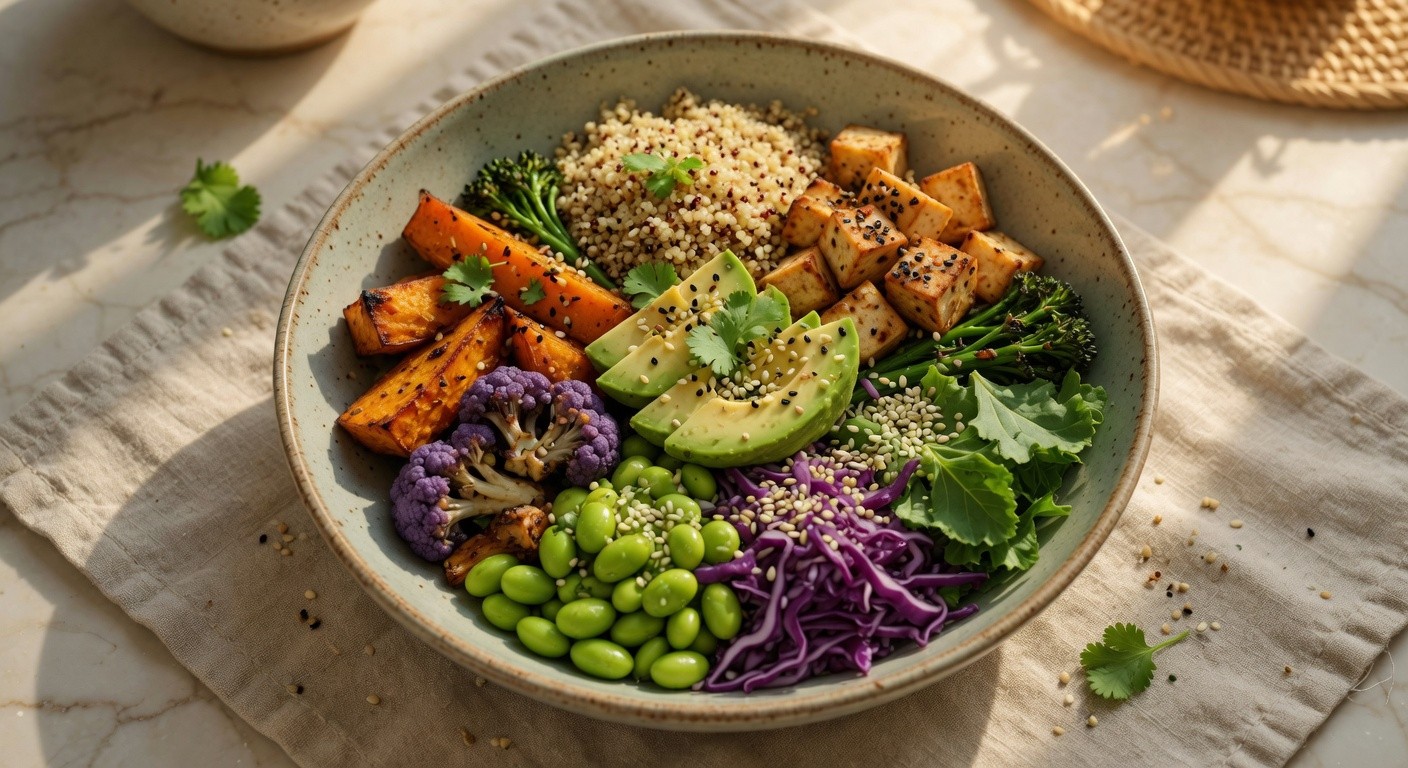
A well-built plant-based plan can be excellent for menopause weight loss. It naturally pushes fiber intake up, makes meals more produce-centered, and often improves food quality quickly. For women who feel heavy, constipated, or stuck in a cycle of convenience foods, that shift alone can make eating feel better.
The catch is that “plant-based” can mean two very different things. One version is lentils, tofu, edamame, oats, vegetables, fruit, nuts, and seeds. The other is vegan cookies, chips, and meat substitutes at every meal. Only one of those helps with weight loss.
Build the plate around protein, not just plants
The biggest mistake I see is under-eating protein. Menopause-related weight gain often happens alongside muscle loss, so a plant-based plan has to protect lean mass, not just reduce calories. That means centering meals on foods like tofu, tempeh, soy yogurt, edamame, beans, lentils, and higher-protein dairy alternatives when appropriate.
A practical day might look like tofu scramble with vegetables, lentil soup and a grain bowl for lunch, then tempeh stir-fry with broccoli and brown rice for dinner. Chia, flax, pumpkin seeds, and even ideas from sourcing bulk hemp seeds can help round out snacks and toppings.
Why this works best with personalization
Higher-protein intake is associated with healthier body composition in menopausal women, but most articles stop short of helping women apply that in real meals. Gut symptoms also matter. Beans, cruciferous vegetables, or large raw salads can be useful for one person and miserable for another, especially if bloating is already a problem. That gap is noted in this discussion of diet and menopause weight loss.
That's where a structured plan helps. A telemedicine team can guide food tolerance, symptom tracking, and supplement decisions while also addressing digestion through resources like gut health strategies for weight loss.
Best fit: Women who prefer lighter meals and want more fiber.
Watch for: Low protein, poor satiety, and overuse of processed vegan foods.
Good starter meal: Buddha bowl with quinoa, tofu, roasted vegetables, tahini, and pumpkin seeds.
4. Intermittent Fasting for Menopause
Intermittent fasting gets a lot of attention because it can simplify eating. Some women do well with it. They stop late-night grazing, tighten up chaotic meal patterns, and feel less snack-driven. Others feel worse, sleep worse, or end up overeating in the eating window.
That's why I don't treat fasting as automatically good for menopause. I treat it as a tool.
When it helps and when it backfires
If your main issue is unstructured eating from morning to night, a gentle time-restricted pattern can create boundaries. A simple overnight fast, such as finishing dinner earlier and delaying breakfast modestly, may be enough. You don't need to jump into aggressive fasting windows to see whether structure helps.
Where women get into trouble is using fasting as a way to white-knuckle through the day. If you're already under-eating protein, waking at night, or dragging through workouts, a tighter eating window can amplify the problem. Menopause is not the time to lose muscle and call it success.
Start with the easiest version that improves your routine. If it makes you more irritable, tired, or binge-prone, it's the wrong version.
A smarter way to test it
Try asking a few practical questions. Do you snack heavily after dinner? Are mornings naturally low-hunger, or are you skipping breakfast while feeling awful? Does a protein-rich first meal help, or do you do better waiting a bit?
If you experiment, keep the meals inside your window substantial and balanced. Fasting doesn't fix a diet built on coffee, crackers, and random bites. It only works when the eating window includes enough protein, fiber, and calories to support recovery and satiety.
For women who want structure without guessing, a clinician can help map fasting onto a realistic calorie goal using tools like this calorie deficit guide. That matters because the schedule is only one part of the plan. Food quality still drives results.
Can work for: Evening grazers and women who prefer fewer meals.
Often fails for: Women with poor sleep, high stress, or low energy.
Non-negotiable: Keep resistance training in the plan so weight loss doesn't come mostly from muscle.
5. Phytoestrogen-Rich Whole Foods Diet
Some women want an approach that feels more targeted to menopause itself, not just weight loss in general. A phytoestrogen-rich whole foods pattern fits that need. It focuses on foods like soy, flaxseed, sesame, legumes, and whole grains that may support symptom management while keeping meals grounded in whole foods.
This isn't a miracle diet, and it's not a replacement for medical care when symptoms are severe. But it can be a useful lane for women whose hot flashes, appetite shifts, and body composition changes all seem to be colliding at once.
Foods that earn their place
The highest-value version of this pattern is simple. Add ground flaxseed to oatmeal or yogurt. Use edamame or roasted chickpeas as snacks. Rotate tofu, tempeh, or miso-based meals into the week. Sprinkle sesame seeds on grain bowls or salads. These are realistic upgrades, not wellness theater.
A good example is breakfast. A soy yogurt bowl with berries, flax, and walnuts tends to outperform a low-protein muffin or cereal breakfast because it supports fullness and offers more nutritional value.
Trade-offs to know before you commit
This plan can become too narrow if you focus only on “menopause foods” and ignore the basics. You still need enough total protein, calorie awareness, strength training, and regular meals. A tablespoon of flax in an otherwise chaotic diet won't overcome nightly overeating or skipped lunches.
Some women also need help with food timing, especially if bloating or constipation gets worse when fiber climbs too fast. In telemedicine, that's where personalized pacing matters. You can adjust the amount and type of fiber, the soy foods you tolerate best, and whether you also need medical support.
A modern service like 10 Rx Home can integrate symptom tracking with physician oversight, which becomes especially useful if you're also exploring broader prescription support or wellness add-ons such as NAD+ within a structured plan. Diet works better when someone is watching the full picture.
Easy wins: Flax in breakfast, edamame snacks, tofu stir-fries, bean-based lunches.
What doesn't work: Using specialty foods while ignoring calorie intake and muscle loss.
Good fit: Women who want a food-first strategy that also speaks to menopause symptoms.
6. Anti-Inflammatory Whole Food Elimination Diet
This approach is best used when symptoms are messy. You're trying to lose weight, but you're also bloated, puffy, achey, irregular, tired, or reacting badly to meals in a way you can't pin down. In that setting, a short-term elimination structure can be useful.
The key phrase is short-term. A good elimination plan clarifies patterns. A bad one turns into months of fear around food.
What this diet is actually for
The purpose isn't to prove that common foods are “toxic.” It's to strip meals back to simpler whole-food options so you can see whether certain foods are worsening digestion, sleep, energy, or symptom flares. That might mean temporarily removing obvious ultra-processed foods, alcohol, or a small set of foods you strongly suspect are an issue, then reintroducing them methodically.
A practical elimination menu might include eggs with cooked vegetables, salmon with roasted squash, chicken soup, lentils if tolerated, fruit, olive oil, rice, and plain yogurt only if it's being tested in or out with intention. The cleaner structure often helps people notice how much processed snacking had crept in.
Why supervision matters here
Without a plan, elimination diets become nutritionally thin and psychologically exhausting. Women often cut too much, lose meal satisfaction, then rebound into overeating. Others remove foods but never reintroduce them systematically, so they learn nothing useful.
If an elimination diet doesn't have a reintroduction phase, it's just restriction with better branding.
This is one area where telemedicine support can be especially valuable. A clinician can help decide whether your issue sounds more like blood sugar instability, GI sensitivity, sleep disruption, medication effects, or a diet quality problem. That keeps you from blaming the wrong food while missing the underlying problem.
Best fit: Women with digestive symptoms, food uncertainty, or inflammatory-feeling flares.
Not best for: Anyone with a history of disordered eating or chronic over-restriction.
Success marker: Clearer symptom patterns and a broader, more confident diet after reintroduction.
7. Protein-Centric Lower-Carb Menopause Diet

If the Mediterranean diet is the most balanced all-around choice, this one is often the most practical for women who are hungry all the time, losing muscle, or noticing that higher-carb meals don't satisfy them. A protein-centric lower-carb plan doesn't mean keto by default. It means protein becomes the anchor, and carbs become more intentional.
For many menopausal women, that shift is powerful. The market may be crowded with supplements, but the evidence-based foundation still points back to food quality. At the same time, menopause-focused demand is clearly large. The global menopause market was estimated at USD 17.79 billion in 2024 and is projected to reach USD 24.35 billion by 2030, with dietary supplements accounting for 94.23% of revenue in 2024, according to Grand View Research's menopause market analysis. That's useful context, but supplements still shouldn't distract from the basics.
How to structure this without going extreme
Each meal starts with protein. Eggs, Greek yogurt, cottage cheese, chicken, fish, tofu, edamame, turkey, or lean beef can all work. Then add vegetables, a sensible serving of carbohydrate, and a fat source that improves satisfaction without turning the meal into a calorie bomb.
A strong day might include eggs and sautéed spinach at breakfast, grilled chicken salad with beans at lunch, Greek yogurt with berries as a snack, and salmon with broccoli and a small sweet potato at dinner. Snack ideas matter here, because random low-protein snacking can undo an otherwise solid plan. Resources like healthy snacks for weight loss can help fill those gaps.
Why this works well in medical weight care
This is also the approach that often pairs best with medically supervised weight loss. Many women searching best menopause diet weight loss don't just want a meal plan. They want to know when diet alone is enough and when it's time to add medical support. That's an important gap in current content, especially as obesity is increasingly treated as a chronic disease and medication use for weight management continues to expand.
A telemedicine service like 10 Rx Home can help decide whether you need lifestyle work only, a prescription-based plan, additional lab review, or symptom support that goes beyond diet. That kind of decision-making is often more valuable than the diet label itself.
Best fit: Women struggling with appetite, muscle loss, and carb-driven hunger.
Watch for: Going so low-carb that sleep, energy, or workouts get worse.
Most effective pairing: Resistance training, consistent meals, and clinician oversight.
7-Way Comparison of Menopause Weight-Loss Diets
Diet | Implementation complexity | Resource requirements | Expected outcomes | Ideal use cases | Key advantages |
|---|---|---|---|---|---|
Mediterranean Diet for Menopause | Moderate, adopt whole-food patterns and meal prep | Moderate, fresh produce, quality olive oil, fish; some cost/time | Reduced hot flashes, improved cardiovascular markers, sustainable weight loss over weeks | Women seeking heart health, anti-inflammatory benefits, and a flexible long-term plan | Anti-inflammatory, evidence-backed, flexible and sustainable |
Low-Glycemic Index (GI) Diet | Moderate, learn GI values and pairings | Low–Moderate, whole grains, legumes, apps or resources to check GI | Stabilized blood sugar, fewer cravings, steady weight loss and improved energy | Women with insulin resistance, blood sugar swings, or cravings-driven eating | Directly targets glucose control and reduces hunger/energy crashes |
Plant-Based / Vegetarian Menopause Diet | Moderate, needs protein planning and possible supplements | Low–Moderate, legumes, grains, seeds; may need B12/omega‑3 supplements | Fewer hot flashes for many, improved body composition, lower chronic disease risk | Those preferring ethical/environmental diets or high-phytoestrogen approaches | High phytoestrogens/fiber, low saturated fat, often cost-effective |
Intermittent Fasting (IF) for Menopause | Moderate, requires consistent timing and gradual adaptation | Low, no special foods but monitoring recommended; may need clinician oversight | Rapid fat loss, improved insulin sensitivity; symptom response varies widely | Women aiming for faster weight loss and metabolic flexibility who tolerate fasting | Simplifies eating windows, promotes autophagy and improved insulin response |
Phytoestrogen-Rich Whole Foods Diet | Moderate, select and rotate phytoestrogen sources consistently | Low–Moderate, soy, flaxseed, legumes, fermented foods | Reduced hot flashes/night sweats, improved bone and vaginal health over weeks | Women seeking natural estrogen-like dietary support or HRT alternatives | Clinically supported for symptom relief, whole-food approach with added nutrients |
Anti-Inflammatory / Elimination Diet | High, strict elimination and methodical reintroduction required | High, organic/minimally processed foods, planning, possible testing | Rapid reduction in inflammation-driven symptoms, improved gut and joint health | Women with pronounced inflammatory symptoms, joint pain, or unexplained menopause worsening | Targets root inflammation, personalized and often fast symptom improvement |
Protein-Centric Lower-Carb Menopause Diet | Moderate, needs planning to meet higher protein targets | Moderate–High, quality protein sources, possible supplements | Preserves muscle and bone, enhances satiety and body composition during weight loss | Women concerned about muscle loss, bone density, or improving body composition | Maintains lean mass, boosts thermic effect, supports strength training |
Your Personalized Path to Wellness Starts Now
The best menopause diet weight loss plan is rarely the one with the flashiest name. It's the one you can follow consistently, the one that matches your symptoms, and the one that helps you lose fat without sacrificing muscle, energy, or sanity.
For some women, that's a Mediterranean pattern with better portion control. For others, it's a lower-GI approach that calms cravings, or a protein-centric plan that finally makes meals satisfying again. A few do well with a gentle fasting structure. Others need to avoid it. And some need a short elimination phase because bloating, fatigue, and food reactions are muddying the picture.
That's the central truth of midlife weight care. Menopause changes the context. It affects sleep, hunger, recovery, glucose handling, and body composition. Generic advice like “eat less and move more” is too blunt for what many women are dealing with.
Medical support can change that. A telemedicine model is especially useful here because it allows more frequent adjustment, better symptom tracking, and a treatment plan that can evolve. If a patient is doing everything right and still stalling, the next step may not be more restriction. It may be medication review, better protein distribution, more structured resistance training, or physician-guided prescription support.
That's where a service like 10 Rx Home stands out. Instead of handing you a food list and wishing you luck, it can help personalize the strategy, monitor how you respond, and determine whether additional tools such as NAD+ products or other prescriptions belong in your broader wellness plan. The diet becomes part of a supervised system, not a solo experiment.
I also encourage women to think beyond the scale. Better menopause care often shows up as steadier energy, fewer cravings, stronger workouts, less evening overeating, improved confidence, and a more predictable routine. Those changes matter because they're what make weight loss maintainable.
If you've been cycling through plans and blaming yourself, stop there. Your body likely needs a different strategy, not harsher discipline. Start with the approach that matches your real challenges, not the one that sounds most impressive online. Then get support that helps you adjust it in real time.
Long-term success usually comes from small decisions repeated well: protein at breakfast, strength training each week, better carbohydrate choices, symptom tracking, and the willingness to ask for medical help when lifestyle work alone isn't enough. Build that foundation, and you'll have far more than a diet. You'll have a plan you can live with, much like a strong half marathon daily nutrition foundation supports training over time.
If you're ready for a menopause weight loss plan that goes beyond generic advice, 10 Rx Home can help you take the next step. Their board-certified physicians can review your goals, symptoms, and health history, then build a personalized treatment plan that may include nutrition guidance, prescription support, and wellness options that fit your life. Start with their free quiz and turn guesswork into a medically supervised path forward.