GLP-1’s at low prices with free shipping. Get Started


" transform="translate(53.5 27.5)" width="0px"/><g d="M 164.013 0 C 206.437 0 240.828 33.597 240.828 75.04 C 240.828 116.484 206.437 150.08 164.013 150.08 C 121.589 150.08 87.198 116.484 87.198 75.04 C 87.198 33.597 121.589 0 164.013 0 Z M 164.52 30.422 C 140.298 30.422 120.662 50.398 120.662 75.04 C 120.662 99.682 140.298 119.659 164.52 119.659 C 188.742 119.659 208.377 99.682 208.377 75.04 C 208.377 50.398 188.742 30.422 164.52 30.422 Z M 49.689 117.004 L 49.724 117.026 C 50.148 121.056 54.397 124.222 59.576 124.222 C 60.05 124.222 60.516 124.195 60.973 124.143 L 61.097 124.222 L 83.406 120.926 C 83.406 120.926 73.956 127.316 67.688 131.067 C 60.617 135.299 49.689 141.207 49.689 141.207 C 49.689 141.207 39.295 147.961 27.633 149.827 C 27.576 149.836 27.52 149.844 27.463 149.853 C 26.591 150.023 25.702 150.098 24.814 150.077 C 24.739 150.079 24.665 150.08 24.591 150.08 L 24.577 150.069 C 19.359 149.854 15.211 146.423 15.211 142.221 L 15.211 29.154 C 15.211 28.755 15.022 28.379 14.702 28.139 C 14.383 27.9 13.968 27.826 13.585 27.939 L 0 29.915 L 35.746 8.366 L 49.689 0 Z M 260.136 98.048 C 260.234 98.048 260.33 98.052 260.427 98.058 L 287.219 98.517 L 287.219 98.612 C 295.722 98.712 302.586 105.638 302.586 114.166 C 302.586 121.454 297.574 127.571 290.811 129.259 L 304.648 146.964 L 304.644 146.964 C 304.889 147.252 305.023 147.617 305.023 147.995 C 305.023 148.839 304.365 149.536 303.523 149.585 L 303.523 149.588 L 291.341 149.588 L 291.341 149.582 C 289.373 149.504 287.613 148.618 286.384 147.245 L 286.374 147.245 L 286.328 147.182 C 286.064 146.88 285.827 146.557 285.619 146.215 L 273.443 129.628 L 273.463 129.625 C 272.779 128.705 272.41 127.589 272.412 126.442 C 272.412 123.684 274.502 121.414 277.187 121.13 L 277.191 121.101 L 281.783 120.351 L 281.783 120.348 C 285.214 120.264 287.968 117.864 287.968 114.916 C 287.968 111.968 285.214 109.568 281.783 109.483 L 281.783 109.481 L 270.538 109.481 L 270.538 146.777 L 270.536 146.777 C 270.538 146.808 270.538 146.839 270.538 146.871 C 270.538 148.34 269.371 149.537 267.913 149.586 L 267.913 149.588 L 258.168 149.588 L 258.168 149.573 C 256.799 149.433 255.731 148.277 255.731 146.871 C 255.731 146.839 255.733 146.808 255.733 146.777 L 255.731 146.777 L 255.731 102.359 L 255.733 102.359 C 255.781 100.064 257.585 98.201 259.856 98.058 L 259.856 98.048 L 259.998 98.051 C 260.044 98.049 260.09 98.048 260.136 98.048 Z M 324.515 110.615 C 326.064 110.719 327.396 111.676 328.101 113.049 L 332.884 119.45 L 338.302 112.809 C 339.033 111.565 340.298 110.713 341.756 110.615 L 341.756 110.605 L 352.44 110.605 C 353.577 110.605 354.5 111.528 354.5 112.667 C 354.5 113.003 354.42 113.321 354.276 113.601 L 354.314 113.604 L 354.176 113.776 C 354.1 113.896 354.011 114.008 353.912 114.109 L 342.693 128.222 C 342.693 128.222 342.413 128.627 342.413 128.972 C 342.413 129.318 342.693 129.722 342.693 129.722 L 355.241 146.116 C 355.722 146.507 356 147.094 356 147.714 C 356 148.852 355.077 149.775 353.938 149.775 C 353.876 149.775 353.814 149.772 353.751 149.766 L 353.751 149.775 L 341.756 149.775 L 341.756 149.749 C 340.252 149.58 338.973 148.605 338.31 147.237 L 333.228 140.405 C 333.228 140.405 333.042 140.217 332.76 140.217 C 332.48 140.217 332.291 140.405 332.291 140.405 L 332.289 140.402 L 327.078 147.492 C 326.891 147.825 326.664 148.134 326.401 148.411 L 326.295 148.557 L 326.263 148.553 C 325.588 149.207 324.723 149.641 323.764 149.749 L 323.764 149.775 L 312.331 149.775 C 311.194 149.775 310.271 148.852 310.271 147.714 C 310.271 147.02 310.613 146.407 311.138 146.033 L 323.015 130.659 C 323.015 130.659 323.295 130.255 323.295 129.909 C 323.295 129.564 323.015 129.16 323.015 129.16 L 311.458 114.146 C 311.058 113.758 310.833 113.224 310.833 112.667 C 310.833 111.528 311.756 110.605 312.894 110.605 L 324.515 110.605 Z" fill="transparent" height="150.08043079668755px" id="HpkDSJwpk" transform="translate(0 1)" width="356.0000118682049px"><path d="M 76.815 0 C 119.239 0 153.63 33.597 153.63 75.04 C 153.63 116.484 119.239 150.08 76.815 150.08 C 34.391 150.08 0 116.484 0 75.04 C 0 33.597 34.391 0 76.815 0 Z M 77.322 30.422 C 53.1 30.422 33.464 50.398 33.464 75.04 C 33.464 99.682 53.1 119.659 77.322 119.659 C 101.544 119.659 121.179 99.682 121.179 75.04 C 121.179 50.398 101.544 30.422 77.322 30.422 Z" fill="rgb(8, 9, 35)" height="150.08043079668755px" id="kvrqFybmK" transform="translate(87.198 0)" width="153.62981889920286px"/><path d="M 49.689 117.004 L 49.724 117.026 C 50.148 121.056 54.397 124.222 59.576 124.222 C 60.05 124.222 60.516 124.195 60.973 124.143 L 61.097 124.222 L 83.406 120.926 C 83.406 120.926 73.956 127.316 67.688 131.067 C 60.617 135.299 49.689 141.207 49.689 141.207 C 49.689 141.207 39.295 147.961 27.633 149.827 C 27.576 149.836 27.52 149.844 27.463 149.853 C 26.591 150.023 25.702 150.098 24.814 150.077 C 24.739 150.079 24.665 150.08 24.591 150.08 L 24.577 150.069 C 19.359 149.854 15.211 146.423 15.211 142.221 L 15.211 29.154 C 15.211 28.755 15.022 28.379 14.702 28.139 C 14.383 27.9 13.968 27.826 13.585 27.939 L 0 29.915 L 35.746 8.366 L 49.689 0 Z M 260.136 98.048 C 260.234 98.048 260.33 98.052 260.427 98.058 L 287.219 98.517 L 287.219 98.612 C 295.722 98.712 302.586 105.638 302.586 114.166 C 302.586 121.454 297.574 127.571 290.811 129.259 L 304.648 146.964 L 304.644 146.964 C 304.889 147.252 305.023 147.617 305.023 147.995 C 305.023 148.839 304.365 149.536 303.523 149.585 L 303.523 149.588 L 291.341 149.588 L 291.341 149.582 C 289.373 149.504 287.613 148.618 286.384 147.245 L 286.374 147.245 L 286.328 147.182 C 286.064 146.88 285.827 146.557 285.619 146.215 L 273.443 129.628 L 273.463 129.625 C 272.779 128.705 272.41 127.589 272.412 126.442 C 272.412 123.684 274.502 121.414 277.187 121.13 L 277.191 121.101 L 281.783 120.351 L 281.783 120.348 C 285.214 120.264 287.968 117.864 287.968 114.916 C 287.968 111.968 285.214 109.568 281.783 109.483 L 281.783 109.481 L 270.538 109.481 L 270.538 146.777 L 270.536 146.777 C 270.538 146.808 270.538 146.839 270.538 146.871 C 270.538 148.34 269.371 149.537 267.913 149.586 L 267.913 149.588 L 258.168 149.588 L 258.168 149.573 C 256.799 149.433 255.731 148.277 255.731 146.871 C 255.731 146.839 255.733 146.808 255.733 146.777 L 255.731 146.777 L 255.731 102.359 L 255.733 102.359 C 255.781 100.064 257.585 98.201 259.856 98.058 L 259.856 98.048 L 259.998 98.051 C 260.044 98.049 260.09 98.048 260.136 98.048 Z M 324.515 110.615 C 326.064 110.719 327.396 111.676 328.101 113.049 L 332.884 119.45 L 338.302 112.809 C 339.033 111.565 340.298 110.713 341.756 110.615 L 341.756 110.605 L 352.44 110.605 C 353.577 110.605 354.5 111.528 354.5 112.667 C 354.5 113.003 354.42 113.321 354.276 113.601 L 354.314 113.604 L 354.176 113.776 C 354.1 113.896 354.011 114.008 353.912 114.109 L 342.693 128.222 C 342.693 128.222 342.413 128.627 342.413 128.972 C 342.413 129.318 342.693 129.722 342.693 129.722 L 355.241 146.116 C 355.722 146.507 356 147.094 356 147.714 C 356 148.852 355.077 149.775 353.938 149.775 C 353.876 149.775 353.814 149.772 353.751 149.766 L 353.751 149.775 L 341.756 149.775 L 341.756 149.749 C 340.252 149.58 338.973 148.605 338.31 147.237 L 333.228 140.405 C 333.228 140.405 333.042 140.217 332.76 140.217 C 332.48 140.217 332.291 140.405 332.291 140.405 L 332.289 140.402 L 327.078 147.492 C 326.891 147.825 326.664 148.134 326.401 148.411 L 326.295 148.557 L 326.263 148.553 C 325.588 149.207 324.723 149.641 323.764 149.749 L 323.764 149.775 L 312.331 149.775 C 311.194 149.775 310.271 148.852 310.271 147.714 C 310.271 147.02 310.613 146.407 311.138 146.033 L 323.015 130.659 C 323.015 130.659 323.295 130.255 323.295 129.909 C 323.295 129.564 323.015 129.16 323.015 129.16 L 311.458 114.146 C 311.058 113.758 310.833 113.224 310.833 112.667 C 310.833 111.528 311.756 110.605 312.894 110.605 L 324.515 110.605 Z" fill="rgb(8, 9, 35)" height="150.08043079668755px" id="kdERGws7a" width="356.0000118682049px"/></g></svg>)
Best Weight Loss Medication for Women: A 2026 Guide
If you’ve been doing everything “right” but still feel stuck, you’re not alone—and it’s not a failure of effort. As explained in , weight loss for women is deeply tied to hormones, metabolism, and life stage, which means the best medication isn’t simply the strongest—it’s the one that fits your biology. The right treatment can help you finally work with your body instead of constantly fighting it.
Find the best weight loss medication for women in 2026. Our guide compares GLP-1s like Zepbound and Wegovy, with a focus on female-specific health needs.

Best Weight Loss Medication for Women: A 2026 Guide
You’re probably here because you’ve done the “right” things.
You cleaned up your diet. You tried low carb, then high protein, then meal prep, then tracking apps. You started walking more, maybe lifting, maybe cutting late-night snacking. And still, the scale barely moved, or it moved and then snapped right back. For a lot of women, that cycle creates shame fast. It shouldn’t.
Weight gain and weight loss resistance in women often sit at the intersection of biology, hormones, sleep, stress, insulin resistance, medication effects, menopause, and reproductive life stages. That means the best weight loss medication for women isn’t just “the strongest drug.” It’s the treatment that fits your body, your goals, and your season of life.
As a physician, my direct opinion is this: if you’ve been fighting your weight for a long time and your health is paying the price, prescription treatment isn’t a shortcut. It’s a medical tool. Used well, it can help you finally work with your biology instead of constantly battling it.
Your Journey to Sustainable Weight Loss Starts Here
A common story goes like this. A woman in her thirties or forties notices that what used to work no longer works. The same meals, the same workouts, the same willpower, but more hunger, more cravings, more belly weight, and more frustration. If she also has PCOS, prediabetes, sleep issues, or is entering perimenopause, the struggle can feel relentless.
That experience is real. It’s also medical.

For years, many women were told to try harder. Eat less. Move more. Be more disciplined. That advice ignores how obesity and overweight often function in the body. Hunger signals change. Satiety changes. Insulin dynamics change. The result is that effort alone may stop being enough.
Medication is not a last resort
I want to reframe this clearly. Weight loss medication can be a smart, proactive treatment choice. Not because you failed, but because your body may need help regulating appetite, fullness, and metabolic health.
The women who do best with medication usually stop viewing it as a moral issue. They start viewing it as care. The same way you’d treat high blood pressure or asthma, you treat a chronic weight problem with evidence-based medicine and close follow-up.
You do not need to earn medical treatment by suffering longer.
What women want most
Most women I speak with are not asking for perfection. They want to feel in control around food again. They want their joints to hurt less. They want better energy, better labs, and a body that feels familiar.
That’s why this conversation matters. Today’s medications can make a meaningful difference, especially when they’re matched to the person in front of you rather than handed out like a trend.
How New Medications Change the Weight Loss Equation
A woman in her 30s with PCOS, rising A1c, relentless cravings before her period, and years of failed diets does not need another lecture about willpower. She needs treatment that addresses the biology driving her hunger and weight gain. That is why newer GLP-1 medications and dual GIP/GLP-1 medications have changed obesity care for women.
Older weight loss drugs often worked by stimulating the nervous system. That can reduce appetite for some patients, but it does not address fullness, insulin resistance, or the cycle of constant food noise the way newer therapies can.
They change appetite regulation in a more useful way
GLP-1 medications mimic a natural gut hormone involved in appetite and satiety. In real life, that usually means women feel full sooner, stay full longer, and spend less mental energy negotiating with food. Many patients describe fewer intrusive cravings and less urgency around eating.
Dual GIP/GLP-1 treatment adds a second pathway tied to appetite and metabolic regulation. That is a big reason tirzepatide has become such an important option, especially for women dealing with insulin resistance or weight gain that worsened after pregnancy, during perimenopause, or alongside PCOS.
They treat more than the number on the scale
The benefit is not just eating less. These medications can improve the broader metabolic picture, which is often the underlying issue. Women commonly seek help because of irregular cycles, fertility concerns, prediabetes, sleep apnea, fatty liver, joint pain, or the slow weight creep that shows up with hormonal change.
This distinction is important, as women rarely come in asking only about the scale. They want steadier energy, better blood sugar, less inflammation, and a body that feels more predictable again.
Why the experience feels different
When treatment is a good fit, the change is practical.
Hunger is less intense, so planned meals feel doable.
Portions feel more natural, not like a daily fight.
Cravings lose some of their pull, which can help during PMS, perimenopause, and high-stress periods.
Consistency improves, because there is less friction between your plan and your biology.
That does not mean medication should be handed out casually. Women who are pregnant, trying to conceive soon, or breastfeeding need a different plan. Women with PCOS, insulin resistance, migraine, reflux, or a history of disordered eating need medication choices that account for those realities. Telemedicine can be useful. A good clinician can review your history, goals, side effect risks, and reproductive plans, then recommend the right path instead of offering a generic weight loss script. If you want a clinician-guided overview of this category, review these GLP-1 treatment options through telemedicine.
One more point matters. Rapid weight loss can cost you muscle if you do not protect it. Strength training, adequate protein, and recovery should be part of the plan from day one. These GLP-1 weight loss strategies offer practical guidance for preserving lean mass while improving fat loss quality.
Zepbound vs Wegovy and Other Leading Options
You are comparing real tools, not browsing a wellness menu. For women who qualify for prescription obesity treatment, Zepbound usually offers the strongest weight loss, and Wegovy remains an excellent first-line option. My advice is simple. Start with the most effective medication you can safely use, then narrow the choice based on pregnancy plans, side effect tolerance, access, and your metabolic history.
Medication | Drug type | How it’s taken | Weight loss data | Best fit in practice |
|---|---|---|---|---|
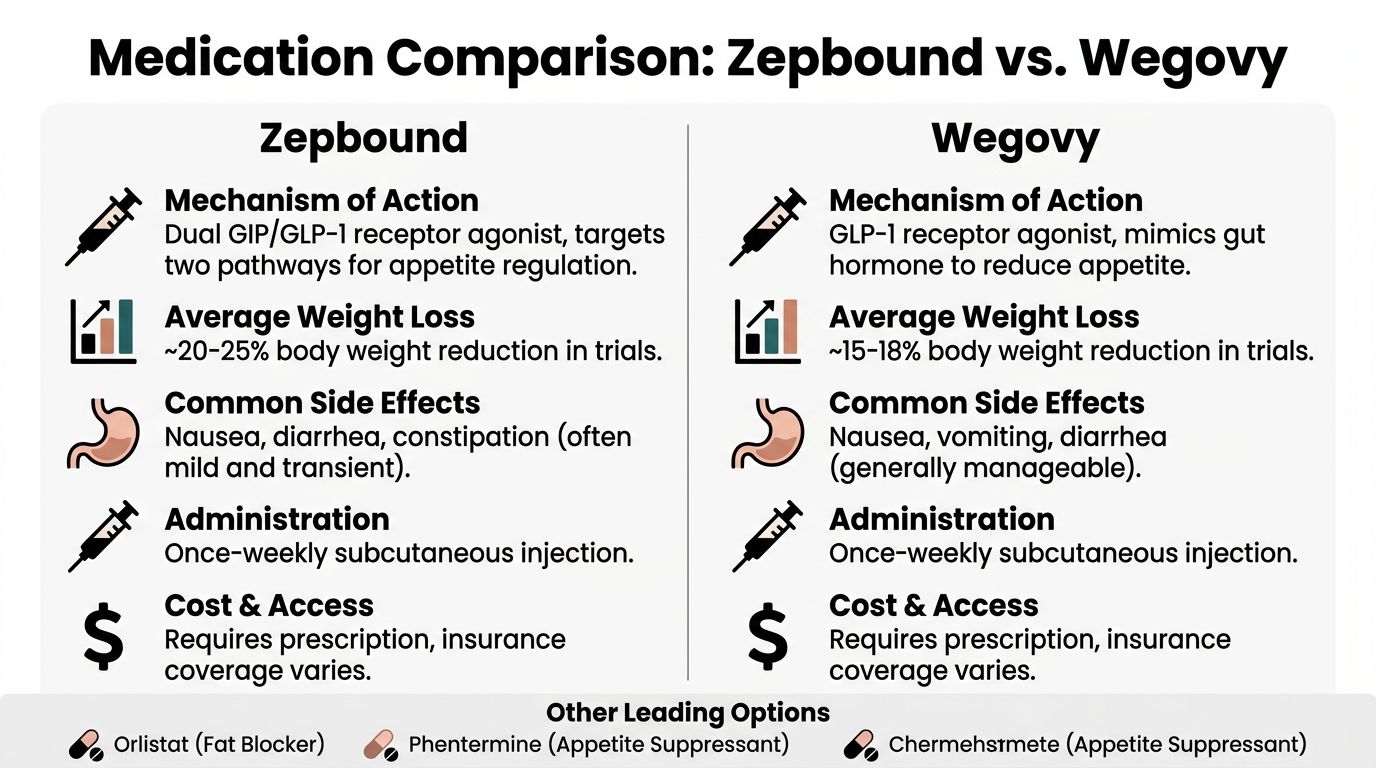
Zepbound (tirzepatide) | Dual GIP/GLP-1 receptor agonist | Weekly injection | Greater average weight loss than semaglutide in comparative trial data | Women who want the strongest efficacy and can use a weekly injectable |
Wegovy (semaglutide) | GLP-1 receptor agonist | Weekly injection | Strong long-term trial results with substantial average weight loss | Women who want a proven weekly option with broad clinical familiarity |
Saxenda (liraglutide) | GLP-1 receptor agonist | Daily injection | Less weight loss than the top weekly GLP-1 based options | Women who need an alternative GLP-1 approach |
Phentermine | Stimulant-based appetite suppressant | Oral | Modest average weight loss compared with newer injectable options | Select women who want an oral medication and are good stimulant candidates |
Orlistat | Fat absorption blocker | Oral | Modest weight loss, limited by gastrointestinal side effects for many patients | Women who want a non-GLP-1 oral option and accept the tradeoffs |
Zepbound usually leads
If your goal is the largest expected drop on the scale, tirzepatide has the edge. Comparative clinical data have consistently put it ahead of semaglutide for average weight loss. That advantage matters for women dealing with severe obesity, insulin resistance, PCOS, or the cascade of problems that often travel with weight gain, including sleep apnea, fatty liver, joint pain, and rising blood sugar.
That is why I commonly rank Zepbound first.
My recommendation: If a woman qualifies for treatment, is not pregnant or breastfeeding, wants the strongest odds of substantial loss, and can tolerate an injectable, Zepbound is often the first medication I discuss.
Wegovy is still a top-tier choice
Wegovy should not be framed as a consolation prize. It is one of the best-studied obesity medications available and a very reasonable first choice for many women. I especially like it when insurance is more likely to cover semaglutide, when a patient has already done well on it, or when tirzepatide causes more nausea than expected.
Sometimes the best medication is the one a woman can stay on for a year.
If you want a side-by-side explanation of the two leading injectables, read this comparison of tirzepatide and semaglutide.
The woman-specific lens matters
The best weight loss medication for women isn't chosen in a vacuum; female physiology changes the conversation.
PCOS and insulin resistance
Women with PCOS often describe the same pattern. Weight climbs faster than expected, hunger returns quickly, and carbohydrate-heavy meals seem to hit harder. In that setting, medications that reduce appetite and improve metabolic control usually make more sense than starting with an older stimulant alone. Zepbound or Wegovy often fit that biology better if they are accessible.
Perimenopause and menopause
This is a common turning point. Sleep gets worse. Muscle mass drops. Fat distribution shifts toward the abdomen. Many women feel as if the same habits suddenly stop working. Weekly GLP-1 based treatment can help restore appetite control and make a structured plan feel workable again, especially when it is paired with protein intake and strength training.
Fertility, pregnancy, and lactation
This changes the decision immediately. If you are pregnant, trying to conceive soon, or breastfeeding, your medication options are different. A good clinician should ask about reproductive plans before prescribing anything, because the right choice for a 38-year-old in perimenopause may be completely wrong for a 31-year-old preparing for pregnancy.
What about Saxenda, phentermine, and older options
These medications still have a role. They are more selective choices.
Saxenda can work, but the daily injection schedule is a real drawback. In practice, many women prefer a weekly medication if both are appropriate.
Phentermine is an oral option that can help with appetite, but it is not my default for women with anxiety, insomnia, palpitations, uncontrolled blood pressure, or a history that makes stimulant use a poor fit. It can be useful in carefully chosen cases. It is rarely the best long-term answer when a woman also has significant metabolic disease.
Orlistat remains available, but I seldom consider it the strongest starting point for a woman with meaningful weight-related health concerns. The expected weight loss is lower, and the gastrointestinal tradeoffs turn many patients off quickly.
Here’s the comparison visual many patients find easiest to scan:
My blunt ranking
For a broad group of appropriate female patients, I would rank them this way:
Zepbound
Wegovy
Saxenda
Phentermine or other older oral agents in carefully selected cases
Orlistat for limited situations
That ranking reflects three things women care about in real life. How much weight the medication is likely to move, how practical it is to stay on, and how well it fits the hormonal and reproductive context of your life.
Women need more than a drug list. They need a treatment plan that matches their biology, their goals, and what they can realistically access through a safe telemedicine evaluation.
Finding Your Fit Patient Scenarios and Use Cases
You stare at your closet, pull on the same jeans that fit last year, and wonder why your body suddenly feels unfamiliar. That question lands differently for women. Hormones shift. PCOS changes appetite and insulin response. Perimenopause changes fat distribution and sleep. Pregnancy plans can override every other part of the decision.
A medication can look strong in a comparison chart and still be the wrong choice for your life. I care less about picking the trendy drug and more about matching treatment to your biology, your goals, and what you can realistically continue through a safe telemedicine plan.

The woman with PCOS and stubborn weight gain
She is often doing more than people realize. She has tried eating less. She has tried cutting carbs. She may be dealing with cravings, irregular cycles, acne, and the exhausting sense that her metabolism is fighting her.
I usually favor a GLP-1 based option, and often Zepbound, because PCOS is rarely just a willpower problem. It is commonly a hunger, insulin, and satiety problem. A medication that helps reduce food noise and improves appetite control usually makes more sense than starting with a stimulant.
If fertility is part of the conversation, timing matters. Weight treatment has to fit the reproductive plan, not compete with it.
The woman in perimenopause who says her body changed in a year
This is one of the most common stories I hear in telemedicine. Sleep gets worse. Midsection weight increases. Alcohol hits harder. The same diet that worked at 35 stops working at 45.
For her, simplicity matters. A once-weekly medication is often easier to live with than a daily option that feels activating or hard to remember. I would usually put Wegovy or Zepbound at the top of the list, then choose based on tolerance, access, and how aggressive the weight loss goal needs to be.
She also needs honesty. Medication can help substantially, but it does not erase poor sleep, low protein intake, or muscle loss risk during midlife.
The woman with obesity, prediabetes, or type 2 diabetes
She is not just asking for smaller clothing sizes. She wants better metabolic health, steadier energy, and less constant thinking about food.
That changes the conversation. I generally center treatment around the newer GLP-1 based medications because they fit both the weight problem and the metabolic problem. In real practice, a full medication review matters. Other prescriptions, side effect history, constipation, reflux, and eating patterns all affect which option is smartest.
If preserving lean mass is a concern, especially during faster weight loss, I want that discussed early. The GLP-1 muscle loss risk calculator can help frame that discussion in a practical way.
The woman who may want pregnancy soon or is breastfeeding
This is the point where many articles get sloppy. I will not.
If you are trying to conceive, could become pregnant, or are breastfeeding, the best medication may be no weight loss medication right now. The right plan may be preconception counseling, nutrition support, sleep work, and getting other health issues under better control first. That is good medicine, not a missed opportunity.
Women deserve clear guidance here. Safety comes first.
The woman who refuses injections
That preference counts. A treatment only works if you are willing to take it.
If you do not want injections, oral medications can still be worth discussing, but I would be direct about the tradeoff. They are often less effective, and some are a poor fit if you already struggle with anxiety, insomnia, palpitations, or blood pressure issues. For some women, though, an oral option is still the right starting point because adherence beats perfection.
The woman who had to stop because side effects got in the way
I do not write these patients off. Many can succeed with a slower dose increase, better meal structure, and more proactive nausea management. If that has been your experience, practical guidance on how to manage Wegovy nausea and stomach side effects is often more useful than abandoning treatment after one rough month.
The right medication is the one that fits your medical history, your reproductive stage, and your real life. That is exactly why telemedicine can work so well for women. It gives you a path to individualized care instead of a one-size-fits-all drug list.
Managing Side Effects and Planning for the Long Term
Side effects decide whether a medication becomes a useful tool or a short-lived trial. Women often stop too early because they were given a prescription, but not a plan for the first month.
With GLP-1 medications, the usual problems are stomach-related. Nausea, constipation, diarrhea, reflux, early fullness, and a strong drop in appetite are common during dose increases. In practice, these symptoms often improve when the dose is advanced more slowly, meals get smaller, and hydration and protein are handled on purpose instead of as an afterthought.
A few habits make a real difference:
Keep meals smaller and simpler during the adjustment phase.
Stop eating at the first sign of fullness instead of trying to finish what is on your plate.
Anchor each day with protein and fluids so low appetite does not turn into low nutrition.
Speak up early about side effects so your clinician can adjust the dose before you get discouraged.
Muscle loss deserves attention too, especially for women in midlife, women eating very little on treatment, and anyone losing weight quickly without resistance training. The GLP-1 muscle loss risk calculator is a useful starting point for a smarter discussion about protein intake, strength work, and whether your rate of loss is too aggressive.
Long-term success requires a maintenance plan from day one. Obesity is a chronic condition. Many women regain weight when medication is stopped abruptly, the dose is reduced without a strategy, or the basics such as sleep, strength training, and follow-up visits fall apart.
I want patients thinking beyond the first few pounds. If you have PCOS, perimenopausal weight gain, insulin resistance, or a long history of weight cycling, your plan should cover what happens after the early appetite suppression phase. That may mean staying on treatment, using the lowest effective maintenance dose, or switching approaches if side effects keep recurring. It also means paying attention to life stage. Pregnancy planning, postpartum recovery, and breastfeeding can all change the right timeline.
Here is the framework I give patients before they start:
Expect an adjustment period. The first weeks are about tolerance, not perfection.
Do not rush the dose. Fast escalation causes unnecessary drop-off.
Track more than weight. Watch energy, bowel habits, protein intake, menstrual changes, and how your eating patterns are shifting.
Build maintenance into the plan early. You should know what the next six to twelve months could look like before the first prescription is filled.
If nausea worries you, read this guide on managing Wegovy nausea and stomach side effects before you start. Patients do better when they know what is common, what can be improved at home, and when to ask for help.
Accessing Treatment Safely Through Telemedicine
Telemedicine has made obesity treatment much more reachable for women who are busy, live far from specialists, or do not want another rushed in-person appointment where weight gets discussed without nuance.
Done well, virtual care is not a shortcut. It’s a structured medical process.

What a safe process looks like
A proper telemedicine pathway should include a detailed health assessment, medication review, discussion of pregnancy status or plans, and a clinician visit that looks at the whole picture. That means weight history, comorbidities, prior diet attempts, side effect risk, and whether you’re even a candidate for medication in the first place.
A good visit should feel personal, not automated.
Questions to bring to your consultation
Use this checklist. It will improve the quality of your appointment fast.
Ask about fit: Which medication best matches my history, goals, and medical conditions?
Ask about reproductive safety: What should I do if I’m trying to conceive, become pregnant, or am breastfeeding?
Ask about interactions: Could any of my current medications affect weight or interact with treatment?
Ask about side effects: What symptoms are common, and when should I contact you?
Ask about follow-up: How will we decide whether the medication is working well enough to continue?
Ask about the long game: What’s the maintenance plan if I respond well?
Green flags in a telemedicine service
Board-certified clinicians
Clear screening for contraindications
Real follow-up, not just prescription fulfillment
A plan for side effects and dose changes
Attention to pregnancy and lactation status
If you want to see how virtual weight loss care typically works from the patient side, this walkthrough is useful: https://www.take10rx.com/blog/achieve-your-goals-with-weight-loss-telemedicine
Your Next Step Towards a Healthier You
The best weight loss medication for women is not always the newest name or the most hyped prescription. It’s the medication that matches your biology, your risk profile, your goals, and your life stage.
Still, I’ll be direct. If you’re asking which treatment currently offers the strongest weight loss results for many appropriate female patients, Zepbound leads. If you need a highly effective alternative with strong evidence and weekly convenience, Wegovy remains an excellent choice. If injections are not realistic, older options still exist, but they usually come with a tradeoff in effectiveness.
What matters most is not choosing based on social media, fear, or shame. Choose based on medical fit.
If you’ve felt stuck for years, you are not broken. You may need better treatment. A thoughtful clinician can help you sort through PCOS, menopause, appetite patterns, side effects, pregnancy planning, and access issues in a way generic advice never will.
Take that step. Ask the harder questions. Get the evaluation. A personalized plan can change far more than your weight.
If you’re ready to explore a medically guided weight loss plan from home, 10 Rx Home connects you with board-certified physicians for personalized treatment, ongoing support, and a simple telemedicine experience designed around real life.