GLP-1’s at low prices with free shipping. Get Started


" transform="translate(53.5 27.5)" width="0px"/><g d="M 164.013 0 C 206.437 0 240.828 33.597 240.828 75.04 C 240.828 116.484 206.437 150.08 164.013 150.08 C 121.589 150.08 87.198 116.484 87.198 75.04 C 87.198 33.597 121.589 0 164.013 0 Z M 164.52 30.422 C 140.298 30.422 120.662 50.398 120.662 75.04 C 120.662 99.682 140.298 119.659 164.52 119.659 C 188.742 119.659 208.377 99.682 208.377 75.04 C 208.377 50.398 188.742 30.422 164.52 30.422 Z M 49.689 117.004 L 49.724 117.026 C 50.148 121.056 54.397 124.222 59.576 124.222 C 60.05 124.222 60.516 124.195 60.973 124.143 L 61.097 124.222 L 83.406 120.926 C 83.406 120.926 73.956 127.316 67.688 131.067 C 60.617 135.299 49.689 141.207 49.689 141.207 C 49.689 141.207 39.295 147.961 27.633 149.827 C 27.576 149.836 27.52 149.844 27.463 149.853 C 26.591 150.023 25.702 150.098 24.814 150.077 C 24.739 150.079 24.665 150.08 24.591 150.08 L 24.577 150.069 C 19.359 149.854 15.211 146.423 15.211 142.221 L 15.211 29.154 C 15.211 28.755 15.022 28.379 14.702 28.139 C 14.383 27.9 13.968 27.826 13.585 27.939 L 0 29.915 L 35.746 8.366 L 49.689 0 Z M 260.136 98.048 C 260.234 98.048 260.33 98.052 260.427 98.058 L 287.219 98.517 L 287.219 98.612 C 295.722 98.712 302.586 105.638 302.586 114.166 C 302.586 121.454 297.574 127.571 290.811 129.259 L 304.648 146.964 L 304.644 146.964 C 304.889 147.252 305.023 147.617 305.023 147.995 C 305.023 148.839 304.365 149.536 303.523 149.585 L 303.523 149.588 L 291.341 149.588 L 291.341 149.582 C 289.373 149.504 287.613 148.618 286.384 147.245 L 286.374 147.245 L 286.328 147.182 C 286.064 146.88 285.827 146.557 285.619 146.215 L 273.443 129.628 L 273.463 129.625 C 272.779 128.705 272.41 127.589 272.412 126.442 C 272.412 123.684 274.502 121.414 277.187 121.13 L 277.191 121.101 L 281.783 120.351 L 281.783 120.348 C 285.214 120.264 287.968 117.864 287.968 114.916 C 287.968 111.968 285.214 109.568 281.783 109.483 L 281.783 109.481 L 270.538 109.481 L 270.538 146.777 L 270.536 146.777 C 270.538 146.808 270.538 146.839 270.538 146.871 C 270.538 148.34 269.371 149.537 267.913 149.586 L 267.913 149.588 L 258.168 149.588 L 258.168 149.573 C 256.799 149.433 255.731 148.277 255.731 146.871 C 255.731 146.839 255.733 146.808 255.733 146.777 L 255.731 146.777 L 255.731 102.359 L 255.733 102.359 C 255.781 100.064 257.585 98.201 259.856 98.058 L 259.856 98.048 L 259.998 98.051 C 260.044 98.049 260.09 98.048 260.136 98.048 Z M 324.515 110.615 C 326.064 110.719 327.396 111.676 328.101 113.049 L 332.884 119.45 L 338.302 112.809 C 339.033 111.565 340.298 110.713 341.756 110.615 L 341.756 110.605 L 352.44 110.605 C 353.577 110.605 354.5 111.528 354.5 112.667 C 354.5 113.003 354.42 113.321 354.276 113.601 L 354.314 113.604 L 354.176 113.776 C 354.1 113.896 354.011 114.008 353.912 114.109 L 342.693 128.222 C 342.693 128.222 342.413 128.627 342.413 128.972 C 342.413 129.318 342.693 129.722 342.693 129.722 L 355.241 146.116 C 355.722 146.507 356 147.094 356 147.714 C 356 148.852 355.077 149.775 353.938 149.775 C 353.876 149.775 353.814 149.772 353.751 149.766 L 353.751 149.775 L 341.756 149.775 L 341.756 149.749 C 340.252 149.58 338.973 148.605 338.31 147.237 L 333.228 140.405 C 333.228 140.405 333.042 140.217 332.76 140.217 C 332.48 140.217 332.291 140.405 332.291 140.405 L 332.289 140.402 L 327.078 147.492 C 326.891 147.825 326.664 148.134 326.401 148.411 L 326.295 148.557 L 326.263 148.553 C 325.588 149.207 324.723 149.641 323.764 149.749 L 323.764 149.775 L 312.331 149.775 C 311.194 149.775 310.271 148.852 310.271 147.714 C 310.271 147.02 310.613 146.407 311.138 146.033 L 323.015 130.659 C 323.015 130.659 323.295 130.255 323.295 129.909 C 323.295 129.564 323.015 129.16 323.015 129.16 L 311.458 114.146 C 311.058 113.758 310.833 113.224 310.833 112.667 C 310.833 111.528 311.756 110.605 312.894 110.605 L 324.515 110.605 Z" fill="transparent" height="150.08043079668755px" id="HpkDSJwpk" transform="translate(0 1)" width="356.0000118682049px"><path d="M 76.815 0 C 119.239 0 153.63 33.597 153.63 75.04 C 153.63 116.484 119.239 150.08 76.815 150.08 C 34.391 150.08 0 116.484 0 75.04 C 0 33.597 34.391 0 76.815 0 Z M 77.322 30.422 C 53.1 30.422 33.464 50.398 33.464 75.04 C 33.464 99.682 53.1 119.659 77.322 119.659 C 101.544 119.659 121.179 99.682 121.179 75.04 C 121.179 50.398 101.544 30.422 77.322 30.422 Z" fill="rgb(8, 9, 35)" height="150.08043079668755px" id="kvrqFybmK" transform="translate(87.198 0)" width="153.62981889920286px"/><path d="M 49.689 117.004 L 49.724 117.026 C 50.148 121.056 54.397 124.222 59.576 124.222 C 60.05 124.222 60.516 124.195 60.973 124.143 L 61.097 124.222 L 83.406 120.926 C 83.406 120.926 73.956 127.316 67.688 131.067 C 60.617 135.299 49.689 141.207 49.689 141.207 C 49.689 141.207 39.295 147.961 27.633 149.827 C 27.576 149.836 27.52 149.844 27.463 149.853 C 26.591 150.023 25.702 150.098 24.814 150.077 C 24.739 150.079 24.665 150.08 24.591 150.08 L 24.577 150.069 C 19.359 149.854 15.211 146.423 15.211 142.221 L 15.211 29.154 C 15.211 28.755 15.022 28.379 14.702 28.139 C 14.383 27.9 13.968 27.826 13.585 27.939 L 0 29.915 L 35.746 8.366 L 49.689 0 Z M 260.136 98.048 C 260.234 98.048 260.33 98.052 260.427 98.058 L 287.219 98.517 L 287.219 98.612 C 295.722 98.712 302.586 105.638 302.586 114.166 C 302.586 121.454 297.574 127.571 290.811 129.259 L 304.648 146.964 L 304.644 146.964 C 304.889 147.252 305.023 147.617 305.023 147.995 C 305.023 148.839 304.365 149.536 303.523 149.585 L 303.523 149.588 L 291.341 149.588 L 291.341 149.582 C 289.373 149.504 287.613 148.618 286.384 147.245 L 286.374 147.245 L 286.328 147.182 C 286.064 146.88 285.827 146.557 285.619 146.215 L 273.443 129.628 L 273.463 129.625 C 272.779 128.705 272.41 127.589 272.412 126.442 C 272.412 123.684 274.502 121.414 277.187 121.13 L 277.191 121.101 L 281.783 120.351 L 281.783 120.348 C 285.214 120.264 287.968 117.864 287.968 114.916 C 287.968 111.968 285.214 109.568 281.783 109.483 L 281.783 109.481 L 270.538 109.481 L 270.538 146.777 L 270.536 146.777 C 270.538 146.808 270.538 146.839 270.538 146.871 C 270.538 148.34 269.371 149.537 267.913 149.586 L 267.913 149.588 L 258.168 149.588 L 258.168 149.573 C 256.799 149.433 255.731 148.277 255.731 146.871 C 255.731 146.839 255.733 146.808 255.733 146.777 L 255.731 146.777 L 255.731 102.359 L 255.733 102.359 C 255.781 100.064 257.585 98.201 259.856 98.058 L 259.856 98.048 L 259.998 98.051 C 260.044 98.049 260.09 98.048 260.136 98.048 Z M 324.515 110.615 C 326.064 110.719 327.396 111.676 328.101 113.049 L 332.884 119.45 L 338.302 112.809 C 339.033 111.565 340.298 110.713 341.756 110.615 L 341.756 110.605 L 352.44 110.605 C 353.577 110.605 354.5 111.528 354.5 112.667 C 354.5 113.003 354.42 113.321 354.276 113.601 L 354.314 113.604 L 354.176 113.776 C 354.1 113.896 354.011 114.008 353.912 114.109 L 342.693 128.222 C 342.693 128.222 342.413 128.627 342.413 128.972 C 342.413 129.318 342.693 129.722 342.693 129.722 L 355.241 146.116 C 355.722 146.507 356 147.094 356 147.714 C 356 148.852 355.077 149.775 353.938 149.775 C 353.876 149.775 353.814 149.772 353.751 149.766 L 353.751 149.775 L 341.756 149.775 L 341.756 149.749 C 340.252 149.58 338.973 148.605 338.31 147.237 L 333.228 140.405 C 333.228 140.405 333.042 140.217 332.76 140.217 C 332.48 140.217 332.291 140.405 332.291 140.405 L 332.289 140.402 L 327.078 147.492 C 326.891 147.825 326.664 148.134 326.401 148.411 L 326.295 148.557 L 326.263 148.553 C 325.588 149.207 324.723 149.641 323.764 149.749 L 323.764 149.775 L 312.331 149.775 C 311.194 149.775 310.271 148.852 310.271 147.714 C 310.271 147.02 310.613 146.407 311.138 146.033 L 323.015 130.659 C 323.015 130.659 323.295 130.255 323.295 129.909 C 323.295 129.564 323.015 129.16 323.015 129.16 L 311.458 114.146 C 311.058 113.758 310.833 113.224 310.833 112.667 C 310.833 111.528 311.756 110.605 312.894 110.605 L 324.515 110.605 Z" fill="rgb(8, 9, 35)" height="150.08043079668755px" id="kdERGws7a" width="356.0000118682049px"/></g></svg>)
Bupropion Side Effects Weight: Quick Guide (bupropion side effects weight)
Bupropion is one of the few antidepressants more commonly linked to weight loss or no significant weight change rather than weight gain. Its unique effect on dopamine and norepinephrine can help reduce appetite and boost energy, making it a supportive option for people who want to prioritize both mental wellness and physical health.
Explore bupropion side effects weight, what to expect, and practical tips for managing weight changes while on treatment.

Bupropion Side Effects Weight: Quick Guide (bupropion side effects weight)
Taking that first step on a mental health journey is a huge act of courage and self-care. It’s also completely normal to have questions about what comes next, especially when it comes to side effects like changes in your weight.
When people think of antidepressants, they often worry about weight gain. But with bupropion, the story is usually quite different. In fact, when it comes to bupropion side effects weight-wise, the most common outcomes are actually weight loss or no change at all, which is one of the main reasons people find it fits so well with their overall wellness goals.
Your Wellness Path and Bupropion's Role

Starting this journey is about so much more than just managing symptoms—it's about reclaiming your sense of balance and well-being. Thinking about medication can feel a little intimidating, especially if you’ve worked hard to feel good in your own body. The great news is you don’t have to choose between your mental and physical health.
Bupropion can be a fantastic partner in this process. It works in a unique way that often helps you feel more energized and motivated. These are two things that are absolutely vital for both mental clarity and sticking with a healthy lifestyle. Think of it less as just a prescription and more as a tool that can empower you to chase your goals with fresh energy.
A Unique Profile Among Antidepressants
This isn't just a feeling; bupropion’s unique effect on weight is backed by some serious research. It stands out from the crowd with a consistently lower risk of weight gain compared to other popular antidepressants.
A major study involving over 183,000 people provided some compelling proof. It found the risk of gaining at least 5% of body weight was 15% lower for those taking bupropion compared to those on sertraline (Zoloft). Over a 24-month period, that difference added up to nearly a kilogram less weight gain.
A Quick Look at Bupropion and Weight
To see how bupropion stacks up at a glance, this table compares its typical weight effect to other common antidepressants.
Antidepressant | Common Weight Effect | Risk of 5% Weight Gain vs. Bupropion |
|---|---|---|
Bupropion (Wellbutrin) | Loss or Neutral | Baseline |
Sertraline (Zoloft) | Neutral to Gain | 15% Higher |
Citalopram (Celexa) | Neutral to Gain | 29% Higher |
Mirtazapine (Remeron) | Often Significant Gain | 75% Higher |
This data makes bupropion a comforting choice for many who are understandably concerned about the bupropion side effects weight connection. It opens up a path where getting your mood back on track doesn't have to mean sacrificing your physical health goals.
Your wellness journey is uniquely yours. Having a treatment that supports both your mind and body is a key part of feeling empowered and in control.
Building Your Support System
Real, lasting progress happens when you feel informed and supported. A big part of that is having access to clear, effective patient education resources so you can truly understand your treatment options.
Just as important is having a healthcare team that really listens and works with you. Modern healthcare makes it easier than ever to connect with professionals who see your complete health picture. If you're looking for a convenient way to get started, you might find our guide on how to get prescriptions online helpful. This is all about building a true partnership for your health, so you can feel confident in every step you take.
How Bupropion Actually Influences Your Weight

To really get why bupropion’s effect on weight is so different, it helps to picture your brain’s command center. Think of it as having a control panel for your appetite, energy, and motivation. Most antidepressants work by tweaking the serotonin or histamine systems. While that can be great for your mood, it can also accidentally crank up your hunger signals or slow down your metabolism, leading to unwanted weight gain.
Bupropion takes a completely different path. It doesn't focus on those systems. Instead, it works by boosting two of your brain's most important chemical messengers: dopamine and norepinephrine. These are your brain's natural motivators—the "get up and go" chemicals that fire up your focus, drive, and energy.
It’s an approach that doesn’t just treat the fog of depression; it helps reignite the spark that makes you feel engaged and alive. This unique action is the key to understanding the typical bupropion side effects weight profile, which often results in weight loss or simply staying right where you are.
The Dopamine and Norepinephrine Advantage
So, what does an increase in these two neurotransmitters actually do? It creates a powerful, two-part effect that can totally shift your body's relationship with weight.
Quieting "Food Noise": Dopamine is a major player in your brain's reward system. When your dopamine levels are more balanced, those intense, nagging cravings and the constant mental chatter about food can start to fade. Many people find they simply feel less preoccupied with eating, especially the emotional eating that often comes with feeling down.
Boosting Energy and Metabolism: Norepinephrine acts like a gentle wake-up call for your central nervous system. It can give your resting metabolic rate a little bump, meaning you burn more calories even when you’re not active. Combine that with the renewed motivation many people experience, and it's a natural recipe for moving more and feeling more energetic.
This is exactly why bupropion stands out. While it's not a weight-loss pill, its fundamental action happens to support the very things that help us maintain a healthy weight: a calmer appetite and more energy to live life.
The Science Behind Its Unique Profile
This isn't just a feel-good theory—it's backed by solid science. Many common antidepressants that lead to weight gain do so because they interact with specific receptors (like histamine H1 or serotonin 5-HT2C) known to stimulate appetite. Bupropion, for the most part, leaves those receptors alone.
Its unique ability to avoid these pathways is a game-changer. In fact, one major two-year Group Health study pinpointed bupropion as the only antidepressant linked to long-term weight loss. That’s a huge deal for anyone trying to manage their mental health and their physical well-being at the same time.
More recent clinical trials consistently back this up, showing that people taking bupropion often see an average weight loss of 2–5 kg (or about 4–11 pounds) over a few months. This makes it an incredibly empowering choice for those who want to feel better mentally without having to sacrifice their physical health goals. If you're interested in the data, you can explore the clinical research behind bupropion's weight effects.
By tapping into your body's own energy and reward chemistry, bupropion helps you build momentum from the inside out. It offers a path toward better mental health that also supports your journey to feeling strong, energized, and truly at home in your body.
A Realistic Timeline for Weight Changes
So, you're starting bupropion and wondering what it might mean for your weight. It's one of the most common questions people have, and for good reason. Thinking about this isn't about vanity; it's about understanding your total well-being.
Knowing what to expect can make the whole process feel less mysterious. While everyone’s body reacts a little differently, there's a general timeline that can give you a good sense of what may be ahead. Let's walk through it.
The Initial Adjustment Period (First 1 to 4 Weeks)
The first month is often where the most noticeable shifts happen, especially with your appetite. As your system gets used to the medication, the uptick in norepinephrine and dopamine can act like a gentle dimmer switch on your hunger signals.
Many people describe this as a quieting of the "food noise"—that constant, nagging chatter in your head about what to eat next. You might find cravings start to fade, and you feel full and satisfied with less food. It's not uncommon to see some modest weight loss during these first 1 to 4 weeks as a direct result.
The Medium-Term Outlook (1 to 6 Months)
Once you're past that initial month, your body continues to find its new rhythm. For a lot of people, the early weight loss might slow to a more gradual, steady pace, while for others, their weight begins to stabilize. This is the phase where a clearer picture of your long-term bupropion side effects weight profile starts to take shape.
One of the most telling studies involved a combination of bupropion and naltrexone specifically for weight management. In those trials, people lost an average of 6% of their starting body weight over the course of a year. This really shines a light on bupropion's potential role in the process.
During these months, you're likely to settle into one of these patterns:
A New Normal: Your weight may level off after the initial drop, finding a new, stable baseline.
Slow and Steady: For some, the weight loss continues, just at a more sustainable, less dramatic rate.
Renewed Energy: Many people feel a welcome boost in energy, which can make things like a brisk walk or a bike ride feel more like a joy and less like a chore. This naturally supports any weight management goals.
This period is all about finding your new equilibrium. The initial side effects often start to fade, and your appetite cues become more reliable. It's the perfect time to build healthy habits that feel good and support you for the long haul.
Long-Term Effects and Sustained Results (6+ Months)
After the six-month mark, bupropion's effect on your weight is usually well-established. Here’s where it really stands out: unlike many other antidepressants known for causing weight gain over time, bupropion often supports either weight neutrality or helps you maintain any initial loss.
In fact, long-term research has pointed to bupropion as the only antidepressant consistently associated with weight loss over a two-year period. It’s an encouraging option for anyone who views their mental and physical health as two sides of the same coin.
What If I Gain Weight Instead?
While it’s much less common, some people do gain weight on bupropion. If this happens to you, it can be really confusing and discouraging, but there's usually a logical reason behind it. For instance, if depression had previously zapped your appetite, feeling better might naturally bring it back.
Other things, like your unique metabolism or subtle shifts in your daily routine, can also be a factor. Seeing the number on the scale go up isn't a sign you've done something wrong. Instead, see it as a signal to check in with your healthcare provider. An open conversation can help you figure out what’s going on and decide on the best path forward together.
Comparing Bupropion to Other Antidepressants
When you're starting a new antidepressant, it’s completely normal to have questions and concerns. One of the biggest worries I hear from people is about potential weight gain, which can feel like trading one problem for another. It's a valid concern, and you deserve to feel good in both your mind and body.
This is where bupropion really stands out from the crowd. Unlike many other common antidepressants, its unique way of working in the brain often leads to a very different outcome when it comes to weight. Instead of potentially working against your health goals, it can sometimes feel like an ally.
Bupropion vs SSRIs: A Clear Difference
The most widely prescribed class of antidepressants are the Selective Serotonin Reuptake Inhibitors, or SSRIs. You've likely heard of them—medications like sertraline (Zoloft), escitalopram (Lexapro), and paroxetine (Paxil). While they can be life-changing for many, they're also well-known for causing weight gain, particularly over the long haul.
SSRIs work by boosting serotonin, a neurotransmitter linked to mood, but also to appetite and cravings. Bupropion takes a different route entirely, focusing on dopamine and norepinephrine. Think of this as shifting the focus from the brain’s "calm and content" chemical to its "motivation and energy" chemicals. This fundamental difference is why it often helps curb appetite and increase energy, rather than the other way around.
When choosing a path for your mental wellness, it’s not about finding a "winner." It's about finding the treatment that harmonizes with your entire well-being—mind and body. Bupropion offers a distinct choice for those who want to feel better without the added worry of unwanted weight changes.
And this isn't just a theory; it's backed by solid research. A major study that tracked first-time users of eight different antidepressants found a consistent pattern. At every checkpoint—6, 12, and even 24 months—people taking bupropion gained the least amount of weight. You can see the complete results in this fascinating report on antidepressant weight change across different medications.
A Data-Driven Comparison
Seeing the numbers can make these differences feel much more real. That same study revealed that people taking bupropion were 15-20% less likely than those on sertraline to gain a clinically significant amount of weight (defined as 5% or more of their body weight).
Even within the SSRI family, the risks aren't all the same. Escitalopram and paroxetine, for example, came with a 15% higher risk of significant weight gain than sertraline in just the first six months. Through it all, bupropion remained the outlier with a more favorable profile.
To really put this into perspective, let's look at how bupropion stacks up against other antidepressants over two years. The table below breaks down the average weight change you might expect.
Antidepressant Weight Change Over 24 Months
This table shows just how different the long-term weight effects can be, comparing the average change and the risk of significant gain for bupropion versus other popular options.
Antidepressant | Average Weight Change at 24 Months | Relative Risk of ≥5% Weight Gain (vs. Sertraline) |
|---|---|---|
Bupropion (Wellbutrin) | -0.91 kg (-2.0 lbs) | Lower Risk |
Sertraline (Zoloft) | +0.79 kg (+1.7 lbs) | Baseline |
Citalopram (Celexa) | +1.28 kg (+2.8 lbs) | 14% Higher |
Escitalopram (Lexapro) | +1.41 kg (+3.1 lbs) | 15% Higher |
Paroxetine (Paxil) | +1.64 kg (+3.6 lbs) | 16% Higher |
Duloxetine (Cymbalta) | +0.85 kg (+1.9 lbs) | Similar to Sertraline |
Mirtazapine (Remeron) | +2.13 kg (+4.7 lbs) | Significantly Higher |
This data offers a powerful insight: the medication you and your doctor choose can have a real, measurable impact on your physical health journey.
Making an Empowered Choice
Seeing all these numbers laid out isn't about labeling one drug as "good" and another as "bad." Far from it. This is about showing you that you have options, and that your concerns about weight are valid and can be addressed.
The goal here is to give you the information you need to have a confident, collaborative conversation with your doctor. Your personal health history, your lifestyle, and your treatment goals are all crucial parts of the puzzle. By understanding how the bupropion side effects weight profile compares, you can better advocate for a plan that truly feels right for you—one that helps you move forward with both confidence and hope.
Strategies for Managing Your Weight on Bupropion
Starting bupropion is more than just taking a pill; it's a chance to build a new relationship with your body and mind. Think of your prescription as a helpful partner, but the real, lasting change comes from the lifestyle choices you make alongside it. While bupropion often gives people a head start when it comes to weight, you can build on that momentum by creating a simple, sustainable plan that supports both your mental and physical health.
This isn't about a total overhaul overnight. It’s about making small, intentional shifts that add up to feeling fantastic. When you're proactive, you can turn your treatment into a springboard for a healthier, more energized life that truly feels like your own.
Tune Into Your Body with Mindful Eating
One of the first things many people notice on bupropion is that the constant internal chatter about food—that nagging "food noise"—finally quiets down. This creates the perfect opening to practice mindful eating. It’s a chance to stop eating out of habit or stress and start listening to what your body is actually asking for.
It's as simple as pausing before you grab a snack. Ask yourself: "Am I really hungry? Or am I just bored, tired, or thirsty?" This small moment of reflection helps you reconnect with your body’s natural signals, making it feel surprisingly easy to make healthier choices.
The chart below shows just how different bupropion's effect on weight can be compared to other common antidepressants, which is why it offers such a unique starting point.
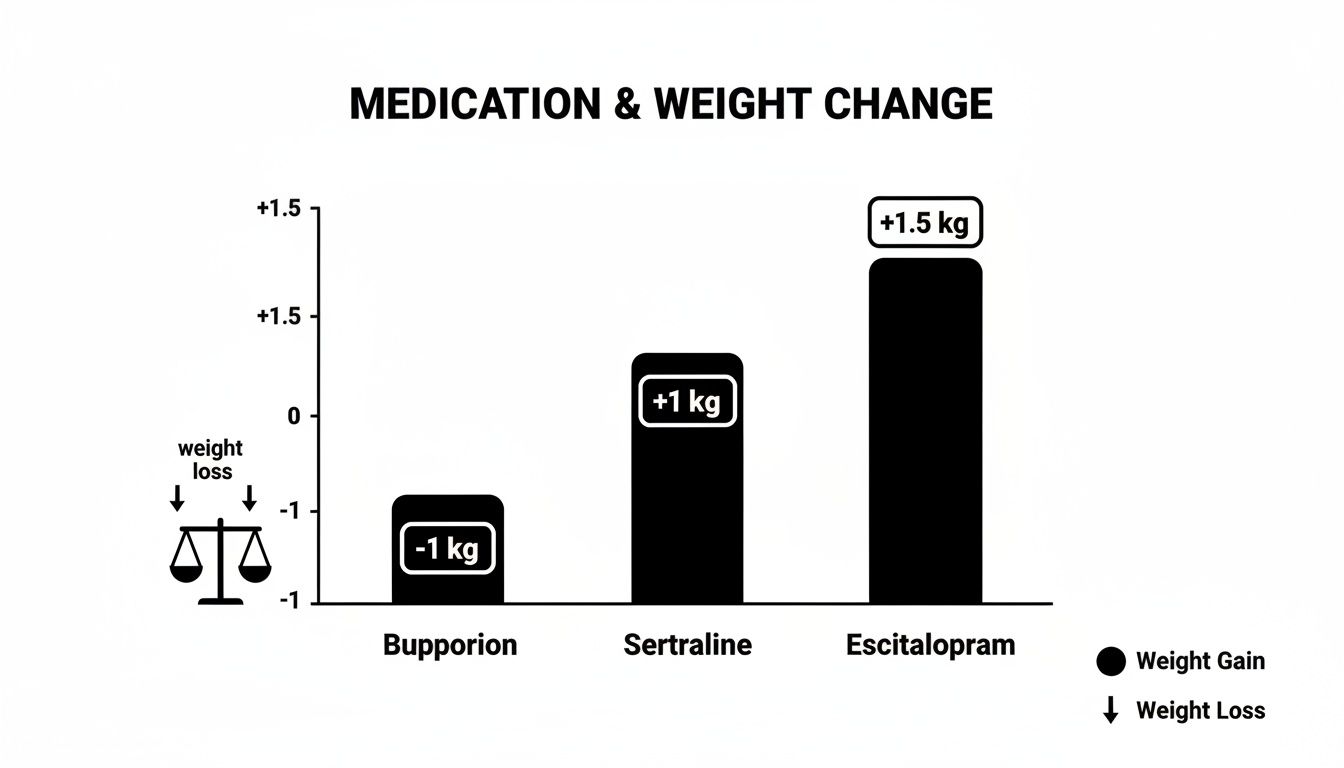
As you can see, bupropion is the only one in this group linked to an average weight loss, creating a supportive backdrop for your efforts. If you're looking for structured approaches to build on this, exploring different effective weight loss plans can offer some great ideas.
Find Joy in Movement and Prioritize Rest
That welcome boost in energy and motivation? It’s one of the best side effects of bupropion. Now is the time to channel that feeling into movement that you actually enjoy.
Reframe "Exercise": Forget the treadmill if you hate it. Seriously. Think about what sounds fun—dancing in your living room, hiking a beautiful trail, or joining a local pickleball league.
Start Small: A daily 15-minute walk can do wonders for your mood and metabolism. Consistency will always beat intensity, especially when you're just starting out.
Just as important as moving your body is letting it rest. Good sleep is non-negotiable for keeping your hormones in check, especially the ones that control your appetite and stress levels. Aim for 7-9 hours of solid sleep each night. This helps your mind and body reset, making it so much easier to manage cravings and make clear-headed choices the next day.
Tracking your journey is about so much more than a number on the scale. Celebrate the real wins: having more energy for your family, feeling more confident in your favorite jeans, or just waking up feeling clear and ready for the day. Those are the victories that truly matter.
By focusing on nourishing food, joyful movement, and deep rest, you create a powerful partnership with your medication. For more ideas on eating well without feeling deprived, take a look at our guide to healthy snacks for weight loss. These strategies aren't just about managing weight; they're about building a foundation to thrive in every part of your life.
Take Control of Your Health with Telehealth
Understanding how a medication like bupropion can affect your body is a huge first step. You've done the research, and now you have a much clearer picture. But knowledge is only powerful when you use it. This is your moment to move forward with confidence and hope.
Let this sink in: you don't have to choose between your mental well-being and your physical health goals. It’s absolutely possible to pursue both. The key is finding a healthcare professional who really gets it—someone who can help you build a plan that works for your life.
A Modern Path to Personalized Care
This is exactly where telehealth comes in. Let’s be real, finding the time and energy for a traditional doctor’s visit can feel like a huge hurdle. Between the drive, the waiting room, and a packed schedule, it’s easy to put it off.
Telehealth changes the game entirely. It lets you connect with a board-certified physician from the comfort of your own home, on your own terms. This isn't about getting a quick, generic prescription. It's about having a real conversation with an expert who is there to listen. Your concerns about bupropion side effects like weight changes are completely valid, and they deserve a thorough, unhurried discussion.
Your health journey is personal. Having a dedicated medical partner who supports you every step of the way gives you the confidence to truly thrive. Telehealth makes that level of support more accessible than ever before.
Imagine what it feels like to have an expert in your corner, ready to help you:
Dig into Your Story: They'll take the time to review your health history and listen to your specific concerns, especially around past experiences with medications and weight.
Design a Plan for You: Together, you can figure out if bupropion is the best fit or explore other avenues that feel more aligned with your goals.
Stay Connected: Checking in is simple. You can easily connect with your provider to talk about how you’re feeling, manage any side effects, and fine-tune your plan as you go.
This kind of partnership puts you right where you should be: in charge of your own health. You’re not just a passive patient; you’re an active participant.
If you’re ready to feel that sense of empowerment, you can achieve your goals with weight loss telemedicine. Taking that next step is one of the best things you can do for yourself.
Frequently Asked Questions
It’s completely normal to have questions as you start any new treatment. In fact, it's a great sign that you're an active partner in your own health journey. Let’s walk through some of the most common questions people have about bupropion and its effect on weight, answered simply and clearly.
How Much Weight Can I Realistically Expect to Lose on Bupropion?
Many people find that bupropion comes with a welcome bonus: modest weight loss. While its main job is to help with your mental health, its unique properties can give you a helpful nudge with your physical health goals, too.
So, what do the numbers say? Clinical studies have shown that it's common for people to lose an average of 4 to 11 pounds over a few months. One fascinating long-term study followed users for two years and found they lost an average of 2.4 pounds, which is especially significant when you compare it to other antidepressants that often cause weight gain.
Think of any weight loss not as the primary goal, but as a supportive side effect. The real win is your overall well-being. Bupropion’s unique profile simply makes it possible to work on both your mental and physical health at the same time.
Of course, your personal results will hinge on your own metabolism, lifestyle, and how your body responds. The best approach is to focus on feeling better mentally and celebrate any physical changes as a wonderful side benefit.
What Should I Do If I Start Gaining Weight on Bupropion?
Seeing the scale go up when you were hoping for the opposite can feel confusing and frustrating. Take a deep breath—it's important not to panic. While it's not the typical response, weight gain on bupropion does happen for a small number of people, and there's usually a good reason behind it.
First, let's look at the bigger picture. Sometimes, as your mood lifts, an appetite that was suppressed by depression can return. This can lead to a natural—and often healthy—return to your body’s set point. It's also a good idea to ask yourself:
Have my eating habits changed lately?
Am I moving my body less than I was before?
Are there any new sources of stress in my life?
The single most important thing you can do is talk to your healthcare provider. They're your partner in this. Together, you can figure out what's going on, review your habits, and decide on the next best step, whether that's adjusting your dose or trying a different strategy.
Can Bupropion Be Prescribed Only for Weight Loss?
This is an excellent and important question. Bupropion is officially FDA-approved to treat depression and seasonal affective disorder, not as a standalone weight-loss drug. When a doctor prescribes it just for weight management, it’s considered an "off-label" use.
However, its impact on appetite and metabolism is so well-known that a combination drug—one that pairs bupropion with another medication called naltrexone—is FDA-approved specifically for chronic weight management. This really shows how bupropion fits into the larger picture of metabolic health.
If losing weight is your main goal, it’s vital to have an open and honest conversation with a doctor. They can give you a full health evaluation and help you find the safest and most effective treatment for you. To get a better sense of what that process looks like, our article on the cost of an online doctor visit can give you some helpful insights. Your health is a team effort, and it all starts with a good conversation.
Ready to take the next step in your wellness journey with a team that listens? At 10 Rx Home, we connect you with board-certified physicians who create personalized plans that fit your life. Start your free quiz today at https://take10rx.com and discover a supportive path to feeling your best.