GLP-1’s at low prices with free shipping. Get Started


" transform="translate(53.5 27.5)" width="0px"/><g d="M 164.013 0 C 206.437 0 240.828 33.597 240.828 75.04 C 240.828 116.484 206.437 150.08 164.013 150.08 C 121.589 150.08 87.198 116.484 87.198 75.04 C 87.198 33.597 121.589 0 164.013 0 Z M 164.52 30.422 C 140.298 30.422 120.662 50.398 120.662 75.04 C 120.662 99.682 140.298 119.659 164.52 119.659 C 188.742 119.659 208.377 99.682 208.377 75.04 C 208.377 50.398 188.742 30.422 164.52 30.422 Z M 49.689 117.004 L 49.724 117.026 C 50.148 121.056 54.397 124.222 59.576 124.222 C 60.05 124.222 60.516 124.195 60.973 124.143 L 61.097 124.222 L 83.406 120.926 C 83.406 120.926 73.956 127.316 67.688 131.067 C 60.617 135.299 49.689 141.207 49.689 141.207 C 49.689 141.207 39.295 147.961 27.633 149.827 C 27.576 149.836 27.52 149.844 27.463 149.853 C 26.591 150.023 25.702 150.098 24.814 150.077 C 24.739 150.079 24.665 150.08 24.591 150.08 L 24.577 150.069 C 19.359 149.854 15.211 146.423 15.211 142.221 L 15.211 29.154 C 15.211 28.755 15.022 28.379 14.702 28.139 C 14.383 27.9 13.968 27.826 13.585 27.939 L 0 29.915 L 35.746 8.366 L 49.689 0 Z M 260.136 98.048 C 260.234 98.048 260.33 98.052 260.427 98.058 L 287.219 98.517 L 287.219 98.612 C 295.722 98.712 302.586 105.638 302.586 114.166 C 302.586 121.454 297.574 127.571 290.811 129.259 L 304.648 146.964 L 304.644 146.964 C 304.889 147.252 305.023 147.617 305.023 147.995 C 305.023 148.839 304.365 149.536 303.523 149.585 L 303.523 149.588 L 291.341 149.588 L 291.341 149.582 C 289.373 149.504 287.613 148.618 286.384 147.245 L 286.374 147.245 L 286.328 147.182 C 286.064 146.88 285.827 146.557 285.619 146.215 L 273.443 129.628 L 273.463 129.625 C 272.779 128.705 272.41 127.589 272.412 126.442 C 272.412 123.684 274.502 121.414 277.187 121.13 L 277.191 121.101 L 281.783 120.351 L 281.783 120.348 C 285.214 120.264 287.968 117.864 287.968 114.916 C 287.968 111.968 285.214 109.568 281.783 109.483 L 281.783 109.481 L 270.538 109.481 L 270.538 146.777 L 270.536 146.777 C 270.538 146.808 270.538 146.839 270.538 146.871 C 270.538 148.34 269.371 149.537 267.913 149.586 L 267.913 149.588 L 258.168 149.588 L 258.168 149.573 C 256.799 149.433 255.731 148.277 255.731 146.871 C 255.731 146.839 255.733 146.808 255.733 146.777 L 255.731 146.777 L 255.731 102.359 L 255.733 102.359 C 255.781 100.064 257.585 98.201 259.856 98.058 L 259.856 98.048 L 259.998 98.051 C 260.044 98.049 260.09 98.048 260.136 98.048 Z M 324.515 110.615 C 326.064 110.719 327.396 111.676 328.101 113.049 L 332.884 119.45 L 338.302 112.809 C 339.033 111.565 340.298 110.713 341.756 110.615 L 341.756 110.605 L 352.44 110.605 C 353.577 110.605 354.5 111.528 354.5 112.667 C 354.5 113.003 354.42 113.321 354.276 113.601 L 354.314 113.604 L 354.176 113.776 C 354.1 113.896 354.011 114.008 353.912 114.109 L 342.693 128.222 C 342.693 128.222 342.413 128.627 342.413 128.972 C 342.413 129.318 342.693 129.722 342.693 129.722 L 355.241 146.116 C 355.722 146.507 356 147.094 356 147.714 C 356 148.852 355.077 149.775 353.938 149.775 C 353.876 149.775 353.814 149.772 353.751 149.766 L 353.751 149.775 L 341.756 149.775 L 341.756 149.749 C 340.252 149.58 338.973 148.605 338.31 147.237 L 333.228 140.405 C 333.228 140.405 333.042 140.217 332.76 140.217 C 332.48 140.217 332.291 140.405 332.291 140.405 L 332.289 140.402 L 327.078 147.492 C 326.891 147.825 326.664 148.134 326.401 148.411 L 326.295 148.557 L 326.263 148.553 C 325.588 149.207 324.723 149.641 323.764 149.749 L 323.764 149.775 L 312.331 149.775 C 311.194 149.775 310.271 148.852 310.271 147.714 C 310.271 147.02 310.613 146.407 311.138 146.033 L 323.015 130.659 C 323.015 130.659 323.295 130.255 323.295 129.909 C 323.295 129.564 323.015 129.16 323.015 129.16 L 311.458 114.146 C 311.058 113.758 310.833 113.224 310.833 112.667 C 310.833 111.528 311.756 110.605 312.894 110.605 L 324.515 110.605 Z" fill="transparent" height="150.08043079668755px" id="HpkDSJwpk" transform="translate(0 1)" width="356.0000118682049px"><path d="M 76.815 0 C 119.239 0 153.63 33.597 153.63 75.04 C 153.63 116.484 119.239 150.08 76.815 150.08 C 34.391 150.08 0 116.484 0 75.04 C 0 33.597 34.391 0 76.815 0 Z M 77.322 30.422 C 53.1 30.422 33.464 50.398 33.464 75.04 C 33.464 99.682 53.1 119.659 77.322 119.659 C 101.544 119.659 121.179 99.682 121.179 75.04 C 121.179 50.398 101.544 30.422 77.322 30.422 Z" fill="rgb(8, 9, 35)" height="150.08043079668755px" id="kvrqFybmK" transform="translate(87.198 0)" width="153.62981889920286px"/><path d="M 49.689 117.004 L 49.724 117.026 C 50.148 121.056 54.397 124.222 59.576 124.222 C 60.05 124.222 60.516 124.195 60.973 124.143 L 61.097 124.222 L 83.406 120.926 C 83.406 120.926 73.956 127.316 67.688 131.067 C 60.617 135.299 49.689 141.207 49.689 141.207 C 49.689 141.207 39.295 147.961 27.633 149.827 C 27.576 149.836 27.52 149.844 27.463 149.853 C 26.591 150.023 25.702 150.098 24.814 150.077 C 24.739 150.079 24.665 150.08 24.591 150.08 L 24.577 150.069 C 19.359 149.854 15.211 146.423 15.211 142.221 L 15.211 29.154 C 15.211 28.755 15.022 28.379 14.702 28.139 C 14.383 27.9 13.968 27.826 13.585 27.939 L 0 29.915 L 35.746 8.366 L 49.689 0 Z M 260.136 98.048 C 260.234 98.048 260.33 98.052 260.427 98.058 L 287.219 98.517 L 287.219 98.612 C 295.722 98.712 302.586 105.638 302.586 114.166 C 302.586 121.454 297.574 127.571 290.811 129.259 L 304.648 146.964 L 304.644 146.964 C 304.889 147.252 305.023 147.617 305.023 147.995 C 305.023 148.839 304.365 149.536 303.523 149.585 L 303.523 149.588 L 291.341 149.588 L 291.341 149.582 C 289.373 149.504 287.613 148.618 286.384 147.245 L 286.374 147.245 L 286.328 147.182 C 286.064 146.88 285.827 146.557 285.619 146.215 L 273.443 129.628 L 273.463 129.625 C 272.779 128.705 272.41 127.589 272.412 126.442 C 272.412 123.684 274.502 121.414 277.187 121.13 L 277.191 121.101 L 281.783 120.351 L 281.783 120.348 C 285.214 120.264 287.968 117.864 287.968 114.916 C 287.968 111.968 285.214 109.568 281.783 109.483 L 281.783 109.481 L 270.538 109.481 L 270.538 146.777 L 270.536 146.777 C 270.538 146.808 270.538 146.839 270.538 146.871 C 270.538 148.34 269.371 149.537 267.913 149.586 L 267.913 149.588 L 258.168 149.588 L 258.168 149.573 C 256.799 149.433 255.731 148.277 255.731 146.871 C 255.731 146.839 255.733 146.808 255.733 146.777 L 255.731 146.777 L 255.731 102.359 L 255.733 102.359 C 255.781 100.064 257.585 98.201 259.856 98.058 L 259.856 98.048 L 259.998 98.051 C 260.044 98.049 260.09 98.048 260.136 98.048 Z M 324.515 110.615 C 326.064 110.719 327.396 111.676 328.101 113.049 L 332.884 119.45 L 338.302 112.809 C 339.033 111.565 340.298 110.713 341.756 110.615 L 341.756 110.605 L 352.44 110.605 C 353.577 110.605 354.5 111.528 354.5 112.667 C 354.5 113.003 354.42 113.321 354.276 113.601 L 354.314 113.604 L 354.176 113.776 C 354.1 113.896 354.011 114.008 353.912 114.109 L 342.693 128.222 C 342.693 128.222 342.413 128.627 342.413 128.972 C 342.413 129.318 342.693 129.722 342.693 129.722 L 355.241 146.116 C 355.722 146.507 356 147.094 356 147.714 C 356 148.852 355.077 149.775 353.938 149.775 C 353.876 149.775 353.814 149.772 353.751 149.766 L 353.751 149.775 L 341.756 149.775 L 341.756 149.749 C 340.252 149.58 338.973 148.605 338.31 147.237 L 333.228 140.405 C 333.228 140.405 333.042 140.217 332.76 140.217 C 332.48 140.217 332.291 140.405 332.291 140.405 L 332.289 140.402 L 327.078 147.492 C 326.891 147.825 326.664 148.134 326.401 148.411 L 326.295 148.557 L 326.263 148.553 C 325.588 149.207 324.723 149.641 323.764 149.749 L 323.764 149.775 L 312.331 149.775 C 311.194 149.775 310.271 148.852 310.271 147.714 C 310.271 147.02 310.613 146.407 311.138 146.033 L 323.015 130.659 C 323.015 130.659 323.295 130.255 323.295 129.909 C 323.295 129.564 323.015 129.16 323.015 129.16 L 311.458 114.146 C 311.058 113.758 310.833 113.224 310.833 112.667 C 310.833 111.528 311.756 110.605 312.894 110.605 L 324.515 110.605 Z" fill="rgb(8, 9, 35)" height="150.08043079668755px" id="kdERGws7a" width="356.0000118682049px"/></g></svg>)
Phentermine and Anxiety: Your Guide to Management
Phentermine can be an effective tool for weight loss, but because it stimulates the central nervous system, some people may experience increased anxiety, restlessness, or a jittery feeling. Understanding how your body responds—and working closely with a physician to adjust dosage, timing, or alternatives—can help you stay on track while protecting your mental well-being.
Concerned about phentermine and anxiety? Get clear facts on the link, learn symptom management, and confidently discuss with your doctor.

Phentermine and Anxiety: Your Guide to Management
Deciding to start your weight loss journey with phentermine is a huge step, and it's completely normal to wonder about the side effects. Let's get right to it: yes, for some people, phentermine can cause anxiety, a feeling of being jittery, or just perpetually "on edge."
This happens because of how the medication works. Phentermine is designed to give your central nervous system a nudge, boosting your energy and telling your brain you're full. But that same system also manages your body's "fight or flight" response. For some of us, that nudge can feel more like a shove, unintentionally kicking your body's stress response into a higher gear.
Phentermine and Anxiety At a Glance
This table provides a quick summary of the relationship between phentermine and anxiety, helping you grasp the key points before we dive deeper.
Key Aspect | Simple Explanation | What This Means For You |
|---|---|---|
Mechanism | Phentermine is a stimulant that boosts energy and suppresses appetite. | This stimulation can sometimes spill over, triggering feelings of nervousness or a racing heart. |
Individual Sensitivity | Everyone's body chemistry is unique. | A dose that works perfectly for one person might feel too intense for another. It's not a weakness, just a different reaction. |
Dose & Timing | Higher doses and taking it late in the day can increase anxiety risk. | Starting low and finding the right dose and time with your doctor is key to minimizing side effects. |
Awareness | Knowing this is a possible side effect is half the battle. | You can recognize the feeling for what it is—a side effect—and not a random bout of anxiety, making it easier to manage. |
Understanding these basics puts you in the driver's seat of your own treatment.
Your Body on Phentermine: A Closer Look
Think of phentermine as turning up the master volume on your body's metabolism and energy. This is fantastic for curbing hunger and helping you stick to your goals. The medication is what’s known as a sympathomimetic amine—a technical term for a compound that essentially mimics the effects of adrenaline.
But here's the thing: that master volume knob also controls alertness and stress. If you're sensitive to stimulants (like caffeine), you might find that phentermine turns the volume up a little too high, leading to that anxious, wired feeling. It’s simply a matter of your unique biology.
So, why is knowing this so important? Because it transforms a potentially scary side effect into a simple signal from your body. Instead of feeling alarmed, you can see it for what it is and work with your doctor to fine-tune your approach.
Here’s what you need to keep in mind:
It’s a stimulant, plain and simple. Phentermine is structurally similar to an amphetamine, which is why it's so effective at giving your system a jolt.
Your sensitivity matters. We all react differently. What feels like a gentle boost to one person might feel like an overwhelming rush to another.
The dose makes the difference. Higher doses often come with a higher risk of side effects. This is precisely why starting with a lower dose under a doctor's care is the gold standard.
Research really drives this point home. One clinical trial found that among patients on a high-dose phentermine plan, 4.7% had to stop treatment due to depression, compared to just 1.2% in the group taking a placebo.
Just knowing that these feelings can happen is the first step toward managing them. It allows you to partner with your doctor to make small but meaningful adjustments, like changing the timing or even the form of your medication. For example, learning about the differences between a phentermine tablet vs capsule can show you how each one releases into your system differently.
Your path to a healthier you should feel empowering, not overwhelming. Understanding your body's signals is a critical part of making that happen.
How Phentermine Interacts With Your Nervous System
To really get why phentermine might stir up feelings of anxiety, we have to look at what it’s actually doing inside your body. Picture your nervous system having a built-in “accelerator pedal,” controlled by powerful chemical messengers like norepinephrine. This system is in charge of your energy, focus, and even your hunger cues.
Phentermine works by gently pressing down on that accelerator. It prompts your brain to release more of these stimulating hormones, which is fantastic for curbing your appetite and giving you a much-needed energy boost. That little push can make all the difference in sticking to your goals.
This is a powerful mechanism, and as the visual below shows, it creates a direct line from the medication to your nervous system, which can sometimes influence your emotional state.
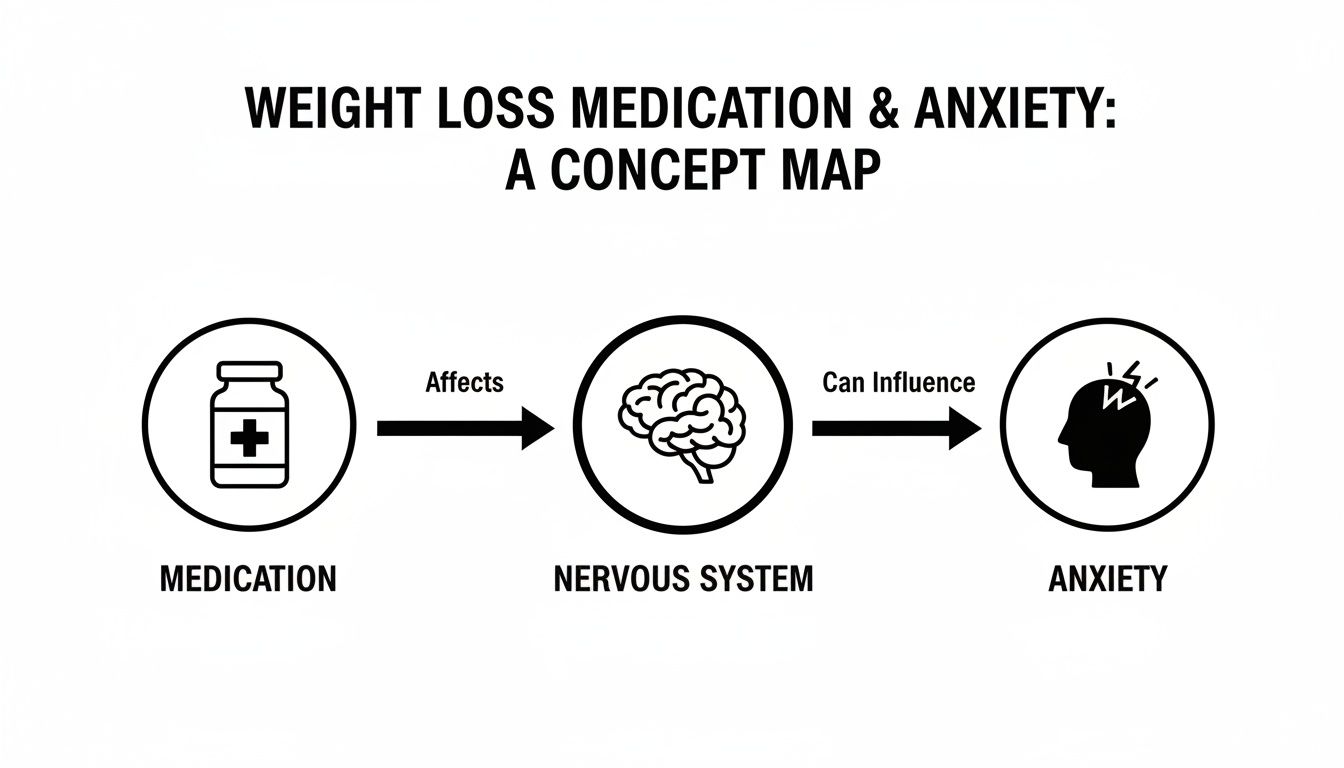
Think of it as a domino effect. The medication tips the first domino (your nervous system), which can then lead to others, including changes in how you feel.
The Fight or Flight Connection
Now, here's where it gets interesting. That same accelerator pedal also fires up your body's "fight or flight" response. This is your primal survival instinct, hardwired to get you ready for immediate action—think a racing heart, shallow breathing, and a feeling of being on high alert.
For some of us, especially those who are already a bit prone to anxiety, phentermine’s nudge on the accelerator can feel more like flooring it. The physical effects of the medication—that revved-up feeling—are almost identical to the physical symptoms of anxiety. Your body is just responding to the stimulant, but your mind can interpret those signals as panic or worry, creating a confusing and uncomfortable loop.
This isn't a personal flaw or a sign you're not strong enough. It's simply biochemistry in action. Your unique body chemistry is the lead actor in this play, determining how you'll respond. It’s precisely why working closely with a doctor is absolutely essential for a safe and positive experience.
When your system is in this stimulated state, it can sometimes lead to nervous system dysregulation. Learning to tell the difference between feeling energized and feeling truly anxious is a skill that puts you back in the driver's seat.
Why Your Unique Body Chemistry Matters
Everyone walks a different path, and that’s especially true when it comes to medication. How you react to phentermine is deeply personal and depends on a few key things:
A History of Anxiety: If you already live with an anxiety disorder, you might be more sensitive to the "on alert" feeling that phentermine can produce. It’s so important that your doctor knows your full mental health picture.
Stimulant Sensitivity: Are you the person who gets jittery from a single cup of coffee? If that sounds familiar, you’ll likely feel the stimulating side of phentermine more acutely.
Dose and Timing: It's a simple truth: a higher dose can mean more intense side effects. Taking your dose too late in the day can also disrupt your sleep, and we all know that a bad night’s sleep is a fast track to feeling anxious and overwhelmed.
This is exactly why a "one-size-fits-all" mentality just doesn't work. A great medical provider will always start you on a low dose to see how your body reacts. It’s all about finding that sweet spot where you get the amazing appetite suppression without crossing over into feeling anxious.
While we're talking about mood, it's good to have a complete view. You can learn more by reading our guide on if phentermine can cause depression.
Ultimately, this is your journey. Finding the right balance is a team effort between you and your doctor, where open and honest conversation leads to a plan that supports your weight loss and your well-being.
Recognizing the Difference Between Jatters and Anxiety
When you first start taking phentermine, you're going to feel a change. Many people describe it as being more "revved up" or having a new source of energy. But is that feeling a helpful boost, or is it tipping into something more uncomfortable?
Learning to tell the difference between the normal, expected jitters and true, full-blown anxiety is the most important skill you can develop on this journey. It’s what keeps you in the driver's seat of your own well-being.
Think of it this way: one feeling has you lacing up your sneakers for a walk, ready to take on the day. The other has you staring at the ceiling at 3 a.m., your mind racing. That's the difference we need to unpack.

Let's get clear on what your body and mind might be telling you, so you can respond with confidence.
Physical Signals: What Is Your Body Telling You?
Phentermine is a stimulant—that’s how it works. So, a bump in physical energy is definitely part of the package. The real question is about the quality of that energy. It's time to become a bit of a detective and tune into the specifics.
Typical jitters might feel like:
A noticeable but manageable buzz of energy.
A faster heart rate, especially right after your dose or when you're active.
Feeling a little more talkative, like you've had one too many espressos.
A restlessness you can actually use, channeling it into cleaning the house or getting your steps in.
Anxiety-related physical symptoms, on the other hand, feel very different:
A heart that’s constantly racing, even when you’re sitting still.
A tight feeling in your chest or a frustrating shortness of breath.
Shaking or trembling that feels completely out of your control.
Sudden sweating, lightheadedness, or random chills that have no obvious cause.
Here’s a good way to frame it: jitters are like the low hum of an engine working properly. Anxiety is the loud, insistent alarm bell telling you something is off.
Emotional Cues: How Are You Feeling Mentally?
This is where paying attention becomes absolutely crucial. The emotional flavor of your experience is the clearest signal of whether you're dealing with a simple side effect or something that needs more attention.
Feeling a bit irritable or "on edge" as your body gets used to the medication is pretty common. But if that feeling starts to take over and cloud your entire day, it’s a sign to dig a little deeper.
While serious mood changes are rare (affecting less than 1% of users according to sources like GoodRx), they are significant. On the other hand, anecdotal reports suggest that a much larger group—maybe 20-30% of people—experience some level of jitteriness or irritability. You can always discover more insights on phentermine's common side effects to get a fuller picture of what others experience.
Let's compare these two emotional states.
Self-Awareness Check: A productive energy boost should make you feel capable and motivated. Anxiety does the opposite—it makes you feel threatened and overwhelmed, often for no clear reason.
Use this quick checklist to see which column sounds more like your reality.
Feeling Productively Energized | Feeling Overwhelmed by Anxiety |
|---|---|
Focus: You can direct your energy toward tasks and goals. | Distraction: Your mind races, making it impossible to concentrate. |
Mood: You feel optimistic, driven, and in control. | Dread: You feel a constant sense of worry or impending doom. |
Thoughts: Your thoughts are clear and focused on what's next. | Worry Loops: You get stuck on negative thoughts you can't shake off. |
Social: You feel more outgoing and want to connect with others. | Withdrawal: You feel a strong urge to pull back and be alone. |
Checking in with yourself isn't about becoming paranoid over every little feeling. It’s about being an active partner in your own health journey. When you can spot these signs, you’ll know whether it's just a small bump in the road or a clear signal that it’s time to call your doctor for support and guidance.
Practical Strategies for Managing Anxiety on Phentermine
Discovering that phentermine is making you feel anxious can be disheartening, but please don't feel like you have to choose between your mental well-being and your weight loss goals. You are in the driver's seat. With a few smart adjustments, you can absolutely manage these feelings and find a comfortable, successful path forward.

These aren't drastic life overhauls. Instead, think of them as simple, powerful tweaks to your daily rhythm that help your mind and body work with the medication, not against it. Let's dive into some real-world strategies you can start using today.
Adjust Your Dose Timing and Routine
This is often the simplest yet most powerful change you can make. Since phentermine is a stimulant designed to give you energy, when you take it matters immensely. Taking it too late in the day is a common culprit for disrupting sleep, which is a fast track to feeling anxious and on edge.
Here’s how to get your timing right:
Take It Early: The best practice is to take your dose first thing in the morning, around 1-2 hours after you've had breakfast. This ensures the medication’s peak effects happen while you’re active, giving it plenty of time to taper off before bedtime.
Never Double Up: If you miss a dose, just skip it. Taking an extra pill later to "catch up" is a recipe for a sleepless night and a spike in anxiety. It's not worth it.
Create a Consistent Schedule: Your body loves predictability. Taking your medication at the same time every single day helps stabilize your energy and mood, creating a reliable internal rhythm.
For many people, especially those sensitive to stimulants, this small shift can be a total game-changer. A well-rested mind is a resilient mind.
Mind Your Lifestyle Habits
Beyond timing, your daily habits have a huge say in how your body handles phentermine. Think of it like this: phentermine turns up the volume on your central nervous system. Your job is to fine-tune the other controls—like diet and hydration—to keep everything in beautiful harmony.
Below is a practical guide comparing high-anxiety habits with their low-anxiety alternatives to help you make immediate, positive changes.
Lifestyle Adjustments to Minimize Phentermine-Related Anxiety
Area of Focus | Habit That May Increase Anxiety | Calming Alternative Strategy |
|---|---|---|
Morning Routine | Starting the day with a large coffee on top of your phentermine dose. | Switch to decaf, herbal tea, or simply have your coffee several hours after your dose to avoid a stimulant overload. |
Nutrition | Skipping meals or eating sugary, processed foods for a quick energy spike. | Prioritize balanced meals with protein, healthy fats, and complex carbs to provide steady, stable energy and prevent blood sugar crashes. |
Hydration | Forgetting to drink water, leading to dehydration. | Keep a water bottle with you at all times. Proper hydration is critical for neurological function and can help mitigate side effects like headaches and jitters. |
Making these conscious swaps creates a solid foundation of calm, making you far less vulnerable to feeling overstimulated.
Incorporate Calming Activities
When you feel that first wave of restlessness or a racing mind, having a go-to calming activity can work wonders. These aren't just distractions; they are physiological tools that activate your body’s natural relaxation response.
Try weaving one of these simple practices into your day:
Mindful Breathing: Wherever you are, just stop. Take five slow, deep breaths. A great pattern is to inhale for a count of four, hold for four, and exhale for a count of six. This can instantly slow a hammering heart.
Gentle Movement: A brisk 10-minute walk outside can be a fantastic way to burn off that excess nervous energy. The combination of movement and fresh air is a powerful antidote to feeling "stuck" in anxiety.
Digital Detox: Feeling overwhelmed? Put your phone away for 30 minutes. The endless scroll and constant pings from notifications add a huge layer of stimulation you just don't need.
Sometimes the most effective strategies are the simplest. If these feelings are persistent or feel too big to handle on your own, remember that professional counselling services can provide incredible support and teach you more advanced coping skills. Asking for help is a sign of strength and one of the most proactive steps you can take on your wellness journey.
Tell Your Doctor Everything—Seriously, Everything
Think of your body as a finely tuned orchestra. Every single thing you take, from a prescription medication to a simple daily vitamin, is an instrument playing its part. Before you introduce a powerful conductor like phentermine, your doctor needs the full sheet music to understand what's already playing.
This means creating a complete, no-holds-barred list of every single substance you take. We’re talking prescriptions, over-the-counter drugs, vitamins, and even herbal supplements. It might feel like a lot to track, but this is the single most important safety check you can perform before starting your treatment.
This level of honesty isn't about being judged. It's about protecting you. It allows your doctor to spot a potential bad reaction before it ever has a chance to happen, ensuring your path to weight loss is both safe and successful.
Why That "Harmless" Supplement Matters More Than You Think
It's so easy to dismiss the little things. That vitamin C packet you take when you feel a cold coming on, the melatonin that helps you drift off to sleep, or the occasional allergy pill. But when you’re dealing with a medication as potent as phentermine, there’s no such thing as an insignificant substance.
Many common supplements can either crank up phentermine’s effects to an uncomfortable level or get in its way, creating a risk for heightened side effects like anxiety or even more serious issues.
For example, St. John's Wort, an herbal remedy many people use for mood support, works on some of the same brain pathways as phentermine. Taking them together is like having two people trying to drive the same car—it can easily overload your system. The same goes for many over-the-counter decongestants, which are often stimulants themselves.
So, when you prepare for your appointment, make sure your list includes:
All Prescription Meds: This is crucial, especially for anything related to mental health, blood pressure, or thyroid conditions.
Over-the-Counter (OTC) Drugs: Don't forget pain relievers, cold and flu medicine, allergy pills, and sleep aids.
Vitamins and Minerals: Yes, even your daily multivitamin or that extra Vitamin D supplement.
Herbal and Natural Supplements: This includes everything from ashwagandha and green tea extract to CBD and turmeric.
Being transparent is your superpower here. It gives your doctor the complete picture they need to keep you safe.
The Real-Life Dangers of Holding Back
The link between phentermine and anxiety can become particularly hazardous when other medications are thrown into the mix. We’ve seen this in medical reports over the years. Combining phentermine with drugs that affect brain chemistry, like antidepressants, can sometimes trigger severe psychiatric symptoms. In one documented case, a 61-year-old woman who was already taking several medications for depression and anxiety developed paranoid delusions, severe anxiety, and insomnia just days after starting a 15mg dose of phentermine.
Your health history is as unique as your fingerprint. A full medication review is the only way a doctor can truly understand how phentermine will interact with your body and sidestep these kinds of dangerous reactions.
When your doctor has all the information, they can make the best possible decisions for you. They might adjust the dosage, recommend pausing a specific supplement, or even decide a different weight loss medication would be a better and safer fit. This is also why it’s vital to understand how different weight loss drugs can interact, which is something we cover in our guide on what medicines to avoid with Wegovy.
Ultimately, your relationship with your doctor is a partnership. Being completely open and honest about what you’re taking is the most powerful step you can take to protect your own well-being on this journey.
Of course. Here is the rewritten section with a more human, natural, and expert tone.
How to Talk to Your Doctor About Anxiety Symptoms
It can be really unnerving to feel your anxiety spike while you’re taking phentermine. The good news is, you don’t have to just white-knuckle your way through it. The single most important thing you can do is have an open, honest conversation with the doctor who prescribed it.
Talking about these symptoms isn't admitting defeat—it's taking control. Think of it as a crucial check-in to make sure your treatment plan is working for you, not against you. This is how you and your doctor fine-tune the process, ensuring your mental well-being is just as prioritized as your weight loss goals.
Come to the Conversation Prepared
Walking into an appointment with a clear idea of what you want to say can make all the difference, especially in a telemedicine visit where every minute counts. A little prep work beforehand helps you organize your thoughts so you can give your doctor the full picture.
You're the expert on what you're feeling. Your doctor has the medical expertise. The goal is to bring those two things together.
Before your call, try to get a handle on three key pieces of information:
What the symptoms feel like.
How often they’re happening.
What seems to trigger them.
This simple framework helps turn a vague sense of "feeling bad" into concrete details your doctor can actually work with.
How to Describe Your Symptoms with Clarity
Instead of just saying, "The medicine is making me anxious," try to paint a picture of your experience. The more specific you are, the better your doctor can understand if this is a mild case of the jitters or something more serious.
Try using descriptions like these:
"My heart starts pounding about an hour after I take my pill, even if I'm just sitting still."
"I'm really struggling to get to sleep. My mind just races with worries and I feel totally wired."
"A few times now, I've suddenly gotten this scary feeling of a tight chest and shortness of breath out of nowhere."
"I feel so irritable and on edge all the time. It’s just not who I normally am."
Giving these kinds of real-life examples is incredibly helpful. If you’re new to virtual care and want to feel more comfortable with the process, you can learn more about what to expect from an online doctor prescription consultation ahead of time.
Track Your Experience for a More Productive Talk
One of the best ways to prepare is to keep a simple symptom log for a few days before your appointment. You don’t need a fancy app or journal—the notes app on your phone or a small notebook is perfect.
When you track your symptoms, you're turning subjective feelings into objective data. This is what gives your doctor the clear insights needed to make smart adjustments, whether that means changing your dose, shifting the timing, or adding other supportive strategies.
Here’s a simple way you could track everything:
Date & Time | Symptom | Intensity (1-10) | What Was I Doing? (Triggers) |
|---|---|---|---|
Mon, 8 AM | Took phentermine | N/A | Had with a light breakfast. |
Mon, 10 AM | Jittery, racing heart | 7/10 | At my desk, right after my morning coffee. |
Tue, 3 PM | Sudden wave of dread | 6/10 | Facing a stressful deadline at work. |
Wed, 11 PM | Couldn't shut my brain off | 8/10 | Lying in bed, felt "wired" and restless. |
Bringing a log like this to your appointment is a game-changer. It shows your doctor exactly what your days look like and allows you to work together as a team to find the right path forward, making your journey both successful and sustainable.
Your Questions About Phentermine and Anxiety, Answered
Starting a new medication like phentermine can bring up a lot of questions, especially when you hear it might be linked to anxiety. Getting clear, straightforward answers is the best way to feel confident and in control of your health journey. Let's walk through some of the most common concerns we hear from patients just like you.
Will the Anxiety from Phentermine Go Away on Its Own?
For many people, that initial jittery or "wired" feeling does fade. It typically happens within the first week or two as your body gets used to the medication. Think of it like your internal engine adjusting to a new, higher-octane fuel—it just takes a moment to find its rhythm.
But this is important: you should never feel like you have to just tough it out. If the anxiety is sticking around, feels overwhelming, or is getting in the way of your daily life, that's your cue to take action. Reaching out to your doctor isn't a sign of weakness; it’s a sign that you’re being a smart and proactive partner in your own healthcare. A simple tweak to your dose or timing is often all it takes to smooth things out.
Can I Take My Anxiety Medication with Phentermine?
This is a critical question, and the only person who can answer it safely is your own prescribing doctor. Combining phentermine with any other medication, especially those for anxiety or depression, can be tricky and even risky.
It's absolutely vital that you give your doctor a complete and honest list of everything you take—every prescription, every over-the-counter pill, and every supplement. They need the full picture to check for potential interactions and make sure your entire treatment plan is working together safely and effectively for you.
Your safety always, always comes first. Never start, stop, or change how you take any medication without talking to your healthcare provider. An open and honest conversation is your most powerful tool for preventing harmful drug interactions.
Are There Alternatives If the Phentermine Anxiety Is Too Intense?
Absolutely. Your mental well-being is just as vital as your physical health, and you shouldn't have to sacrifice one for the other. If the anxiety from phentermine is just too much, it simply means it's not the right tool for your unique body. And that is perfectly okay.
Your doctor has other effective tools they can turn to. This might look like:
Different prescription medications that support weight loss through other biological pathways, without the same stimulating effects.
Non-prescription supplements or therapies that can help support your goals.
A new focus on targeted lifestyle and nutrition strategies designed specifically for your needs.
The goal is to find a path that helps you feel successful and at peace. This is your journey, and if one road gets bumpy, there's always another route to your destination.
Ready to find a personalized path to wellness that puts your whole health first? The board-certified physicians at 10 Rx Home are here to listen and create a plan that works for you. Take our free quiz today to get started.