GLP-1’s at low prices with free shipping. Get Started


" transform="translate(53.5 27.5)" width="0px"/><g d="M 164.013 0 C 206.437 0 240.828 33.597 240.828 75.04 C 240.828 116.484 206.437 150.08 164.013 150.08 C 121.589 150.08 87.198 116.484 87.198 75.04 C 87.198 33.597 121.589 0 164.013 0 Z M 164.52 30.422 C 140.298 30.422 120.662 50.398 120.662 75.04 C 120.662 99.682 140.298 119.659 164.52 119.659 C 188.742 119.659 208.377 99.682 208.377 75.04 C 208.377 50.398 188.742 30.422 164.52 30.422 Z M 49.689 117.004 L 49.724 117.026 C 50.148 121.056 54.397 124.222 59.576 124.222 C 60.05 124.222 60.516 124.195 60.973 124.143 L 61.097 124.222 L 83.406 120.926 C 83.406 120.926 73.956 127.316 67.688 131.067 C 60.617 135.299 49.689 141.207 49.689 141.207 C 49.689 141.207 39.295 147.961 27.633 149.827 C 27.576 149.836 27.52 149.844 27.463 149.853 C 26.591 150.023 25.702 150.098 24.814 150.077 C 24.739 150.079 24.665 150.08 24.591 150.08 L 24.577 150.069 C 19.359 149.854 15.211 146.423 15.211 142.221 L 15.211 29.154 C 15.211 28.755 15.022 28.379 14.702 28.139 C 14.383 27.9 13.968 27.826 13.585 27.939 L 0 29.915 L 35.746 8.366 L 49.689 0 Z M 260.136 98.048 C 260.234 98.048 260.33 98.052 260.427 98.058 L 287.219 98.517 L 287.219 98.612 C 295.722 98.712 302.586 105.638 302.586 114.166 C 302.586 121.454 297.574 127.571 290.811 129.259 L 304.648 146.964 L 304.644 146.964 C 304.889 147.252 305.023 147.617 305.023 147.995 C 305.023 148.839 304.365 149.536 303.523 149.585 L 303.523 149.588 L 291.341 149.588 L 291.341 149.582 C 289.373 149.504 287.613 148.618 286.384 147.245 L 286.374 147.245 L 286.328 147.182 C 286.064 146.88 285.827 146.557 285.619 146.215 L 273.443 129.628 L 273.463 129.625 C 272.779 128.705 272.41 127.589 272.412 126.442 C 272.412 123.684 274.502 121.414 277.187 121.13 L 277.191 121.101 L 281.783 120.351 L 281.783 120.348 C 285.214 120.264 287.968 117.864 287.968 114.916 C 287.968 111.968 285.214 109.568 281.783 109.483 L 281.783 109.481 L 270.538 109.481 L 270.538 146.777 L 270.536 146.777 C 270.538 146.808 270.538 146.839 270.538 146.871 C 270.538 148.34 269.371 149.537 267.913 149.586 L 267.913 149.588 L 258.168 149.588 L 258.168 149.573 C 256.799 149.433 255.731 148.277 255.731 146.871 C 255.731 146.839 255.733 146.808 255.733 146.777 L 255.731 146.777 L 255.731 102.359 L 255.733 102.359 C 255.781 100.064 257.585 98.201 259.856 98.058 L 259.856 98.048 L 259.998 98.051 C 260.044 98.049 260.09 98.048 260.136 98.048 Z M 324.515 110.615 C 326.064 110.719 327.396 111.676 328.101 113.049 L 332.884 119.45 L 338.302 112.809 C 339.033 111.565 340.298 110.713 341.756 110.615 L 341.756 110.605 L 352.44 110.605 C 353.577 110.605 354.5 111.528 354.5 112.667 C 354.5 113.003 354.42 113.321 354.276 113.601 L 354.314 113.604 L 354.176 113.776 C 354.1 113.896 354.011 114.008 353.912 114.109 L 342.693 128.222 C 342.693 128.222 342.413 128.627 342.413 128.972 C 342.413 129.318 342.693 129.722 342.693 129.722 L 355.241 146.116 C 355.722 146.507 356 147.094 356 147.714 C 356 148.852 355.077 149.775 353.938 149.775 C 353.876 149.775 353.814 149.772 353.751 149.766 L 353.751 149.775 L 341.756 149.775 L 341.756 149.749 C 340.252 149.58 338.973 148.605 338.31 147.237 L 333.228 140.405 C 333.228 140.405 333.042 140.217 332.76 140.217 C 332.48 140.217 332.291 140.405 332.291 140.405 L 332.289 140.402 L 327.078 147.492 C 326.891 147.825 326.664 148.134 326.401 148.411 L 326.295 148.557 L 326.263 148.553 C 325.588 149.207 324.723 149.641 323.764 149.749 L 323.764 149.775 L 312.331 149.775 C 311.194 149.775 310.271 148.852 310.271 147.714 C 310.271 147.02 310.613 146.407 311.138 146.033 L 323.015 130.659 C 323.015 130.659 323.295 130.255 323.295 129.909 C 323.295 129.564 323.015 129.16 323.015 129.16 L 311.458 114.146 C 311.058 113.758 310.833 113.224 310.833 112.667 C 310.833 111.528 311.756 110.605 312.894 110.605 L 324.515 110.605 Z" fill="transparent" height="150.08043079668755px" id="HpkDSJwpk" transform="translate(0 1)" width="356.0000118682049px"><path d="M 76.815 0 C 119.239 0 153.63 33.597 153.63 75.04 C 153.63 116.484 119.239 150.08 76.815 150.08 C 34.391 150.08 0 116.484 0 75.04 C 0 33.597 34.391 0 76.815 0 Z M 77.322 30.422 C 53.1 30.422 33.464 50.398 33.464 75.04 C 33.464 99.682 53.1 119.659 77.322 119.659 C 101.544 119.659 121.179 99.682 121.179 75.04 C 121.179 50.398 101.544 30.422 77.322 30.422 Z" fill="rgb(8, 9, 35)" height="150.08043079668755px" id="kvrqFybmK" transform="translate(87.198 0)" width="153.62981889920286px"/><path d="M 49.689 117.004 L 49.724 117.026 C 50.148 121.056 54.397 124.222 59.576 124.222 C 60.05 124.222 60.516 124.195 60.973 124.143 L 61.097 124.222 L 83.406 120.926 C 83.406 120.926 73.956 127.316 67.688 131.067 C 60.617 135.299 49.689 141.207 49.689 141.207 C 49.689 141.207 39.295 147.961 27.633 149.827 C 27.576 149.836 27.52 149.844 27.463 149.853 C 26.591 150.023 25.702 150.098 24.814 150.077 C 24.739 150.079 24.665 150.08 24.591 150.08 L 24.577 150.069 C 19.359 149.854 15.211 146.423 15.211 142.221 L 15.211 29.154 C 15.211 28.755 15.022 28.379 14.702 28.139 C 14.383 27.9 13.968 27.826 13.585 27.939 L 0 29.915 L 35.746 8.366 L 49.689 0 Z M 260.136 98.048 C 260.234 98.048 260.33 98.052 260.427 98.058 L 287.219 98.517 L 287.219 98.612 C 295.722 98.712 302.586 105.638 302.586 114.166 C 302.586 121.454 297.574 127.571 290.811 129.259 L 304.648 146.964 L 304.644 146.964 C 304.889 147.252 305.023 147.617 305.023 147.995 C 305.023 148.839 304.365 149.536 303.523 149.585 L 303.523 149.588 L 291.341 149.588 L 291.341 149.582 C 289.373 149.504 287.613 148.618 286.384 147.245 L 286.374 147.245 L 286.328 147.182 C 286.064 146.88 285.827 146.557 285.619 146.215 L 273.443 129.628 L 273.463 129.625 C 272.779 128.705 272.41 127.589 272.412 126.442 C 272.412 123.684 274.502 121.414 277.187 121.13 L 277.191 121.101 L 281.783 120.351 L 281.783 120.348 C 285.214 120.264 287.968 117.864 287.968 114.916 C 287.968 111.968 285.214 109.568 281.783 109.483 L 281.783 109.481 L 270.538 109.481 L 270.538 146.777 L 270.536 146.777 C 270.538 146.808 270.538 146.839 270.538 146.871 C 270.538 148.34 269.371 149.537 267.913 149.586 L 267.913 149.588 L 258.168 149.588 L 258.168 149.573 C 256.799 149.433 255.731 148.277 255.731 146.871 C 255.731 146.839 255.733 146.808 255.733 146.777 L 255.731 146.777 L 255.731 102.359 L 255.733 102.359 C 255.781 100.064 257.585 98.201 259.856 98.058 L 259.856 98.048 L 259.998 98.051 C 260.044 98.049 260.09 98.048 260.136 98.048 Z M 324.515 110.615 C 326.064 110.719 327.396 111.676 328.101 113.049 L 332.884 119.45 L 338.302 112.809 C 339.033 111.565 340.298 110.713 341.756 110.615 L 341.756 110.605 L 352.44 110.605 C 353.577 110.605 354.5 111.528 354.5 112.667 C 354.5 113.003 354.42 113.321 354.276 113.601 L 354.314 113.604 L 354.176 113.776 C 354.1 113.896 354.011 114.008 353.912 114.109 L 342.693 128.222 C 342.693 128.222 342.413 128.627 342.413 128.972 C 342.413 129.318 342.693 129.722 342.693 129.722 L 355.241 146.116 C 355.722 146.507 356 147.094 356 147.714 C 356 148.852 355.077 149.775 353.938 149.775 C 353.876 149.775 353.814 149.772 353.751 149.766 L 353.751 149.775 L 341.756 149.775 L 341.756 149.749 C 340.252 149.58 338.973 148.605 338.31 147.237 L 333.228 140.405 C 333.228 140.405 333.042 140.217 332.76 140.217 C 332.48 140.217 332.291 140.405 332.291 140.405 L 332.289 140.402 L 327.078 147.492 C 326.891 147.825 326.664 148.134 326.401 148.411 L 326.295 148.557 L 326.263 148.553 C 325.588 149.207 324.723 149.641 323.764 149.749 L 323.764 149.775 L 312.331 149.775 C 311.194 149.775 310.271 148.852 310.271 147.714 C 310.271 147.02 310.613 146.407 311.138 146.033 L 323.015 130.659 C 323.015 130.659 323.295 130.255 323.295 129.909 C 323.295 129.564 323.015 129.16 323.015 129.16 L 311.458 114.146 C 311.058 113.758 310.833 113.224 310.833 112.667 C 310.833 111.528 311.756 110.605 312.894 110.605 L 324.515 110.605 Z" fill="rgb(8, 9, 35)" height="150.08043079668755px" id="kdERGws7a" width="356.0000118682049px"/></g></svg>)
How To Refill Insulin Pen Cartridges
Learning how to refill insulin pen cartridges can feel overwhelming at first, but it quickly becomes a simple, repeatable routine. As explained in , confidence comes from understanding the feel of the pen—how it clicks, twists, and primes—so small steps become second nature. With the right habits and a steady routine, managing insulin becomes less stressful and far more empowering.
Learn to refill insulin pen cartridges safely. Guide covers refillable vs disposable pens, step-by-step instructions, & getting refills with 10 Rx Home.

How To Refill Insulin Pen Cartridges
The first time you hold an insulin pen, it often feels like two things at once. It feels like a tool that can help you take charge of your health, and it feels like one more object you’re afraid of using wrong.
That tension is normal.
The struggle isn’t caused by carelessness; it’s because the details are physical, small, and new. You’re turning a dial, listening for clicks, threading on a needle cap, watching for a tiny drop at the tip, and wondering whether that resistance you felt was normal or a mistake. Learning to refill insulin pen cartridges is less about memorizing medical jargon and more about building calm, repeatable habits with your hands.
Your Journey to Confident Diabetes Management
You’re at the kitchen counter. The pen is in one hand, the cartridge box is open, and the small parts suddenly feel smaller than they looked in the clinic. You turn the device over, test the dial, hear a few clicks, and wonder whether that sound means you’re doing it right.
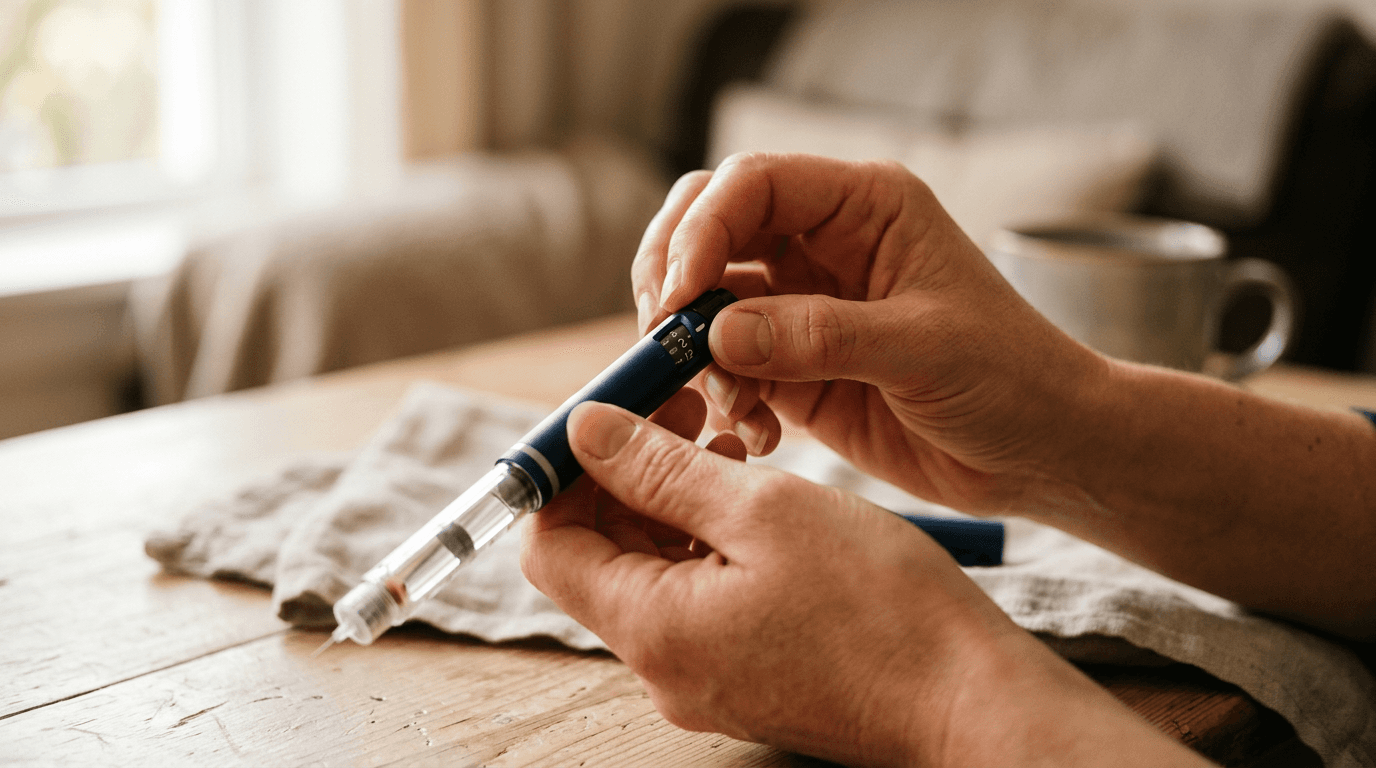
That moment is common. A new diagnosis asks you to learn with your hands as much as your head. The pen may look simple, but early confidence comes from knowing how it should feel. The dial should turn with clear resistance. The cartridge should seat securely. The injection button should press with a firm, familiar motion instead of a vague, uncertain one.
For many people, that tactile structure makes insulin delivery feel more manageable than drawing up a dose from a vial. You have a defined grip, a set sequence, and feedback you can hear and feel. Those details matter on ordinary days, especially when you are tired, rushed, eating out, or trying to dose without drawing attention.
I often tell newly diagnosed patients to pay attention to the pen in the same way they would pay attention to a new kitchen tool or glucose meter. Learn the normal feel first. Once you know what a proper twist, click, and push feel like, small problems become easier to catch before they turn into missed doses or wasted insulin.
“You do not need to feel fearless to become skilled. You need a routine that feels steady.”
There is also a practical side that deserves more attention. A refill insulin pen routine depends on more than injection technique. You need enough cartridges on hand, enough pen needles, and a refill process that does not leave you checking the window for remaining units late at night. Many patients do well once the device becomes familiar, but supply stress can shake that confidence fast.
That is one reason modern telehealth services such as 10 Rx Home are changing the day-to-day experience for many insulin users. The pen still has to feel right in your hand, but getting refills, clarifying prescriptions, and handling routine follow-up can become much less stressful when support is easier to access.
What confidence really looks like
Confidence with a refill insulin pen is rarely dramatic. It usually looks quiet.
It means the clicks no longer make you tense. It means you notice when a cartridge is almost empty before it becomes a problem. It means a dropped cap or a slightly awkward grip does not derail the whole process because you know how to reset and check your steps.
Confidence is tactile: you know how the pen should twist, seat, and prime.
Confidence is visual: you recognize what your insulin should look like and when something needs a second look.
Confidence is logistical: you have a plan to keep cartridges and supplies filled without last-minute scrambling.
That is the goal. Steady hands, clear steps, and a system that supports you between appointments.
Choosing Your Tool Refillable vs Disposable Insulin Pens
You open your bag before dinner, reach for your pen, and feel that quick pause. Is this the one that still has enough insulin left? Does the dial feel familiar, or a little different from the last pen? Those small moments matter. The right pen should make an ordinary task feel steady in your hand, not uncertain.

Both disposable and refillable insulin pens can work well. The better choice depends on what you need your hands to do each day, how much setup feels reasonable, and how you prefer to manage refills.
What disposable pens do well
Disposable pens come already filled with insulin. You attach a new needle, dial the dose, inject, and discard the pen when it is empty.
For many newly diagnosed patients, that simplicity lowers the mental load at the start. There is no cartridge to load and fewer parts to keep track of on a busy morning or while traveling. If fine motor tasks are frustrating, a disposable pen may feel less fiddly.
The trade-off is that each new pen can feel slightly less familiar because the whole device changes. Some people do not mind that at all. Others notice it right away. The dial may feel stiffer, the grip may sit differently in the fingers, or the button press may feel a little less solid than a reusable pen body.
Why some patients prefer refillable pens
A refillable insulin pen keeps the same outer body and uses replaceable insulin cartridges. That consistency is a real benefit in daily life.
Your fingers learn the twist needed to open it. You learn how firmly the cartridge seats. You recognize the normal resistance of the dose dial and the click pattern that tells you the pen is working the way it should. For someone building confidence, that repeated tactile experience often makes injections feel more routine and less tense.
Some refillable models also support very small dose adjustments, including half-unit dosing. If your clinician is fine-tuning doses, that detail may influence the decision.
Practical rule: Choose the device you can set up correctly and use calmly when you are tired, rushed, or away from home.
Disposable vs. Refillable Insulin Pens at a Glance
Feature | Disposable (Prefilled) Pen | Refillable (Reusable) Pen |
|---|---|---|
Setup | Minimal setup | Requires cartridge changes |
Convenience | Simple and quick | More hands-on at first |
Waste | More discarded material | Less waste over time |
Dose feel | Consistent within each pen | Familiar feel from the same pen body |
Fine adjustments | Depends on model | Some models allow smaller increments |
Travel style | Easy grab-and-go | Works well with planned cartridge packing |
Learning curve | Easier at the start | Slightly steeper, then often very routine |
Accuracy and usability both matter
Clinicians favor pen devices primarily for dosing precision and usability. For a newly diagnosed patient, that matters in very practical ways. Clear clicks, a readable dose window, and a button you can press without straining your thumb all make correct dosing easier to repeat.
That does not mean one style is automatically better for every person. A reusable pen may offer a more stable hand feel over time, while a prefilled pen may reduce setup errors for someone who wants the fewest possible steps. The best match is the one that supports correct use day after day.
If you have used other injection devices before, that experience can help guide the choice. Patients who are already comfortable with weekly injection routines, such as those described in this guide on how to inject semaglutide, often adapt quickly to pen technique but still need a device that feels manageable in real life.
How to decide with your clinician
A good pen choice starts with honest details.
Choose a disposable pen if you want the fewest setup steps and do better with a ready-to-use device.
Choose a refillable pen if you like consistency in how the pen body feels and want less waste over time.
Ask about dose increments if you need very small adjustments.
Bring up dexterity, vision, and hand strength if dialing, gripping, or cartridge changes might be difficult.
Ask how refills are handled before you commit to a device, especially if missed supplies would create stress.
I encourage patients to think beyond the prescription itself. Think about the ordinary moments. The pen you can grip securely, dial without second-guessing, and keep supplied without last-minute scrambling is usually the right one. Modern telehealth services such as 10 Rx Home can make that last part easier by reducing the friction around refills and routine follow-up, which matters just as much as the hardware once this becomes part of daily life.
Some people start with disposable pens and later switch to a refillable model once the process feels less new. Others stay with disposables because they fit their routine better. Both choices are reasonable.
What works in real life is the pen you will use correctly, confidently, and consistently.
Your Guide to Changing an Insulin Cartridge
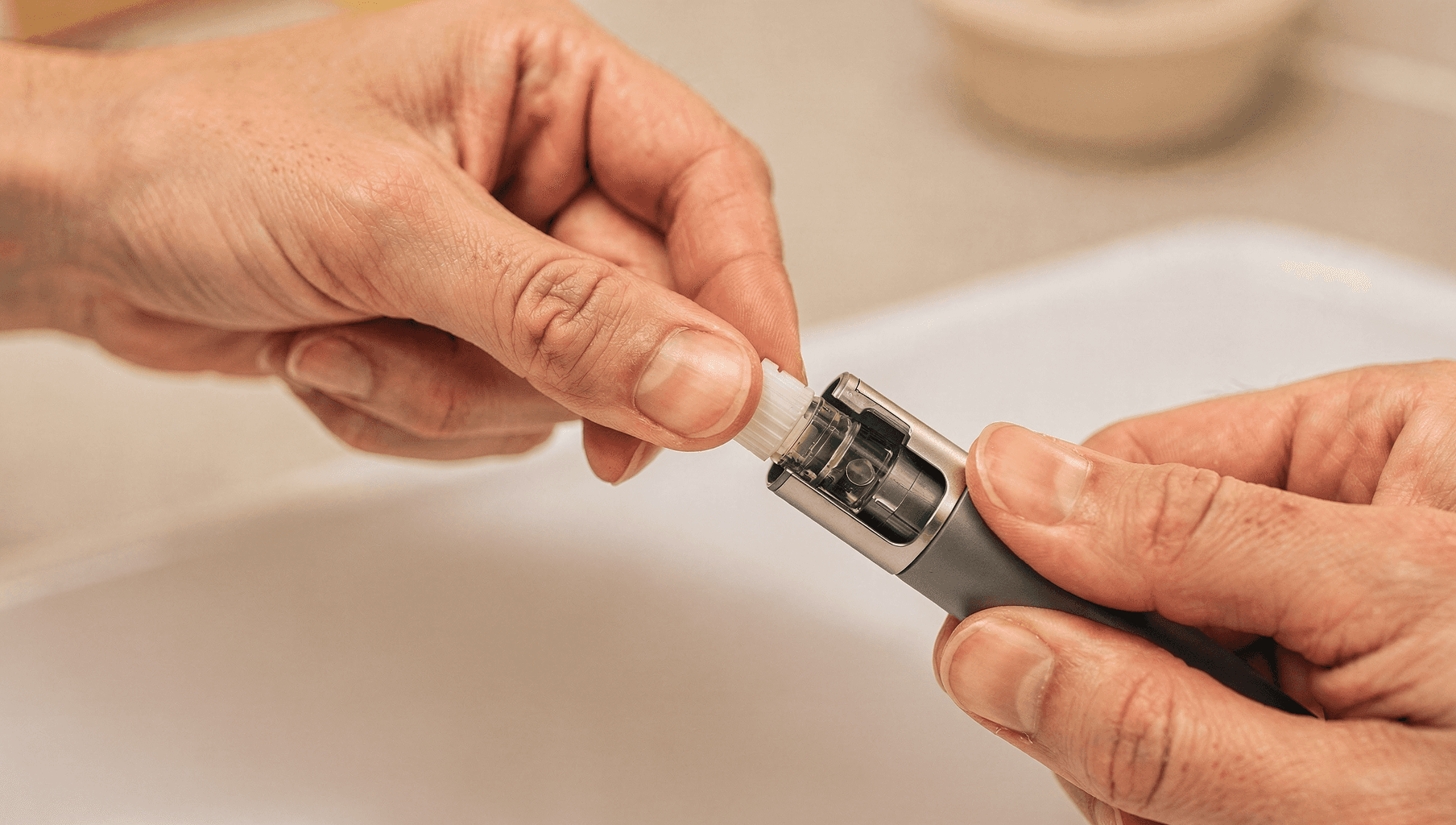
If you’re about to refill insulin pen cartridges for the first time, the process may feel fiddly. Once your hands learn it, it becomes routine. The key is not rushing the small parts.
In a controlled study of the ClikSTAR reusable insulin pen, 99.6% of patients trained by diabetes specialists successfully delivered three consecutive 40-unit doses, with a 95% lower confidence bound of 98.2%, as reported in this ClikSTAR administration study. That matters because skill with a pen is very learnable. People get this.
Set up your space before your hands get busy
Choose a flat, well-lit surface. Don’t start while standing over a sink or digging through a bag. Small pen parts are easy to drop, and when you’re tense, that makes the whole process feel harder than it is.
Lay out what you need:
Your reusable pen body
The new insulin cartridge
A fresh pen needle
Alcohol swab if your care team recommends one for the pen surface
Sharps container or your approved disposal method
Before opening anything, check the cartridge label carefully. The right insulin matters more than speed. Many pen errors happen because a person grabs the wrong box, especially if they use more than one insulin.
Opening the pen and removing the old cartridge
Most reusable pens unscrew in the middle. You’ll usually feel a clean release, not a grinding resistance. If it feels stuck, pause and look at the seam rather than forcing it.
Once open, gently remove the used cartridge. Sometimes it slides out easily. Sometimes you need to tip the pen body slightly and let gravity help. Don’t pry with anything sharp.
This is also a good time to look at the inside of the pen. You’re checking for obvious damage, debris, cracks, or anything that looks out of place. If the pen body looks damaged, don’t improvise. Call your pharmacy, manufacturer support line, or prescribing team.
A pen should feel mechanically smooth. If you’re forcing, jamming, or bending a part, stop and reassess.
Seating the new cartridge
Take the new cartridge out of its packaging and orient it the way your pen model requires. While many first-time users hesitate, the movement is usually simple. The cartridge should fit the chamber cleanly, not at an angle.
When you close the pen body, pay attention to the feel. A properly seated cartridge typically gives you a sense of alignment. The halves meet evenly. The twist feels controlled. Nothing bulges or leans.
If the pen won’t close smoothly, the cartridge may not be seated correctly. Open it again and reset it. This is one of the most common harmless fumbles.
Resetting the pen mechanism
Some reusable pens require the plunger or piston rod to be reset before the new cartridge is fully assembled. This isn’t a flaw. It’s just part of how the internal mechanism meets the fresh cartridge stopper.
Go slowly here. If your pen model requires turning or pressing the rod back, follow your device instructions exactly. Don’t force the mechanism forward against the new cartridge.
If you’re new to injection devices in general, it can help to watch another medication tutorial just to get used to the rhythm of prep, needle attachment, and calm hand positioning. The sequence in this guide to injecting semaglutide shows the same kind of measured, deliberate setup that helps with insulin pens too.
Attaching a fresh needle
Remove the protective tab from a new pen needle. Push or screw it on straight, depending on your pen and needle type. The best attachment feels centered. If the needle goes on crooked, take it off and start over with a fresh one.
Then remove the outer needle cap and keep it nearby. Remove the inner cap and discard it. At this point, don’t touch the needle itself.
This is the moment many people become hyperaware of every movement. That’s normal. Slow is fine. You are not behind.
Priming until you see the drop
Priming matters because it clears air and confirms flow. Dial the small priming amount your pen instructions specify, hold the pen with the needle pointing upward, and tap lightly if needed so any air rises.
Press the button and watch the needle tip.
You’re looking for a small insulin drop. Sometimes it appears immediately. Sometimes it takes another prime. What matters is visible flow before you dial your actual dose.
What the prime should feel like
The dial should turn with clear increments
The button should depress without grinding
The insulin drop should appear at the tip
The dose window should return as expected after priming
If no drop appears after repeated correct priming attempts, change the needle first. Needle issues are common and usually easier to fix than device issues.
Dialing your dose and checking your grip
Now dial the prescribed dose. Listen to the clicks if your device makes them. The sound is more helpful than many people expect. It becomes a built-in check that your fingers are moving the dial, not brushing it accidentally.
Hold the pen in a way that lets your thumb press the button straight in. Sideways pressure can make the button feel sticky. A simple adjustment in grip often solves what seems like a device problem.
The first few times are about pattern, not perfection
Your first cartridge change may feel slow. Your second will feel less strange. By the third or fourth, your hands usually know where to go.
What I want patients to remember is this: awkward doesn’t mean unsafe. It means unfamiliar. Pen use becomes easier because the device repeats the same motions.
A short checklist you can use every time
Check the label before opening the cartridge.
Open the pen gently and remove the old cartridge.
Insert the new cartridge evenly and close the pen without force.
Reset the mechanism if your model requires it.
Attach a new needle straight.
Prime until you see a drop.
Dial the prescribed dose only after priming is complete.
Mastering Pen Safety Hygiene and Storage
A confident pen user doesn’t just know how to refill insulin pen cartridges. They know the habits that protect the insulin, the skin, and the device over time.
These habits are not fussy extras. They’re the difference between a pen that works predictably and a pen routine that slowly becomes frustrating.
The non-negotiable safety habits
Never share an insulin pen, even if you change the needle. The pen is for one person only.
Use a new needle for each injection. Reused needles can become dull, bent, or partly blocked, which can make injections sting more and make dose delivery less predictable. If you want a practical refresher on needle selection and handling, this guide to safe use of needles for injection pens explains the basics clearly.
After the injection, remove the needle and dispose of it safely. Don’t store the pen with a used needle attached. Leaving a needle on can invite leakage, air entry, and contamination.
Safety note: The shortest path to fewer pen problems is simple: new needle, correct storage, no sharing.
Keeping the pen clean without overdoing it
Most pens don’t need elaborate cleaning. Wipe the exterior if needed, and keep the cartridge holder and threading free of visible debris. Don’t soak the pen body. Don’t use harsh cleaners unless the manufacturer specifically allows them.
If insulin residue dries near the tip area, clean it gently. Crusted insulin can make the next setup feel sticky, and then people assume the pen mechanism is failing when it’s really a surface issue.
Storage at home, work, and on the move
Storage mistakes usually come from good intentions. People want to protect the insulin, so they overchill it, overheat it, or leave it in a place that seems safe but isn’t. Your specific insulin and pen brand matter, so always follow the product instructions and pharmacy guidance.
For day-to-day use, build one home base for your pen supplies. A consistent shelf, drawer, or travel pouch prevents mix-ups. If you want a broader overview of medication handling, this storage guidance from 10 Rx Home is a useful starting point for thinking through temperature, organization, and routine.
Real-world storage habits that help
At home: keep supplies together in one designated area, away from direct heat and out of reach of children or pets.
At work: use a protective case so the pen doesn’t get crushed in a bag or desk drawer.
In the car: avoid leaving insulin in a parked vehicle where temperatures can swing.
While traveling: carry supplies with you rather than checking them in luggage when possible.
What often goes wrong
Some people leave the needle attached between doses because it seems convenient. That shortcut often causes more problems than it saves.
Others toss loose pen parts into a purse or backpack. Then a cap pops off, a needle bends, or the dose dial gets nudged. Pens do better when they have a dedicated case or pouch and a consistent routine around them.
Troubleshooting Common Insulin Pen Challenges
Most pen problems are ordinary, not emergencies. The stressful part is not knowing whether the problem is minor or whether you should stop and ask for help.

When the dose button feels stuck
Check your grip first. A sideways thumb press can make a button feel jammed. Then look at the needle. If the needle is blocked or bent, the pen may resist delivery.
If the pen still feels wrong, remove the needle safely, attach a fresh one, and prime again. Don’t muscle through resistance. Mechanical forcing can damage the device and make the situation less clear.
When the needle won’t attach easily
A needle should go on straight. If it catches at an angle, stop. Cross-threading is common when someone is rushing or attaching the needle one-handed.
Try again with a fresh needle and a stable surface. Good lighting helps. If hand irritation or skin sensitivity is part of your injection routine, this guide to red and itchy injection sites offers useful general tips on what normal irritation can look like and when to pay closer attention.
When you see air bubbles
Small air bubbles can look dramatic in a cartridge because the chamber is narrow and clear. Don’t panic. Priming is designed to address normal air in the system.
Hold the pen upright, tap gently so the bubble rises, and prime as directed by your pen instructions. The visual cue you want is flow at the needle tip, not a perfectly bubble-free cartridge at all times.
If the pen primes and delivers normally, a small visible bubble is usually a prompt to be careful, not a reason to panic.
When insulin flow seems slow
Slow flow often points to the needle, not the cartridge. Start there. Change the needle and prime again.
Also check whether the insulin itself looks as expected for your prescribed type. If the insulin appearance seems unusual, or if the pen has been stored improperly, stop using that cartridge and contact your pharmacist or prescriber for guidance.
When the cartridge change just didn’t feel right
Trust that instinct. If the pen didn’t close smoothly, if the cartridge sat unevenly, or if the mechanism felt unusually resistant, reopen it and inspect the setup from the beginning.
What doesn’t work is hoping the next step will somehow fix a misaligned part. What works is backing up one step, checking alignment, and rebuilding the setup calmly.
Seamless Insulin Refills with Modern Telehealth
You finish a dose, hear that familiar click, and realize the pen feels lighter than expected. Then you check the cartridge and see there is less left than you thought. That moment creates more stress than the injection itself for many people.
Using an insulin pen is hands-on. You feel the dose dial turn. You watch the cartridge level drop. You notice when the pen starts to feel close to empty. Refill planning needs to match that real-world rhythm, because running low rarely happens on a calm weekday with plenty of time to sort it out.
Refill problems often come from ordinary life. Travel, delayed messages, insurance timing, pharmacy backorders, and missed renewal windows can all leave someone stretching the last few units in a cartridge. Emergency refill rules can also be inconsistent from one setting to another, as noted earlier in this article. The result is familiar in practice. A patient handles the pen correctly but still ends up anxious because the next fill is not lined up.
Modern telehealth improves that process by making prescription follow-up easier to handle before the pen is nearly empty. Good care systems help patients request renewals early, respond to pharmacy questions quickly, and sort out medication changes without waiting for a full office visit. That matters with insulin, where a delay affects more than convenience. It affects daily safety and confidence.
I tell patients to aim for a refill system that feels uneventful. You should not have to count clicks and wonder whether the remaining insulin will last through the weekend.
A useful setup usually includes a few practical features:
clear refill request steps
a simple way to message the care team about dose or supply questions
follow-up that helps prevent delays with pharmacies or insurance
enough continuity that you are not re-explaining your insulin routine every time
Technology is improving the administrative side too. If you want a clearer view of that process, this overview of AI in prescription refills and prior authorizations explains how newer tools can reduce some of the bottlenecks patients notice first.
If you want a straightforward patient overview, this guide on how to refill prescriptions walks through the process in clear terms.
Good refill support lowers mental load. Instead of worrying about whether your current pen will make it, you can focus on your doses, your meals, your schedule, and the feel of the pen in your hand. That is the goal. Keep the cartridge filled, keep the routine steady, and remove as much friction as possible from the part of diabetes care that should be predictable.
If you want a simpler way to stay on top of prescriptions and ongoing care, 10 Rx Home offers a simplified telehealth experience with personalized treatment support, access to board-certified physicians, and convenient refill management that helps take the stress out of keeping your medication routine on track.