GLP-1’s at low prices with free shipping. Get Started


" transform="translate(53.5 27.5)" width="0px"/><g d="M 164.013 0 C 206.437 0 240.828 33.597 240.828 75.04 C 240.828 116.484 206.437 150.08 164.013 150.08 C 121.589 150.08 87.198 116.484 87.198 75.04 C 87.198 33.597 121.589 0 164.013 0 Z M 164.52 30.422 C 140.298 30.422 120.662 50.398 120.662 75.04 C 120.662 99.682 140.298 119.659 164.52 119.659 C 188.742 119.659 208.377 99.682 208.377 75.04 C 208.377 50.398 188.742 30.422 164.52 30.422 Z M 49.689 117.004 L 49.724 117.026 C 50.148 121.056 54.397 124.222 59.576 124.222 C 60.05 124.222 60.516 124.195 60.973 124.143 L 61.097 124.222 L 83.406 120.926 C 83.406 120.926 73.956 127.316 67.688 131.067 C 60.617 135.299 49.689 141.207 49.689 141.207 C 49.689 141.207 39.295 147.961 27.633 149.827 C 27.576 149.836 27.52 149.844 27.463 149.853 C 26.591 150.023 25.702 150.098 24.814 150.077 C 24.739 150.079 24.665 150.08 24.591 150.08 L 24.577 150.069 C 19.359 149.854 15.211 146.423 15.211 142.221 L 15.211 29.154 C 15.211 28.755 15.022 28.379 14.702 28.139 C 14.383 27.9 13.968 27.826 13.585 27.939 L 0 29.915 L 35.746 8.366 L 49.689 0 Z M 260.136 98.048 C 260.234 98.048 260.33 98.052 260.427 98.058 L 287.219 98.517 L 287.219 98.612 C 295.722 98.712 302.586 105.638 302.586 114.166 C 302.586 121.454 297.574 127.571 290.811 129.259 L 304.648 146.964 L 304.644 146.964 C 304.889 147.252 305.023 147.617 305.023 147.995 C 305.023 148.839 304.365 149.536 303.523 149.585 L 303.523 149.588 L 291.341 149.588 L 291.341 149.582 C 289.373 149.504 287.613 148.618 286.384 147.245 L 286.374 147.245 L 286.328 147.182 C 286.064 146.88 285.827 146.557 285.619 146.215 L 273.443 129.628 L 273.463 129.625 C 272.779 128.705 272.41 127.589 272.412 126.442 C 272.412 123.684 274.502 121.414 277.187 121.13 L 277.191 121.101 L 281.783 120.351 L 281.783 120.348 C 285.214 120.264 287.968 117.864 287.968 114.916 C 287.968 111.968 285.214 109.568 281.783 109.483 L 281.783 109.481 L 270.538 109.481 L 270.538 146.777 L 270.536 146.777 C 270.538 146.808 270.538 146.839 270.538 146.871 C 270.538 148.34 269.371 149.537 267.913 149.586 L 267.913 149.588 L 258.168 149.588 L 258.168 149.573 C 256.799 149.433 255.731 148.277 255.731 146.871 C 255.731 146.839 255.733 146.808 255.733 146.777 L 255.731 146.777 L 255.731 102.359 L 255.733 102.359 C 255.781 100.064 257.585 98.201 259.856 98.058 L 259.856 98.048 L 259.998 98.051 C 260.044 98.049 260.09 98.048 260.136 98.048 Z M 324.515 110.615 C 326.064 110.719 327.396 111.676 328.101 113.049 L 332.884 119.45 L 338.302 112.809 C 339.033 111.565 340.298 110.713 341.756 110.615 L 341.756 110.605 L 352.44 110.605 C 353.577 110.605 354.5 111.528 354.5 112.667 C 354.5 113.003 354.42 113.321 354.276 113.601 L 354.314 113.604 L 354.176 113.776 C 354.1 113.896 354.011 114.008 353.912 114.109 L 342.693 128.222 C 342.693 128.222 342.413 128.627 342.413 128.972 C 342.413 129.318 342.693 129.722 342.693 129.722 L 355.241 146.116 C 355.722 146.507 356 147.094 356 147.714 C 356 148.852 355.077 149.775 353.938 149.775 C 353.876 149.775 353.814 149.772 353.751 149.766 L 353.751 149.775 L 341.756 149.775 L 341.756 149.749 C 340.252 149.58 338.973 148.605 338.31 147.237 L 333.228 140.405 C 333.228 140.405 333.042 140.217 332.76 140.217 C 332.48 140.217 332.291 140.405 332.291 140.405 L 332.289 140.402 L 327.078 147.492 C 326.891 147.825 326.664 148.134 326.401 148.411 L 326.295 148.557 L 326.263 148.553 C 325.588 149.207 324.723 149.641 323.764 149.749 L 323.764 149.775 L 312.331 149.775 C 311.194 149.775 310.271 148.852 310.271 147.714 C 310.271 147.02 310.613 146.407 311.138 146.033 L 323.015 130.659 C 323.015 130.659 323.295 130.255 323.295 129.909 C 323.295 129.564 323.015 129.16 323.015 129.16 L 311.458 114.146 C 311.058 113.758 310.833 113.224 310.833 112.667 C 310.833 111.528 311.756 110.605 312.894 110.605 L 324.515 110.605 Z" fill="transparent" height="150.08043079668755px" id="HpkDSJwpk" transform="translate(0 1)" width="356.0000118682049px"><path d="M 76.815 0 C 119.239 0 153.63 33.597 153.63 75.04 C 153.63 116.484 119.239 150.08 76.815 150.08 C 34.391 150.08 0 116.484 0 75.04 C 0 33.597 34.391 0 76.815 0 Z M 77.322 30.422 C 53.1 30.422 33.464 50.398 33.464 75.04 C 33.464 99.682 53.1 119.659 77.322 119.659 C 101.544 119.659 121.179 99.682 121.179 75.04 C 121.179 50.398 101.544 30.422 77.322 30.422 Z" fill="rgb(8, 9, 35)" height="150.08043079668755px" id="kvrqFybmK" transform="translate(87.198 0)" width="153.62981889920286px"/><path d="M 49.689 117.004 L 49.724 117.026 C 50.148 121.056 54.397 124.222 59.576 124.222 C 60.05 124.222 60.516 124.195 60.973 124.143 L 61.097 124.222 L 83.406 120.926 C 83.406 120.926 73.956 127.316 67.688 131.067 C 60.617 135.299 49.689 141.207 49.689 141.207 C 49.689 141.207 39.295 147.961 27.633 149.827 C 27.576 149.836 27.52 149.844 27.463 149.853 C 26.591 150.023 25.702 150.098 24.814 150.077 C 24.739 150.079 24.665 150.08 24.591 150.08 L 24.577 150.069 C 19.359 149.854 15.211 146.423 15.211 142.221 L 15.211 29.154 C 15.211 28.755 15.022 28.379 14.702 28.139 C 14.383 27.9 13.968 27.826 13.585 27.939 L 0 29.915 L 35.746 8.366 L 49.689 0 Z M 260.136 98.048 C 260.234 98.048 260.33 98.052 260.427 98.058 L 287.219 98.517 L 287.219 98.612 C 295.722 98.712 302.586 105.638 302.586 114.166 C 302.586 121.454 297.574 127.571 290.811 129.259 L 304.648 146.964 L 304.644 146.964 C 304.889 147.252 305.023 147.617 305.023 147.995 C 305.023 148.839 304.365 149.536 303.523 149.585 L 303.523 149.588 L 291.341 149.588 L 291.341 149.582 C 289.373 149.504 287.613 148.618 286.384 147.245 L 286.374 147.245 L 286.328 147.182 C 286.064 146.88 285.827 146.557 285.619 146.215 L 273.443 129.628 L 273.463 129.625 C 272.779 128.705 272.41 127.589 272.412 126.442 C 272.412 123.684 274.502 121.414 277.187 121.13 L 277.191 121.101 L 281.783 120.351 L 281.783 120.348 C 285.214 120.264 287.968 117.864 287.968 114.916 C 287.968 111.968 285.214 109.568 281.783 109.483 L 281.783 109.481 L 270.538 109.481 L 270.538 146.777 L 270.536 146.777 C 270.538 146.808 270.538 146.839 270.538 146.871 C 270.538 148.34 269.371 149.537 267.913 149.586 L 267.913 149.588 L 258.168 149.588 L 258.168 149.573 C 256.799 149.433 255.731 148.277 255.731 146.871 C 255.731 146.839 255.733 146.808 255.733 146.777 L 255.731 146.777 L 255.731 102.359 L 255.733 102.359 C 255.781 100.064 257.585 98.201 259.856 98.058 L 259.856 98.048 L 259.998 98.051 C 260.044 98.049 260.09 98.048 260.136 98.048 Z M 324.515 110.615 C 326.064 110.719 327.396 111.676 328.101 113.049 L 332.884 119.45 L 338.302 112.809 C 339.033 111.565 340.298 110.713 341.756 110.615 L 341.756 110.605 L 352.44 110.605 C 353.577 110.605 354.5 111.528 354.5 112.667 C 354.5 113.003 354.42 113.321 354.276 113.601 L 354.314 113.604 L 354.176 113.776 C 354.1 113.896 354.011 114.008 353.912 114.109 L 342.693 128.222 C 342.693 128.222 342.413 128.627 342.413 128.972 C 342.413 129.318 342.693 129.722 342.693 129.722 L 355.241 146.116 C 355.722 146.507 356 147.094 356 147.714 C 356 148.852 355.077 149.775 353.938 149.775 C 353.876 149.775 353.814 149.772 353.751 149.766 L 353.751 149.775 L 341.756 149.775 L 341.756 149.749 C 340.252 149.58 338.973 148.605 338.31 147.237 L 333.228 140.405 C 333.228 140.405 333.042 140.217 332.76 140.217 C 332.48 140.217 332.291 140.405 332.291 140.405 L 332.289 140.402 L 327.078 147.492 C 326.891 147.825 326.664 148.134 326.401 148.411 L 326.295 148.557 L 326.263 148.553 C 325.588 149.207 324.723 149.641 323.764 149.749 L 323.764 149.775 L 312.331 149.775 C 311.194 149.775 310.271 148.852 310.271 147.714 C 310.271 147.02 310.613 146.407 311.138 146.033 L 323.015 130.659 C 323.015 130.659 323.295 130.255 323.295 129.909 C 323.295 129.564 323.015 129.16 323.015 129.16 L 311.458 114.146 C 311.058 113.758 310.833 113.224 310.833 112.667 C 310.833 111.528 311.756 110.605 312.894 110.605 L 324.515 110.605 Z" fill="rgb(8, 9, 35)" height="150.08043079668755px" id="kdERGws7a" width="356.0000118682049px"/></g></svg>)
Symptoms of Low Glutathione: Identify the Signs
The symptoms of low glutathione often show up in subtle but frustrating ways—persistent fatigue, brain fog, slow recovery, and even stubborn weight loss despite healthy habits. As highlighted in , these signals aren’t failures in discipline, but signs your body may need deeper cellular support. Recognizing the pattern is the first step toward restoring your energy, resilience, and overall wellness.
Feeling tired or struggling to lose weight? Discover the hidden symptoms of low glutathione & learn how personalized care can boost your master antioxidant.

Symptoms of Low Glutathione: Identify the Signs
You clean up your meals. You show up for walks or workouts. You try to sleep more. You even cut back on the habits you know don’t help. Still, you wake up tired, your focus feels fuzzy, the scale barely moves, and your skin looks flatter or more stressed than you expect.
That combination can feel confusing. Individuals often treat those issues as separate. Fatigue must mean you need more sleep. Stubborn weight loss must mean you need stricter discipline. Skin changes must be about age, products, or hormones.
Sometimes those explanations fit. Sometimes they do not.
A less obvious possibility is that your body is running low on one of its core protective compounds: glutathione. It is not a magic fix, and it does not explain every symptom. But when glutathione is low, the effects can show up across energy, recovery, immune resilience, metabolism, and appearance all at once.
That matters because the symptoms of low glutathione often blend into everyday life. People brush them off for months or years. They assume they are busy, stressed, getting older, or failing at their wellness plan.
You are not failing. Your body may be signaling that it needs more support.
The Hidden Reason You Still Feel Drained
Sarah is the kind of person many observers would call healthy. She keeps protein in her meals, takes walks after dinner, says no to most late nights, and tries to do the right things. But by midafternoon, she feels like someone pulled the plug.
Her brain slows down first. Then her patience does. She reaches for caffeine, pushes through work, skips the workout she planned, and promises herself tomorrow will feel different.
It often doesn’t.
Many individuals experience that exact loop. They are not flat-out sick. They are not thriving either. They feel off in a way that is hard to name. Energy is lower than it should be. Recovery takes longer. Motivation slips because the body never feels fully recharged.
When that happens, the first instinct is usually to blame willpower or routine. But fatigue is not always a character flaw, and it is not always solved by sleeping in on weekends. Sometimes the deeper issue is that your cells are struggling to keep up with the stress placed on them.
Glutathione becomes relevant here.
Glutathione helps your cells manage the constant wear and tear of living in the modern world. If your internal defense system is stretched thin, you may feel it as tiredness, fogginess, slower recovery, and a general sense that your body has lost its spark. If fatigue is your main concern, this guide to the best supplements for fatigue can help you think more broadly about what might be contributing.
Key takeaway: Feeling drained despite healthy habits does not always mean you need to try harder. It may mean your body needs a different kind of support.
What Is Glutathione Your Body’s Master Antioxidant
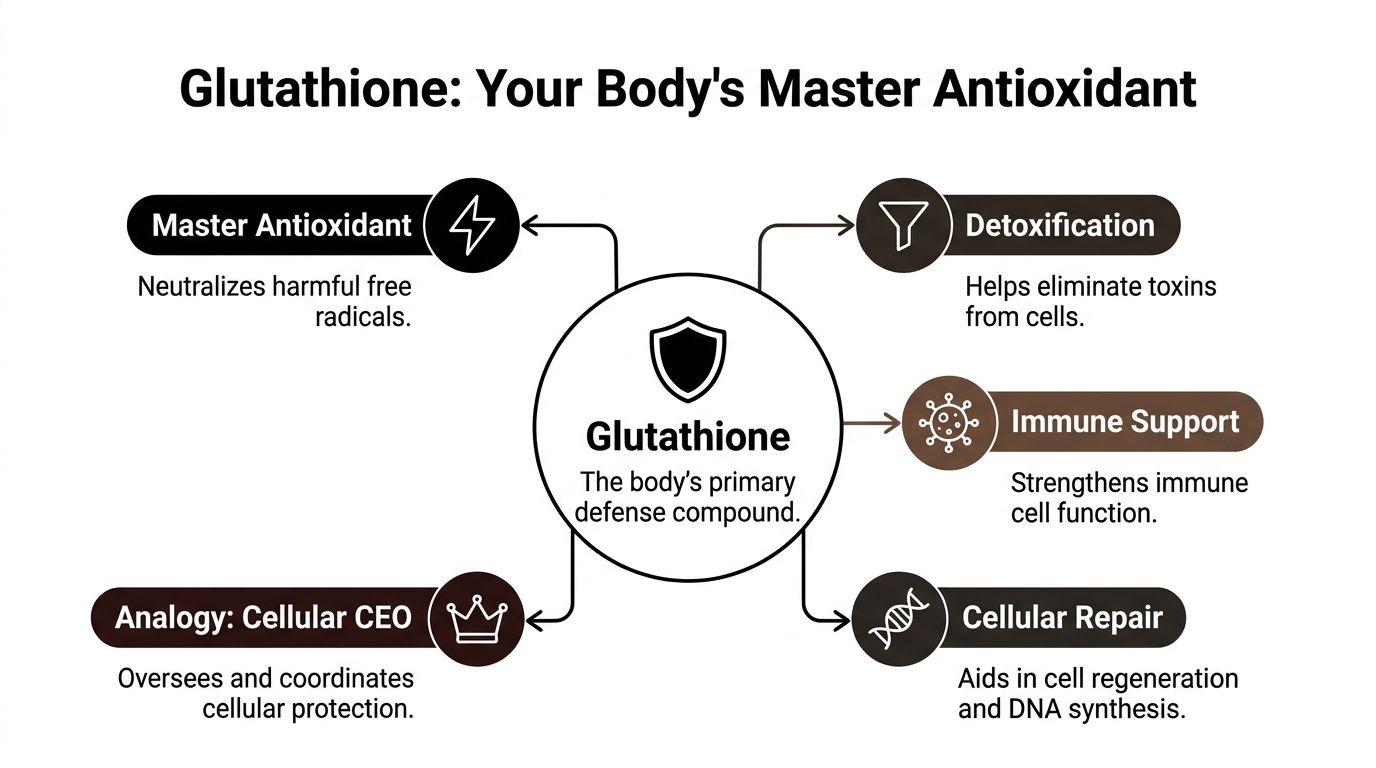
Glutathione is often called the body’s master antioxidant. That phrase sounds technical, but the idea is simple. It is one of your body’s main internal protectors.
Think of glutathione as your body’s cleanup crew, security team, and maintenance department all rolled into one. Every day, your cells produce waste, face environmental exposures, and deal with the normal strain of turning food and oxygen into energy. Glutathione helps manage that load so the system keeps running smoothly.
It helps prevent cellular wear
One of glutathione’s biggest jobs is neutralizing free radicals. These are unstable molecules that can damage cells when they build up.
A useful analogy is rust. If metal sits out in the elements long enough, it corrodes. Your body does not rust, of course, but cells do experience their own version of wear from oxidative stress. Glutathione helps limit that damage.
This matters for energy, brain function, recovery, and aging. It also helps explain why antioxidants matter in visible ways too. If you want a practical skin-focused explanation, this overview of the benefits of antioxidants for skin gives helpful context.
It supports detoxification
Your liver and other tissues constantly process compounds your body needs to break down and remove. Glutathione plays a central role in that work.
Imagine it as the filter in a busy air system. The filter does not stop life from happening. It helps the system handle what passes through. When glutathione is available, your body is better equipped to process internal byproducts and outside exposures.
That does not mean “detox” in the trendy juice-cleanse sense. It means your body has built-in detox pathways, and glutathione is one of the compounds those pathways rely on.
It helps immune cells do their job
Your immune system needs balance. It has to respond to threats without staying stuck in a state of overreaction.
Glutathione helps support that balance. When levels are healthy, immune cells are better able to function the way they are supposed to. When levels are strained, people may notice they get run down more easily or take longer to bounce back.
It affects more than one wellness goal
Readers often find this surprising. Glutathione is not only about “feeling healthy.” It touches several goals people care about every day:
Energy and recovery: Lower cellular stress can support steadier day-to-day function.
Metabolic health: Oxidative stress can complicate weight management and exercise consistency.
Appearance: Skin often reflects what is happening internally.
Resilience: Recovery from stress, illness, and hard training all depend on cellular support.
People exploring the relationship between metabolism and antioxidants often start with resources like this discussion of glutathione for weight loss, because weight struggles are often the first sign that something deeper is off.
Think of glutathione this way: it is not a luxury nutrient for biohackers. It is part of your body’s basic operating system.
Uncovering the Telltale Symptoms of Low Glutathione
The symptoms of low glutathione can feel frustrating because they rarely arrive with a clear label. More often, they appear as small disruptions that spread across daily life.
One person notices brain fog and poor recovery after exercise. Another keeps wondering why the scale will not budge even with real effort. Someone else looks in the mirror and feels like their skin looks tired before they feel tired.

The daily drain
This is the cluster many individuals first notice. It includes the vague but persistent feeling that your battery never quite charges.
Common signs can include:
Persistent fatigue: You get through the day, but everything feels heavier than it should.
Mental fog: Focus slips. Word recall feels slower. Multitasking becomes harder.
Poor sleep quality: You may sleep enough hours and still wake up unrested.
Slow recovery: Exercise, busy workweeks, and emotional stress seem to linger longer.
These symptoms are easy to dismiss because they are common. But common does not mean normal.
The metabolic roadblocks
This is one of the most overlooked patterns.
When glutathione is low, mitochondrial function can suffer. In plain language, your cells may become less efficient at producing usable energy. That can make workouts feel harder, reduce exercise consistency, and leave you feeling wiped out after activity instead of energized by it.
Low glutathione is also tied to chronic inflammation and oxidative stress, which can complicate insulin resistance and metabolic syndrome, according to this discussion of glutathione deficiency and metabolic health. That matters because people often experience weight loss resistance as a discipline problem when it may also reflect a stress-management problem at the cellular level.
Here is how that can look in real life:
Pattern | How it may feel |
|---|---|
Workout resistance | You dread movement because recovery feels slow |
Weight plateaus | You are consistent, but body composition barely shifts |
Energy crashes | You start strong, then hit a wall later in the day |
Stress eating loops | Low energy and poor recovery make healthy choices harder to sustain |
This does not mean low glutathione is the only cause of weight struggles. Hormones, sleep, medications, calorie intake, strength training, and medical conditions all matter. It does mean that metabolism is not about calories on paper. It is also about how well your body handles oxidative stress.
The visible signs
Skin is not separate from the rest of your biology. It is often one of the first places internal strain becomes visible.
Possible skin-related clues include:
Dullness
Uneven tone
Breakout-prone skin
A more tired or sagging look than expected for your age
A slower rebound after stress or illness
People often treat these as cosmetic annoyances only. But they can also be part of a larger picture involving inflammation, recovery, sleep quality, and immune balance.
Many readers find this confusing. They assume fatigue and skin changes must belong to different categories. In reality, both can reflect the same underlying burden. If glutathione helps support collagen-related processes, detoxification, and antioxidant defense, then low levels can show up both in how you feel and how you look.
Practical lens: If your energy, weight progress, and skin all seem to worsen together, it is worth thinking systemically instead of chasing each symptom in isolation.
The immune and illness pattern
Some people mainly notice that they catch things easily or seem to stay run down longer than the people around them.
Low glutathione has been associated with chronic infections and reduced glutathione levels have been noted in infections including COVID-19, influenza, and HIV, as discussed later in the clinical section of this article. In everyday life, that may show up as frequent illness, slower recovery, or the feeling that your body has less reserve.
When symptoms point to something more serious
Many people reading about symptoms of low glutathione are dealing with functional issues like fatigue, stress overload, recovery problems, or skin changes. But there are also rare inherited disorders involving glutathione metabolism that are far more severe.
Those conditions can include serious neurological problems, anemia, and metabolic complications. They are not the same thing as the more common wellness picture described here. The important point is not to self-diagnose. It is to notice patterns and get proper evaluation when symptoms persist.
What Causes Glutathione Levels to Drop
Some causes of low glutathione are built into life. Others are shaped by how much stress your body has to carry.
The most important anchor is age. Glutathione production naturally declines by approximately 10% per decade after age 20, and by age 50 people have lost roughly 30% of peak production capacity compared with their twenties, according to this review on age-related glutathione decline.

That single fact helps explain a lot. People often assume they are “getting older” when energy falls, recovery slows, and body composition becomes harder to manage. Aging is part of the story, but not because decline is mysterious. One reason is that your antioxidant capacity changes.
The load on the system
Age is only one layer. Your body also has to respond to what it is exposed to and what it has to process every day.
The same source notes that environmental toxins, chronic stress, and poor dietary habits can further accelerate this natural decline. A useful way to think about it is capacity versus demand.
If glutathione is part of your cellular defense system, then several things can push demand higher:
Chronic psychological stress: Your body stays on alert and spends more resources managing that burden.
Poor nutrition: The body may lack the building blocks it needs to maintain protective systems.
Environmental exposures: Daily life can increase the amount of cleanup your body has to do.
Ongoing health challenges: Chronic illness can create a heavier oxidative load.
Why people get confused
Many individuals expect one dramatic cause. They want a single reason for why they feel different.
Usually it is more cumulative than that. A person in their forties or fifties may already be producing less glutathione than they did in their twenties. Add high stress, inconsistent sleep, a diet built around convenience, and years of environmental exposure, and the body has to work with less while handling more.
That mismatch can create the exact pattern many readers recognize:
You feel more tired from the same schedule.
Fat loss takes more effort.
Workouts require more recovery.
Skin looks more stressed during busy periods.
Helpful reframe: Your body may not be betraying you. It may be adapting to a heavier load with fewer internal reserves.
What you can influence
You cannot stop aging. You can reduce avoidable strain.
That distinction matters because it moves the conversation away from blame and toward strategy. Once you understand that low glutathione often reflects both natural decline and accumulated stress, the next step becomes clearer: reduce unnecessary burden and support the systems that help your body recover.
How Low Glutathione Is Evaluated and Its Clinical Impact
If the symptoms of low glutathione sound familiar, the next question is usually, “How do I know if this is what’s going on?”
The answer starts with a clinician, not a supplement aisle.
What evaluation usually looks like
Glutathione issues are not usually identified by symptoms alone. A healthcare professional looks at the full pattern.
That often includes:
Your symptom history: fatigue, infections, recovery issues, brain fog, skin changes, and any weight or metabolic frustrations.
Your broader health context: medications, chronic conditions, stress load, sleep quality, and diet.
Laboratory testing when appropriate: a clinician may use bloodwork or other testing to assess glutathione status and related markers.
Clinical interpretation: this is the critical part, because low energy and inflammation can come from many causes.
A useful mindset is to treat glutathione as one piece of a bigger puzzle. It may matter a great deal, but it should be interpreted alongside the rest of your physiology.
For readers interested in root-cause medicine, this overview of what is functional medicine is helpful because it explains why symptoms are best understood as patterns rather than isolated complaints.
Why confirmation matters
Low glutathione is not a wellness talking point. Glutathione dysregulation has been documented in multiple chronic disease states, and low glutathione levels have been associated with conditions including chronic fatigue syndrome, fibromyalgia, neurodegenerative diseases, autoimmune disorders, and chronic infections, according to this clinical summary on glutathione dysregulation and disease associations.
That same source notes that multiple infections, including COVID-19, influenza, and HIV, are associated with significantly reduced glutathione levels.
This changes the conversation. It suggests that glutathione can be more than a marker of feeling rundown. In some settings, it may reflect how well the body is managing major physiological stress.
Rare but important inherited conditions
There is also a rare genetic disorder called severe glutathione synthetase deficiency. In severe forms, neurological complications can include seizures, psychomotor retardation, intellectual disability, and ataxia. In milder inherited forms, approximately 10% to 30% of patients develop compensated hemolytic anemia as a primary manifestation, based on the same clinical source above.
For most readers, that is not the likely explanation for fatigue or skin dullness. Still, these rare disorders highlight something important. Glutathione is not a trendy extra. It plays a significant role in nervous system function, immune balance, and red blood cell stability.
When a clinician takes symptoms more seriously
A clinician is more likely to look deeper when symptoms are persistent, layered, or unexplained by more common causes.
That includes patterns like:
Fatigue that does not improve with rest
Frequent infections or slow recovery
Brain fog plus inflammatory symptoms
Weight resistance paired with low energy
Ongoing symptoms in the setting of chronic illness
Clinical perspective: The goal of evaluation is not to prove you were right about one nutrient. It is to understand what your symptoms are trying to tell you.
When people try to solve this alone, they often jump straight to supplements. That may help some. But if the deeper issue involves chronic inflammation, infection, autoimmune activity, or a more complex metabolic problem, guessing can delay useful care.
A Personalized Path to Restoring Your Glutathione Levels
Restoring glutathione is rarely about one dramatic move. It usually works better as a layered plan.
That is good news, because it means you do not need perfection. You need a strategy that lowers the strain on your system and gives your body what it needs to rebuild.

Start with the foundation
The first tier is not glamorous, but it matters most.
Focus on habits that reduce oxidative burden and support recovery:
Eat enough protein: Your body needs amino acids to build and maintain protective compounds.
Prioritize whole foods: Especially vegetables and minimally processed meals.
Lower chronic stress where possible: Even simple routines help, like walking, breathwork, journaling, or better work boundaries.
Protect sleep consistency: Going to bed at a similar time often helps more than chasing perfect sleep occasionally.
Avoid overtraining: Exercise should build resilience, not leave you flattened for days.
If inflammation and metabolic stress are part of your picture, a structured food approach can help. A practical example is this anti-inflammatory meal plan, which can give readers a concrete template instead of vague advice to “eat cleaner.”
Use targeted nutritional support
Once the basics are in place, targeted supplementation may make sense under professional guidance.
One key concept is that many clinicians focus on precursors, not glutathione itself. A precursor is a building block your body can use to make more of what it needs.
A major example is N-acetylcysteine, or NAC.
That approach has real clinical relevance. In glutathione synthetase deficiency, a rare genetic disorder that severely depletes glutathione, early N-acetylcysteine supplementation can stabilize mild cases with compensated anemia, according to the National Organization for Rare Disorders summary on glutathione synthetase deficiency and NAC.
That does not mean every tired person needs NAC. It does show that supporting glutathione production through precursors is a medically meaningful concept, not a wellness fad.
Other people may also discuss support for broader cellular energy systems at the same time. If that is relevant to you, this guide on how to increase NAD levels naturally gives context for why energy support is often multifactorial.
Know when physician-guided care matters
There are situations where lifestyle and basic supplements are not enough, or should not be your first move.
Physician input matters more when you have:
Severe fatigue
Shortness of breath
Pallor or lightheadedness
Irregular heartbeats
Frequent infections
Neurological symptoms such as tremor, seizures, or coordination problems
Symptoms that keep worsening despite self-care
In moderate to severe glutathione synthetase deficiency, manifestations can include hemolytic anemia, metabolic acidosis, recurrent bacterial sepsis, and progressive central nervous system dysfunction. That is a rare scenario, but it illustrates why “low glutathione” is not always a casual issue.
A simple way to think about next steps
Different people need different levels of support.
Level of concern | Best next move |
|---|---|
Mild fatigue, skin changes, slower recovery | Tighten sleep, nutrition, stress, and training balance |
Weight plateaus with inflammation and low energy | Review metabolic health with a clinician |
Frequent illness or persistent brain fog | Seek professional evaluation rather than self-treating |
Red-flag symptoms like pallor, breathing issues, or neurological changes | Get prompt medical attention |
Important reminder: Supplements can support a plan. They should not replace medical evaluation when symptoms are significant, persistent, or unusual.
The ultimate goal is not to chase one molecule. It is to restore a body that feels more capable, resilient, and responsive again.
Take Control of Your Health with 10 Rx Home
Understanding the symptoms of low glutathione can be the turning point. Many people spend a long time trying to solve fatigue, weight frustration, and skin changes as separate problems. A more useful approach is to look at the full picture and get expert help sorting out what your body needs.
Telemedicine can make this process much easier.
10 Rx Home is built for people who want physician-guided care without adding more friction to their lives. Instead of trying to piece together a plan from social media, supplement blogs, and trial-and-error purchases, you can start with a structured process designed around your specific needs.
The experience is straightforward. You begin with a free quiz, then meet with a board-certified physician who reviews your symptoms, goals, and health background. From there, you receive a personalized treatment plan that fits your biology and your routine.
That matters if your symptoms overlap multiple areas at once. Maybe your main issue is low energy. Maybe it is stubborn weight loss. Maybe your skin and recovery have changed in ways you cannot explain. Personalized care helps connect those dots instead of forcing you into a one-size-fits-all protocol.
Convenience also matters. 10 Rx Home operates across all 50 states in the U.S., which means you can access care from home instead of postponing the support you need. For people balancing work, family, and ongoing wellness goals, that kind of access can be the difference between thinking about change and starting it.
The bigger win is clarity. When you know what you are dealing with and have a physician helping you build a plan, your next steps feel less overwhelming. You stop guessing. You start moving forward.
If you’re ready to stop chasing symptoms one by one, 10 Rx Home can help you take the next step with a free quiz, physician-guided care, and a personalized plan delivered right to your door.