GLP-1’s at low prices with free shipping. Get Started


" transform="translate(53.5 27.5)" width="0px"/><g d="M 164.013 0 C 206.437 0 240.828 33.597 240.828 75.04 C 240.828 116.484 206.437 150.08 164.013 150.08 C 121.589 150.08 87.198 116.484 87.198 75.04 C 87.198 33.597 121.589 0 164.013 0 Z M 164.52 30.422 C 140.298 30.422 120.662 50.398 120.662 75.04 C 120.662 99.682 140.298 119.659 164.52 119.659 C 188.742 119.659 208.377 99.682 208.377 75.04 C 208.377 50.398 188.742 30.422 164.52 30.422 Z M 49.689 117.004 L 49.724 117.026 C 50.148 121.056 54.397 124.222 59.576 124.222 C 60.05 124.222 60.516 124.195 60.973 124.143 L 61.097 124.222 L 83.406 120.926 C 83.406 120.926 73.956 127.316 67.688 131.067 C 60.617 135.299 49.689 141.207 49.689 141.207 C 49.689 141.207 39.295 147.961 27.633 149.827 C 27.576 149.836 27.52 149.844 27.463 149.853 C 26.591 150.023 25.702 150.098 24.814 150.077 C 24.739 150.079 24.665 150.08 24.591 150.08 L 24.577 150.069 C 19.359 149.854 15.211 146.423 15.211 142.221 L 15.211 29.154 C 15.211 28.755 15.022 28.379 14.702 28.139 C 14.383 27.9 13.968 27.826 13.585 27.939 L 0 29.915 L 35.746 8.366 L 49.689 0 Z M 260.136 98.048 C 260.234 98.048 260.33 98.052 260.427 98.058 L 287.219 98.517 L 287.219 98.612 C 295.722 98.712 302.586 105.638 302.586 114.166 C 302.586 121.454 297.574 127.571 290.811 129.259 L 304.648 146.964 L 304.644 146.964 C 304.889 147.252 305.023 147.617 305.023 147.995 C 305.023 148.839 304.365 149.536 303.523 149.585 L 303.523 149.588 L 291.341 149.588 L 291.341 149.582 C 289.373 149.504 287.613 148.618 286.384 147.245 L 286.374 147.245 L 286.328 147.182 C 286.064 146.88 285.827 146.557 285.619 146.215 L 273.443 129.628 L 273.463 129.625 C 272.779 128.705 272.41 127.589 272.412 126.442 C 272.412 123.684 274.502 121.414 277.187 121.13 L 277.191 121.101 L 281.783 120.351 L 281.783 120.348 C 285.214 120.264 287.968 117.864 287.968 114.916 C 287.968 111.968 285.214 109.568 281.783 109.483 L 281.783 109.481 L 270.538 109.481 L 270.538 146.777 L 270.536 146.777 C 270.538 146.808 270.538 146.839 270.538 146.871 C 270.538 148.34 269.371 149.537 267.913 149.586 L 267.913 149.588 L 258.168 149.588 L 258.168 149.573 C 256.799 149.433 255.731 148.277 255.731 146.871 C 255.731 146.839 255.733 146.808 255.733 146.777 L 255.731 146.777 L 255.731 102.359 L 255.733 102.359 C 255.781 100.064 257.585 98.201 259.856 98.058 L 259.856 98.048 L 259.998 98.051 C 260.044 98.049 260.09 98.048 260.136 98.048 Z M 324.515 110.615 C 326.064 110.719 327.396 111.676 328.101 113.049 L 332.884 119.45 L 338.302 112.809 C 339.033 111.565 340.298 110.713 341.756 110.615 L 341.756 110.605 L 352.44 110.605 C 353.577 110.605 354.5 111.528 354.5 112.667 C 354.5 113.003 354.42 113.321 354.276 113.601 L 354.314 113.604 L 354.176 113.776 C 354.1 113.896 354.011 114.008 353.912 114.109 L 342.693 128.222 C 342.693 128.222 342.413 128.627 342.413 128.972 C 342.413 129.318 342.693 129.722 342.693 129.722 L 355.241 146.116 C 355.722 146.507 356 147.094 356 147.714 C 356 148.852 355.077 149.775 353.938 149.775 C 353.876 149.775 353.814 149.772 353.751 149.766 L 353.751 149.775 L 341.756 149.775 L 341.756 149.749 C 340.252 149.58 338.973 148.605 338.31 147.237 L 333.228 140.405 C 333.228 140.405 333.042 140.217 332.76 140.217 C 332.48 140.217 332.291 140.405 332.291 140.405 L 332.289 140.402 L 327.078 147.492 C 326.891 147.825 326.664 148.134 326.401 148.411 L 326.295 148.557 L 326.263 148.553 C 325.588 149.207 324.723 149.641 323.764 149.749 L 323.764 149.775 L 312.331 149.775 C 311.194 149.775 310.271 148.852 310.271 147.714 C 310.271 147.02 310.613 146.407 311.138 146.033 L 323.015 130.659 C 323.015 130.659 323.295 130.255 323.295 129.909 C 323.295 129.564 323.015 129.16 323.015 129.16 L 311.458 114.146 C 311.058 113.758 310.833 113.224 310.833 112.667 C 310.833 111.528 311.756 110.605 312.894 110.605 L 324.515 110.605 Z" fill="transparent" height="150.08043079668755px" id="HpkDSJwpk" transform="translate(0 1)" width="356.0000118682049px"><path d="M 76.815 0 C 119.239 0 153.63 33.597 153.63 75.04 C 153.63 116.484 119.239 150.08 76.815 150.08 C 34.391 150.08 0 116.484 0 75.04 C 0 33.597 34.391 0 76.815 0 Z M 77.322 30.422 C 53.1 30.422 33.464 50.398 33.464 75.04 C 33.464 99.682 53.1 119.659 77.322 119.659 C 101.544 119.659 121.179 99.682 121.179 75.04 C 121.179 50.398 101.544 30.422 77.322 30.422 Z" fill="rgb(8, 9, 35)" height="150.08043079668755px" id="kvrqFybmK" transform="translate(87.198 0)" width="153.62981889920286px"/><path d="M 49.689 117.004 L 49.724 117.026 C 50.148 121.056 54.397 124.222 59.576 124.222 C 60.05 124.222 60.516 124.195 60.973 124.143 L 61.097 124.222 L 83.406 120.926 C 83.406 120.926 73.956 127.316 67.688 131.067 C 60.617 135.299 49.689 141.207 49.689 141.207 C 49.689 141.207 39.295 147.961 27.633 149.827 C 27.576 149.836 27.52 149.844 27.463 149.853 C 26.591 150.023 25.702 150.098 24.814 150.077 C 24.739 150.079 24.665 150.08 24.591 150.08 L 24.577 150.069 C 19.359 149.854 15.211 146.423 15.211 142.221 L 15.211 29.154 C 15.211 28.755 15.022 28.379 14.702 28.139 C 14.383 27.9 13.968 27.826 13.585 27.939 L 0 29.915 L 35.746 8.366 L 49.689 0 Z M 260.136 98.048 C 260.234 98.048 260.33 98.052 260.427 98.058 L 287.219 98.517 L 287.219 98.612 C 295.722 98.712 302.586 105.638 302.586 114.166 C 302.586 121.454 297.574 127.571 290.811 129.259 L 304.648 146.964 L 304.644 146.964 C 304.889 147.252 305.023 147.617 305.023 147.995 C 305.023 148.839 304.365 149.536 303.523 149.585 L 303.523 149.588 L 291.341 149.588 L 291.341 149.582 C 289.373 149.504 287.613 148.618 286.384 147.245 L 286.374 147.245 L 286.328 147.182 C 286.064 146.88 285.827 146.557 285.619 146.215 L 273.443 129.628 L 273.463 129.625 C 272.779 128.705 272.41 127.589 272.412 126.442 C 272.412 123.684 274.502 121.414 277.187 121.13 L 277.191 121.101 L 281.783 120.351 L 281.783 120.348 C 285.214 120.264 287.968 117.864 287.968 114.916 C 287.968 111.968 285.214 109.568 281.783 109.483 L 281.783 109.481 L 270.538 109.481 L 270.538 146.777 L 270.536 146.777 C 270.538 146.808 270.538 146.839 270.538 146.871 C 270.538 148.34 269.371 149.537 267.913 149.586 L 267.913 149.588 L 258.168 149.588 L 258.168 149.573 C 256.799 149.433 255.731 148.277 255.731 146.871 C 255.731 146.839 255.733 146.808 255.733 146.777 L 255.731 146.777 L 255.731 102.359 L 255.733 102.359 C 255.781 100.064 257.585 98.201 259.856 98.058 L 259.856 98.048 L 259.998 98.051 C 260.044 98.049 260.09 98.048 260.136 98.048 Z M 324.515 110.615 C 326.064 110.719 327.396 111.676 328.101 113.049 L 332.884 119.45 L 338.302 112.809 C 339.033 111.565 340.298 110.713 341.756 110.615 L 341.756 110.605 L 352.44 110.605 C 353.577 110.605 354.5 111.528 354.5 112.667 C 354.5 113.003 354.42 113.321 354.276 113.601 L 354.314 113.604 L 354.176 113.776 C 354.1 113.896 354.011 114.008 353.912 114.109 L 342.693 128.222 C 342.693 128.222 342.413 128.627 342.413 128.972 C 342.413 129.318 342.693 129.722 342.693 129.722 L 355.241 146.116 C 355.722 146.507 356 147.094 356 147.714 C 356 148.852 355.077 149.775 353.938 149.775 C 353.876 149.775 353.814 149.772 353.751 149.766 L 353.751 149.775 L 341.756 149.775 L 341.756 149.749 C 340.252 149.58 338.973 148.605 338.31 147.237 L 333.228 140.405 C 333.228 140.405 333.042 140.217 332.76 140.217 C 332.48 140.217 332.291 140.405 332.291 140.405 L 332.289 140.402 L 327.078 147.492 C 326.891 147.825 326.664 148.134 326.401 148.411 L 326.295 148.557 L 326.263 148.553 C 325.588 149.207 324.723 149.641 323.764 149.749 L 323.764 149.775 L 312.331 149.775 C 311.194 149.775 310.271 148.852 310.271 147.714 C 310.271 147.02 310.613 146.407 311.138 146.033 L 323.015 130.659 C 323.015 130.659 323.295 130.255 323.295 129.909 C 323.295 129.564 323.015 129.16 323.015 129.16 L 311.458 114.146 C 311.058 113.758 310.833 113.224 310.833 112.667 C 310.833 111.528 311.756 110.605 312.894 110.605 L 324.515 110.605 Z" fill="rgb(8, 9, 35)" height="150.08043079668755px" id="kdERGws7a" width="356.0000118682049px"/></g></svg>)
Tirzepatide vs. Semaglutide: A Complete Comparison Guide
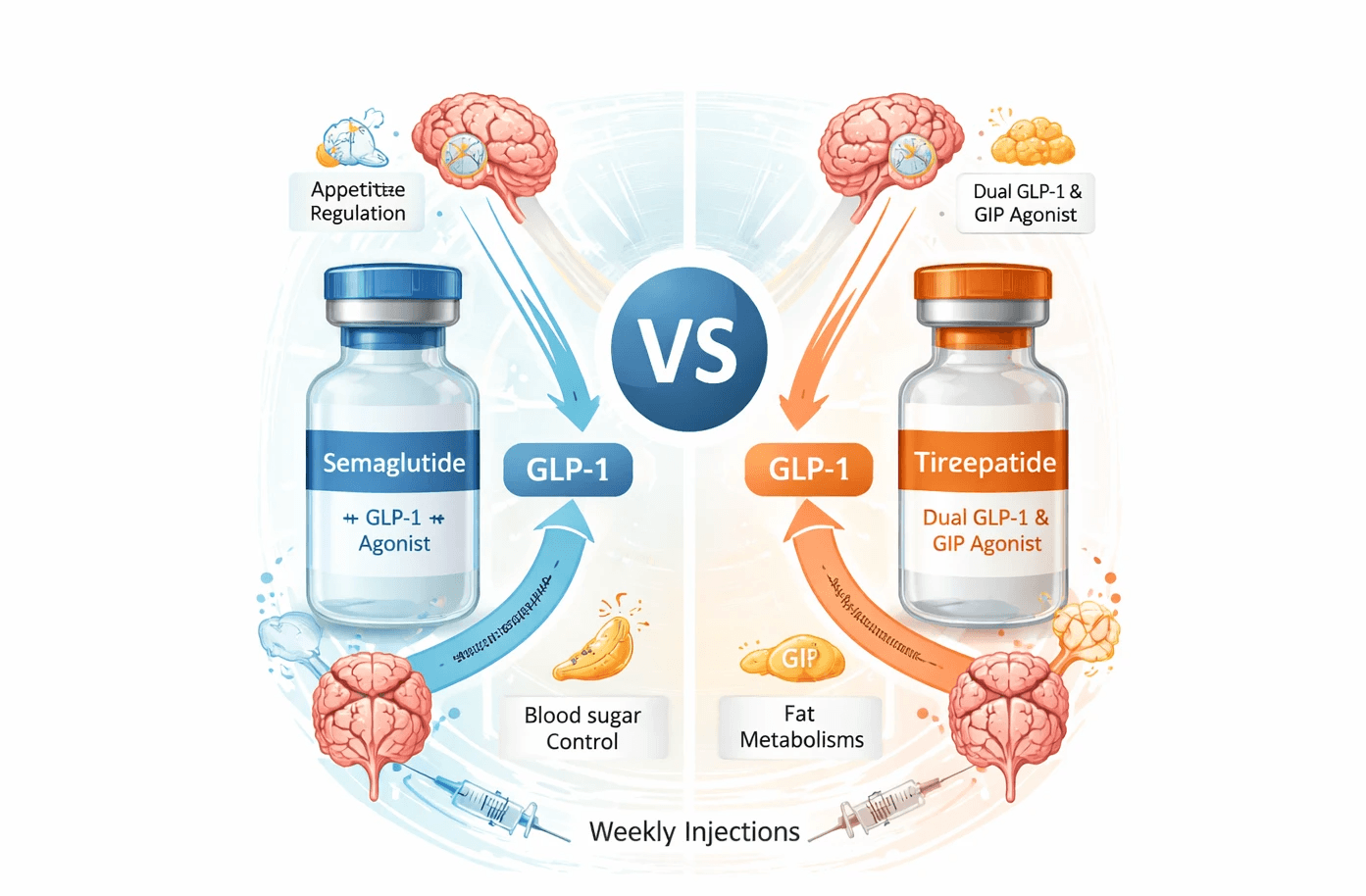
Tirzepatide and semaglutide represent a major shift in how we approach weight management—moving beyond willpower and dieting toward biology-driven care. Both medications support appetite regulation and metabolic health through once-weekly injections, but they operate differently inside the body. Semaglutide targets the GLP-1 pathway, while tirzepatide activates both GLP-1 and GIP receptors, creating a dual-hormone effect that may influence blood sugar, satiety, and fat metabolism more comprehensively.
Explore a science-backed comparison of tirzepatide and semaglutide for weight loss. Our guide details efficacy, side effects, and patient experiences.
Tirzepatide vs. Semaglutide: A Complete Comparison Guide
Tirzepatide and semaglutide are both once-weekly injections that support weight loss and metabolic health, but they work in slightly different ways. The key distinction is that semaglutide is a GLP-1 receptor agonist, while tirzepatide is a dual GLP-1 and GIP receptor agonist. This dual-action mechanism is a significant differentiator and often leads to different outcomes.
A New Era in Medical Weight Management
Inspired by growing consumer interest in GLP-1s, medications like tirzepatide and semaglutide represent a more effective approach to health management. These are not quick fixes. They are powerful, science-backed tools that offer real support for people who have struggled with the cycle of traditional dieting.
These treatments are designed to fit real life, giving patients a solid medical foundation to build sustainable results upon. The goal is a holistic health strategy that benefits not just those looking to lose weight, but also anyone focused on longevity and improving their overall vitality.

Understanding Your Options
As these medications become more common, it is important to understand the subtle but significant differences between them. While both fall under the umbrella of "incretin mimetics," their unique biological actions can produce very different outcomes. This guide offers a straightforward, side-by-side comparison to explain the science behind each one.
Here’s a quick look at how they stack up:
Feature | Tirzepatide (Zepbound®) | Semaglutide (Wegovy®) |
|---|---|---|
Primary Mechanism | Dual-action agonist (GLP-1 and GIP receptors) | Single-action agonist (GLP-1 receptor) |
Administration | Weekly subcutaneous injection | Weekly subcutaneous injection |
Common Goal | Weight management and metabolic health | Weight management and metabolic health |
Primary Receptors | Targets two key metabolic hormones | Targets one key metabolic hormone |
The fundamental difference lies in tirzepatide's dual-receptor activity. By targeting both GIP and GLP-1 pathways, it offers a distinct approach to influencing appetite, blood sugar, and fat storage compared to semaglutide’s single-pathway action.
This dual-hormone approach is a major step forward in metabolic medicine. According to KFF research, 32% of adults have heard "a lot" about these drugs, which makes clear, factual information more critical than ever.
Fortunately, modern telehealth services are making these treatments more accessible. These platforms connect patients directly with medical providers online, creating a structured and supportive environment for anyone considering GLP-1-based therapies. The focus is on a science-first methodology, ensuring your care is safe, reliable, and designed for consistency. Our mission is to provide the knowledge you need for a confident, well-informed discussion with your healthcare provider.
How GLP-1 and GIP Therapies Work
To understand the differences between tirzepatide and semaglutide, you have to look at how they work with your body's own chemistry. Both of these medications belong to a class of drugs called incretin mimetics. In plain terms, that means they mimic the hormones your gut naturally releases after you eat a meal. These hormones are key players in appetite control and blood sugar management.
Think of it like a communication network. These hormones act as messengers, traveling from your gut to your brain to deliver crucial updates on fullness and energy levels. This gut-brain axis is the entire basis for how both of these therapies support your metabolic health.

The Role of GLP-1 in Appetite Regulation
The first major player is a hormone called glucagon-like peptide-1 (GLP-1). When you eat, your intestines release GLP-1, which kicks off a cascade of important actions. It signals your pancreas to release insulin, which helps lower your blood sugar, and it also slows down the speed at which food leaves your stomach.
That slowing effect, known clinically as delayed gastric emptying, is why many people report feeling full much longer after eating. Semaglutide is a GLP-1 receptor agonist: it is designed to activate these exact pathways. In essence, it amplifies your body's natural fullness signals, often leading to reduced calorie consumption and better appetite control.
A primary benefit of a GLP-1 agonist is its ability to signal satiety. By activating receptors in the brain, it can help quiet "food noise," which are the persistent thoughts about eating that many people experience. It is a biological tool that helps align your body with healthier eating habits.
For years, this single-hormone approach has been a cornerstone of medical weight management. It's a reliable, well-researched method that targets a fundamental piece of our metabolic signaling system.
Tirzepatide’s Dual-Action Mechanism
This is where tirzepatide charts its own course. While semaglutide focuses on one pathway, tirzepatide is a dual-action agonist, meaning it activates two different hormone receptors, not just one.
In addition to targeting the GLP-1 receptor, tirzepatide also mimics a second gut hormone: glucose-dependent insulinotropic polypeptide (GIP). GIP also helps with insulin release, but researchers believe that when it works in concert with GLP-1, the combination has a powerful, complementary effect on the body's overall energy balance and how it stores fat.
By tapping into two distinct hormonal pathways, tirzepatide engages the body’s metabolic machinery more comprehensively. The working theory is that activating both the GLP-1 and GIP receptors produces a stronger effect on both blood sugar and weight, offering a different and potentially more potent angle for improving metabolic health.
Comparing Efficacy in Clinical Trials
When we look at how well these medications work, the best place to turn is clinical trial data. These studies give us a clear, science-backed picture of how tirzepatide and semaglutide perform in controlled environments. The results highlight why one might deliver different results than the other.
For some time, semaglutide was a top performer in the GLP-1 space, showing impressive weight loss in its major clinical trials. The conversation shifted once the data from tirzepatide's studies, especially the SURMOUNT series, was released.
These trials did not just test tirzepatide against a placebo; some were designed for direct comparison against other active medications, giving us a head-to-head view. The results showed a clear difference in the average weight loss achieved.
A Head-to-Head Comparison
A pivotal clinical trial that directly compared these two medications shifted the landscape. In that study, tirzepatide demonstrated an average weight loss of approximately 20% of body weight, while semaglutide came in at around 14%.
That is a clinically meaningful difference, and it has influenced how doctors view the two options for their patients. These are not just abstract numbers. A six-percentage-point difference can have a significant impact on related health markers like blood pressure, cholesterol, and insulin sensitivity.
While both drugs are effective, tirzepatide's dual-agonist mechanism, targeting both GIP and GLP-1 receptors, is widely believed to be the reason for its weight loss results in clinical studies. It’s a key differentiator that helps explain the mechanics behind its performance.
Understanding these distinctions is essential for anyone considering GLP-1 therapy. To get a better handle on how semaglutide works on its own, you can learn more in our guide on semaglutide for non-diabetics.
Clinical Efficacy Snapshot: Tirzepatide vs. Semaglutide
To make this data easier to compare at a glance, we have broken down the key findings from major clinical trials into a simple table. This snapshot provides a side-by-side summary of the most important performance metrics.
Metric | Tirzepatide (Zepbound/Mounjaro) | Semaglutide (Wegovy/Ozempic) |
|---|---|---|
Mechanism | Dual agonist (GLP-1 and GIP) | Single agonist (GLP-1) |
Avg. Weight Loss | Up to 22.5% in some trials | Around 15% in pivotal trials |
Metabolic Impact | Strong improvements in blood sugar, lipids | Significant improvements in blood sugar |
Primary Use | Weight management and type 2 diabetes | Weight management and type 2 diabetes |
It is important to remember that these are averages. Personal results can and will vary based on genetics, lifestyle, starting weight, and consistency with a treatment plan.
The point of looking at this data is not to crown a "winner" but to provide you with facts for a productive conversation with your doctor. A healthcare professional is the only one who can place these numbers into the context of your unique health profile and help you decide which path makes the most sense for your life and your goals.
Safety, Side Effects, and Your Day-to-Day Experience
Clinical trial data is one thing, but the experience of taking these medications every day is just as important. Since both tirzepatide and semaglutide are intended for long-term use, getting a clear picture of their safety and common side effects is crucial before starting.
The most common side effects for both drugs are gastrointestinal. This includes nausea, diarrhea, vomiting, and general stomach upset. While these issues are not pleasant, they are usually mild and tend to fade as your body gets used to the medication.
This adjustment period is exactly why doctors do not start patients on the highest dose right away.
How Dose Titration Minimizes Side Effects
To make the treatment as manageable as possible, providers use a strategy called dose titration. This simply means you will "start low and go slow." You begin with a small introductory dose and gradually increase it over weeks or even months.
This slow-and-steady approach gives your body the time it needs to adapt, which is key to minimizing initial side effects. It is a deliberate process designed to prioritize comfort and safety.
It is vital to stay in close contact with your doctor during this ramp-up phase. They need to know how you are feeling so they can adjust your dosing schedule if necessary. This teamwork ensures the treatment plan is working for you.
The chart below shows the kind of results seen in major clinical trials, which helps put the efficacy of these medications into perspective.
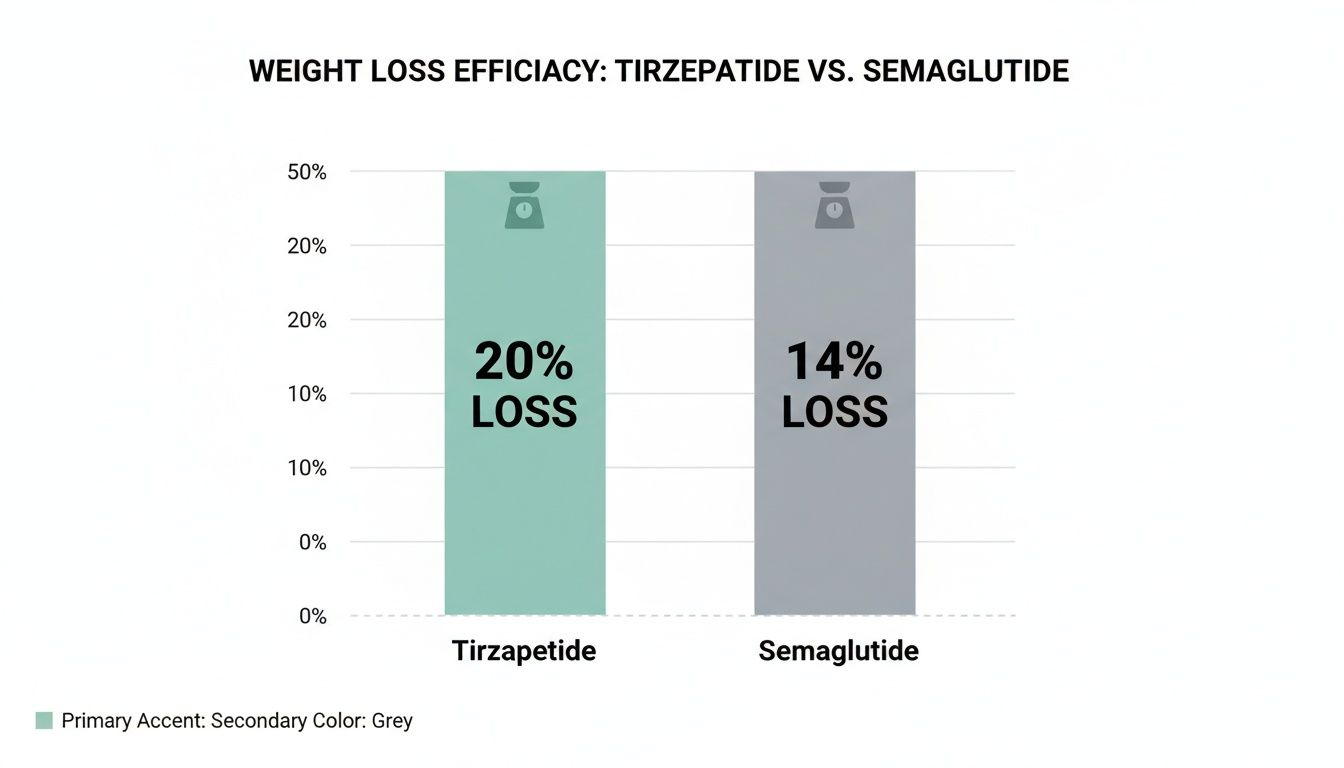
This difference in average outcomes is something your provider will weigh alongside your personal health history and how well you are tolerating the treatment.
Typical Dosing Schedules
Your doctor will map out a specific plan for you, but it helps to know what a standard progression looks like. Both medications are a once-weekly injection.
Semaglutide (Wegovy): A typical start is 0.25 mg a week for the first month. After that, the dose is usually increased every four weeks, moving up to 0.5 mg, 1.0 mg, and 1.7 mg, until you reach the target maintenance dose of 2.4 mg.
Tirzepatide (Zepbound): The journey usually begins at 2.5 mg weekly for four weeks. From there, your provider will likely increase the dose in 2.5 mg increments every four weeks as needed, climbing through 5 mg, 7.5 mg, 10 mg, 12.5 mg, and up to a maximum of 15 mg per week.
This careful, structured increase is a fundamental part of the treatment process. If you want to learn more, our guide on compounded tirzepatide safety and side effects goes into even greater detail.
Ultimately, choosing between these two powerful medications comes down to a conversation with your doctor about balancing the potential for results with your own tolerance for side effects. While some data suggests tirzepatide might have a slightly higher rate of GI issues, many patients tolerate both well, especially with a proper titration schedule. This is where having a trusted medical professional guiding you makes all the difference.
Navigating Cost, Access, and Availability
Knowing the clinical differences between tirzepatide and semaglutide is one thing, but for most people, the decision also comes down to practical factors like cost, insurance coverage, and availability. The demand for these drugs has skyrocketed, which has created both challenges and new pathways for patients.
The numbers are staggering. According to one report, prescriptions for semaglutide and tirzepatide together jumped by over 510% between late 2023 and mid-2025. Yet, a major roadblock remains: over 70% of commercial insurance plans still do not cover these GLP-1 medications for weight loss. This cost barrier is the single biggest reason they are not more widely used. You can learn more from these weight loss statistics and trends to see the full picture.
The Challenge of Insurance Coverage
Navigating insurance for these medications can be difficult. While both drugs are usually covered for type 2 diabetes, getting approval for weight management is a different matter. Patients often face a frustrating loop of prior authorizations and denials.
This gap between what doctors recommend and what insurance companies approve is a huge hurdle. It pushes people to look for other ways to get treatment that are both affordable and do not involve endless paperwork.
Telehealth: A Direct and Transparent Solution
This is where direct-to-patient telehealth services are changing the experience. By stepping outside the complicated insurance system, these platforms can offer straightforward, all-inclusive pricing. You know exactly what you are paying for: the doctor's consultation, the medication, ongoing support, and shipping are typically bundled into one clear cost.
This model is designed to fit real life. It gets rid of the guesswork and hidden fees often encountered with insurance. Patients can engage directly with a medical provider and have a clear path to starting treatment without bureaucratic headaches. For anyone seeking a practical way to manage their health, that simplicity is a huge benefit.
By simplifying the process, telehealth makes medically supervised weight management more accessible. Patients can get a professional evaluation, a personalized plan, and medication delivered to their door, all without needing to navigate complex insurance policies.
Compounded Options for Enhanced Accessibility
Telehealth providers may also offer another important option: compounded versions of tirzepatide and semaglutide. These are prepared by licensed U.S. pharmacies to meet the specific needs of a patient, which a provider may determine is clinically appropriate. This can be a vital choice when brand-name drugs are in short supply or when cost is a primary concern.
These compounded medications are made in state-licensed facilities that follow strict quality and safety rules. Although they are not directly FDA-approved, they provide a science-backed alternative when prescribed by a qualified doctor. This route opens the door for more people to access these powerful therapies safely and consistently under medical guidance.
Making the Right Choice With Your Doctor
Ultimately, deciding between tirzepatide and semaglutide is not something you should do on your own. This is a conversation and a partnership between you and your doctor, who can take all this clinical data and apply it to your specific health situation. The goal is to find the right tool that works for your body and your life.
Your doctor will weigh several critical factors to map out the best path forward. This is not just about picking a drug; it is about creating a personalized plan you can stick with for the long term.
Key Factors in Your Treatment Plan
Before writing a prescription, a good provider will look at your complete health picture. This conversation will almost always cover:
Your Main Goals: Is your top priority weight loss, getting your A1c under control, or tackling other metabolic issues? Knowing what success looks like for you is the first step.
Your Medical History: A deep dive into your health background, especially any existing conditions, is non-negotiable. This ensures the medication is a safe fit.
Side Effect Tolerance: How sensitive are you to potential GI issues? Your answer might influence which medication is chosen and how slowly the dose is increased.
This careful, one-on-one evaluation helps make sure the treatment aligns with your body and lifestyle. Remember, the "best" medication is the one that gets you results while being manageable. For anyone thinking about changing their current medication, our patient's guide to switching from semaglutide to tirzepatide has helpful, practical advice.
Efficacy and Market Trends
While both drugs work well, the numbers from clinical trials often steer the conversation. And the market has certainly noticed. Per a 2024 Marketdata report, tirzepatide is on track to become a best-selling drug, with projected sales hitting $36.5 billion by 2025.
Why the significant interest? It comes down to performance. In trials, tirzepatide showed it could help people lose up to 22.5% of their total body weight. For comparison, semaglutide's trials showed around 15% weight loss. You can discover more insights about this pharmaceutical trend if you are curious about the market dynamics.
The most effective treatment is not always the one with the biggest weight loss number in a study. It is about finding a sustainable balance of results, safety, and side effects that works for you, with guidance from a medical professional.
Your relationship with your provider is the most important part of this journey. Through regular check-ins and open communication, your plan can be fine-tuned over time. This ensures your path to better health is both safe and something you can maintain for life.
Frequently Asked Questions
It is completely normal to have questions when weighing your options. Here, we will tackle some of the most common ones about tirzepatide and semaglutide to help you prepare for a more informed conversation with your doctor.
Is One Medication Better For Specific Health Conditions?
This is a great question, and the answer really comes down to your individual health picture. While both are effective for weight management, their specific approvals from the FDA point to some key differences.
For instance, tirzepatide recently gained approval for treating moderate to severe obstructive sleep apnea in adults with obesity. On the other hand, semaglutide has specific approvals for lowering cardiovascular risk in certain patients. Your provider will look at your entire health profile to see which one aligns best with your needs.
How Long Do I Need To Take These Medications?
Think of these medications less like a short-term diet and more like a long-term tool for managing a chronic condition, similar to how one might manage high blood pressure. They are not designed to be a quick fix.
The goal is to create a sustainable strategy that helps you not just lose weight but also maintain those health improvements for the long haul. You and your provider will figure out the right timeline based on your progress and what you are hoping to achieve.
What Happens If I Experience Side Effects?
The most common side effects, especially when just starting, are mild gastrointestinal issues like nausea. This is expected, which is why a core part of the treatment is a slow and steady dose increase to give your body time to adjust.
Medically supervised care is designed to fit real life. Through secure provider messaging, you can discuss any side effects you experience, allowing your clinician to adjust your plan and ensure your treatment is both effective and comfortable.
This kind of ongoing support is crucial for getting through the initial phase and landing on a dose that feels right for you.
Ready to explore a personalized approach to your health? With Trava, you can connect with a licensed medical provider to see if a science-backed plan is right for you. Find out more at Trava.