GLP-1’s at low prices with free shipping. Get Started


" transform="translate(53.5 27.5)" width="0px"/><g d="M 164.013 0 C 206.437 0 240.828 33.597 240.828 75.04 C 240.828 116.484 206.437 150.08 164.013 150.08 C 121.589 150.08 87.198 116.484 87.198 75.04 C 87.198 33.597 121.589 0 164.013 0 Z M 164.52 30.422 C 140.298 30.422 120.662 50.398 120.662 75.04 C 120.662 99.682 140.298 119.659 164.52 119.659 C 188.742 119.659 208.377 99.682 208.377 75.04 C 208.377 50.398 188.742 30.422 164.52 30.422 Z M 49.689 117.004 L 49.724 117.026 C 50.148 121.056 54.397 124.222 59.576 124.222 C 60.05 124.222 60.516 124.195 60.973 124.143 L 61.097 124.222 L 83.406 120.926 C 83.406 120.926 73.956 127.316 67.688 131.067 C 60.617 135.299 49.689 141.207 49.689 141.207 C 49.689 141.207 39.295 147.961 27.633 149.827 C 27.576 149.836 27.52 149.844 27.463 149.853 C 26.591 150.023 25.702 150.098 24.814 150.077 C 24.739 150.079 24.665 150.08 24.591 150.08 L 24.577 150.069 C 19.359 149.854 15.211 146.423 15.211 142.221 L 15.211 29.154 C 15.211 28.755 15.022 28.379 14.702 28.139 C 14.383 27.9 13.968 27.826 13.585 27.939 L 0 29.915 L 35.746 8.366 L 49.689 0 Z M 260.136 98.048 C 260.234 98.048 260.33 98.052 260.427 98.058 L 287.219 98.517 L 287.219 98.612 C 295.722 98.712 302.586 105.638 302.586 114.166 C 302.586 121.454 297.574 127.571 290.811 129.259 L 304.648 146.964 L 304.644 146.964 C 304.889 147.252 305.023 147.617 305.023 147.995 C 305.023 148.839 304.365 149.536 303.523 149.585 L 303.523 149.588 L 291.341 149.588 L 291.341 149.582 C 289.373 149.504 287.613 148.618 286.384 147.245 L 286.374 147.245 L 286.328 147.182 C 286.064 146.88 285.827 146.557 285.619 146.215 L 273.443 129.628 L 273.463 129.625 C 272.779 128.705 272.41 127.589 272.412 126.442 C 272.412 123.684 274.502 121.414 277.187 121.13 L 277.191 121.101 L 281.783 120.351 L 281.783 120.348 C 285.214 120.264 287.968 117.864 287.968 114.916 C 287.968 111.968 285.214 109.568 281.783 109.483 L 281.783 109.481 L 270.538 109.481 L 270.538 146.777 L 270.536 146.777 C 270.538 146.808 270.538 146.839 270.538 146.871 C 270.538 148.34 269.371 149.537 267.913 149.586 L 267.913 149.588 L 258.168 149.588 L 258.168 149.573 C 256.799 149.433 255.731 148.277 255.731 146.871 C 255.731 146.839 255.733 146.808 255.733 146.777 L 255.731 146.777 L 255.731 102.359 L 255.733 102.359 C 255.781 100.064 257.585 98.201 259.856 98.058 L 259.856 98.048 L 259.998 98.051 C 260.044 98.049 260.09 98.048 260.136 98.048 Z M 324.515 110.615 C 326.064 110.719 327.396 111.676 328.101 113.049 L 332.884 119.45 L 338.302 112.809 C 339.033 111.565 340.298 110.713 341.756 110.615 L 341.756 110.605 L 352.44 110.605 C 353.577 110.605 354.5 111.528 354.5 112.667 C 354.5 113.003 354.42 113.321 354.276 113.601 L 354.314 113.604 L 354.176 113.776 C 354.1 113.896 354.011 114.008 353.912 114.109 L 342.693 128.222 C 342.693 128.222 342.413 128.627 342.413 128.972 C 342.413 129.318 342.693 129.722 342.693 129.722 L 355.241 146.116 C 355.722 146.507 356 147.094 356 147.714 C 356 148.852 355.077 149.775 353.938 149.775 C 353.876 149.775 353.814 149.772 353.751 149.766 L 353.751 149.775 L 341.756 149.775 L 341.756 149.749 C 340.252 149.58 338.973 148.605 338.31 147.237 L 333.228 140.405 C 333.228 140.405 333.042 140.217 332.76 140.217 C 332.48 140.217 332.291 140.405 332.291 140.405 L 332.289 140.402 L 327.078 147.492 C 326.891 147.825 326.664 148.134 326.401 148.411 L 326.295 148.557 L 326.263 148.553 C 325.588 149.207 324.723 149.641 323.764 149.749 L 323.764 149.775 L 312.331 149.775 C 311.194 149.775 310.271 148.852 310.271 147.714 C 310.271 147.02 310.613 146.407 311.138 146.033 L 323.015 130.659 C 323.015 130.659 323.295 130.255 323.295 129.909 C 323.295 129.564 323.015 129.16 323.015 129.16 L 311.458 114.146 C 311.058 113.758 310.833 113.224 310.833 112.667 C 310.833 111.528 311.756 110.605 312.894 110.605 L 324.515 110.605 Z" fill="transparent" height="150.08043079668755px" id="HpkDSJwpk" transform="translate(0 1)" width="356.0000118682049px"><path d="M 76.815 0 C 119.239 0 153.63 33.597 153.63 75.04 C 153.63 116.484 119.239 150.08 76.815 150.08 C 34.391 150.08 0 116.484 0 75.04 C 0 33.597 34.391 0 76.815 0 Z M 77.322 30.422 C 53.1 30.422 33.464 50.398 33.464 75.04 C 33.464 99.682 53.1 119.659 77.322 119.659 C 101.544 119.659 121.179 99.682 121.179 75.04 C 121.179 50.398 101.544 30.422 77.322 30.422 Z" fill="rgb(8, 9, 35)" height="150.08043079668755px" id="kvrqFybmK" transform="translate(87.198 0)" width="153.62981889920286px"/><path d="M 49.689 117.004 L 49.724 117.026 C 50.148 121.056 54.397 124.222 59.576 124.222 C 60.05 124.222 60.516 124.195 60.973 124.143 L 61.097 124.222 L 83.406 120.926 C 83.406 120.926 73.956 127.316 67.688 131.067 C 60.617 135.299 49.689 141.207 49.689 141.207 C 49.689 141.207 39.295 147.961 27.633 149.827 C 27.576 149.836 27.52 149.844 27.463 149.853 C 26.591 150.023 25.702 150.098 24.814 150.077 C 24.739 150.079 24.665 150.08 24.591 150.08 L 24.577 150.069 C 19.359 149.854 15.211 146.423 15.211 142.221 L 15.211 29.154 C 15.211 28.755 15.022 28.379 14.702 28.139 C 14.383 27.9 13.968 27.826 13.585 27.939 L 0 29.915 L 35.746 8.366 L 49.689 0 Z M 260.136 98.048 C 260.234 98.048 260.33 98.052 260.427 98.058 L 287.219 98.517 L 287.219 98.612 C 295.722 98.712 302.586 105.638 302.586 114.166 C 302.586 121.454 297.574 127.571 290.811 129.259 L 304.648 146.964 L 304.644 146.964 C 304.889 147.252 305.023 147.617 305.023 147.995 C 305.023 148.839 304.365 149.536 303.523 149.585 L 303.523 149.588 L 291.341 149.588 L 291.341 149.582 C 289.373 149.504 287.613 148.618 286.384 147.245 L 286.374 147.245 L 286.328 147.182 C 286.064 146.88 285.827 146.557 285.619 146.215 L 273.443 129.628 L 273.463 129.625 C 272.779 128.705 272.41 127.589 272.412 126.442 C 272.412 123.684 274.502 121.414 277.187 121.13 L 277.191 121.101 L 281.783 120.351 L 281.783 120.348 C 285.214 120.264 287.968 117.864 287.968 114.916 C 287.968 111.968 285.214 109.568 281.783 109.483 L 281.783 109.481 L 270.538 109.481 L 270.538 146.777 L 270.536 146.777 C 270.538 146.808 270.538 146.839 270.538 146.871 C 270.538 148.34 269.371 149.537 267.913 149.586 L 267.913 149.588 L 258.168 149.588 L 258.168 149.573 C 256.799 149.433 255.731 148.277 255.731 146.871 C 255.731 146.839 255.733 146.808 255.733 146.777 L 255.731 146.777 L 255.731 102.359 L 255.733 102.359 C 255.781 100.064 257.585 98.201 259.856 98.058 L 259.856 98.048 L 259.998 98.051 C 260.044 98.049 260.09 98.048 260.136 98.048 Z M 324.515 110.615 C 326.064 110.719 327.396 111.676 328.101 113.049 L 332.884 119.45 L 338.302 112.809 C 339.033 111.565 340.298 110.713 341.756 110.615 L 341.756 110.605 L 352.44 110.605 C 353.577 110.605 354.5 111.528 354.5 112.667 C 354.5 113.003 354.42 113.321 354.276 113.601 L 354.314 113.604 L 354.176 113.776 C 354.1 113.896 354.011 114.008 353.912 114.109 L 342.693 128.222 C 342.693 128.222 342.413 128.627 342.413 128.972 C 342.413 129.318 342.693 129.722 342.693 129.722 L 355.241 146.116 C 355.722 146.507 356 147.094 356 147.714 C 356 148.852 355.077 149.775 353.938 149.775 C 353.876 149.775 353.814 149.772 353.751 149.766 L 353.751 149.775 L 341.756 149.775 L 341.756 149.749 C 340.252 149.58 338.973 148.605 338.31 147.237 L 333.228 140.405 C 333.228 140.405 333.042 140.217 332.76 140.217 C 332.48 140.217 332.291 140.405 332.291 140.405 L 332.289 140.402 L 327.078 147.492 C 326.891 147.825 326.664 148.134 326.401 148.411 L 326.295 148.557 L 326.263 148.553 C 325.588 149.207 324.723 149.641 323.764 149.749 L 323.764 149.775 L 312.331 149.775 C 311.194 149.775 310.271 148.852 310.271 147.714 C 310.271 147.02 310.613 146.407 311.138 146.033 L 323.015 130.659 C 323.015 130.659 323.295 130.255 323.295 129.909 C 323.295 129.564 323.015 129.16 323.015 129.16 L 311.458 114.146 C 311.058 113.758 310.833 113.224 310.833 112.667 C 310.833 111.528 311.756 110.605 312.894 110.605 L 324.515 110.605 Z" fill="rgb(8, 9, 35)" height="150.08043079668755px" id="kdERGws7a" width="356.0000118682049px"/></g></svg>)
Doctor Supervised Weight Loss Program: A 2026 Guide
If you’ve been stuck in the cycle of starting over every Monday, it’s not a lack of effort—it’s a lack of the right support. As explained in , a doctor supervised weight loss program shifts the focus from willpower to biology, using medical insight to understand what’s actually driving your weight. With the right guidance, weight loss becomes less about guessing and more about following a plan that adapts with you.
Explore a doctor supervised weight loss program via telemedicine. Learn how virtual consults, prescriptions, and coaching can help you succeed.

Doctor Supervised Weight Loss Program: A 2026 Guide
You wake up motivated on Monday. You clean out the pantry, buy the “good” groceries, and promise yourself that this time will be different.
By Thursday, work runs late. Dinner becomes whatever is fastest. By the weekend, the scale has barely moved, your hunger feels louder than your willpower, and that familiar thought creeps back in: “Why can’t I do what other people seem to do so easily?”
If that sounds familiar, you’re not lazy, and you’re not broken. Many people who seek a doctor supervised weight loss program have already done the hard part over and over. They’ve tried cutting carbs, counting points, skipping meals, paying for apps, joining gyms, and starting over every Monday. What they haven’t had is medical guidance that treats weight like the health condition it often is.
That difference matters. A medical program doesn’t begin with blame. It begins with questions. What is your appetite doing? How is your sleep? Are medications, hormones, stress, insulin resistance, or past dieting patterns making progress harder than it should be? A doctor asks those questions because weight loss is rarely just about “eating less and moving more.”
Telemedicine has made that kind of care far easier to access. You no longer have to rearrange your life around office visits just to get expert help. You can start from home, talk with a licensed clinician, review a plan built for your history and goals, and continue with structured follow-up without sitting in another waiting room.
Your Journey to Sustainable Weight Loss Starts Here
Melissa is the kind of patient I see often. She’s busy, responsible, and tired of being told to “just stay consistent.” She had tried popular diets, meal plans from friends, and intense exercise bursts that worked for a few weeks until hunger, fatigue, and real life caught up with her.
What discouraged her most wasn’t the effort. It was the feeling that she was failing a test everyone else had somehow passed.
That’s where a doctor supervised weight loss program feels different from the start. Instead of handing you another generic rulebook, it asks why your body is resisting change. It looks for patterns. It considers medical history. It brings structure to something that often feels chaotic.

For many people, that shift alone is a relief. You stop seeing weight loss as a character test and start seeing it as a clinical process that can be assessed, monitored, and adjusted.
Weight management works better when you stop treating every setback as a personal failure and start treating it as useful information.
Modern virtual care has opened that door for people who used to feel shut out. If you live far from a clinic, work unusual hours, care for children or parents, or feel uncomfortable discussing weight in person, telemedicine offers a practical path forward.
The heart of it is simple. You meet with a physician, review your health, discuss treatment options, and follow a plan that changes as your body changes. That’s a very different experience from downloading a meal plan and hoping for the best.
Understanding the Medical Approach to Weight Loss
High blood pressure is understood to need medical care. If your readings stay high, a doctor doesn’t tell you to “try harder” and send you away with a motivational quote. They evaluate the cause, review your risks, choose treatment, and follow your progress.
Weight deserves the same mindset.
Why weight loss is medical for many people
A doctor supervised weight loss program treats excess weight as something influenced by biology, behavior, environment, and health conditions all at once. Appetite hormones, blood sugar patterns, sleep disruption, stress, previous dieting, and certain medications can all push in the wrong direction.
That’s why commercial plans often disappoint. Many are built like one-size-fits-all uniforms. Real bodies aren’t shaped that way.
A medical approach looks more like custom-fitted clothing. It’s built to fit your measurements, not someone else’s. Your plan may include lab review, medication screening, nutrition guidance, exercise adjustments, and behavior support. Someone else’s plan may look very different.
What makes this different from a commercial diet
Commercial diets often rely on strict rules because rules are easy to sell. But they don’t always explain what to do when hunger increases, when progress stalls, or when your schedule changes.
A medical program is designed for those moments.
Diagnosis first: A clinician looks at your history, current symptoms, and barriers before recommending treatment.
Personalization next: Nutrition, activity, and medication choices are matched to your health needs.
Monitoring throughout: If something isn’t working, the plan changes. You’re not expected to guess.
Safety built in: Side effects, nutrition gaps, and warning signs are watched closely.
Practical rule: If a plan assumes your body will respond exactly like everyone else’s body, it’s probably too simplistic for long-term success.
The hidden problem with relying on willpower alone
Willpower is useful, but it’s not a treatment plan. If your appetite stays high, your energy crashes, or your weight rebounds every time life gets stressful, more self-criticism won’t solve the underlying issue.
Think of trying to lose weight without support like driving with a dashboard light on and music turned up loud enough to ignore it. You can keep moving for a while, but the problem is still there. Medical supervision helps you read the dashboard instead of pretending it doesn’t matter.
Why telemedicine fits the medical model
Telemedicine doesn’t make the care less real. It changes the delivery, not the seriousness. You still complete a clinical evaluation. You still speak with a licensed provider. You still receive medical recommendations, prescriptions when appropriate, and follow-up.
For many patients, virtual care is easier to stick with because the process fits daily life better. Instead of losing half a day to travel and waiting rooms, you can check in from home and keep the momentum going.
That accessibility matters because sustainable weight loss usually doesn’t come from one dramatic appointment. It comes from repeated, thoughtful adjustments over time.
Inside Your Personalized Telemedicine Weight Loss Plan
A good virtual program should feel organized, not mysterious. Most patients do better when they know what happens first, what comes next, and why each part matters.
The telemedicine model works best when it combines medical judgment with practical follow-through. These four pillars usually make the difference.
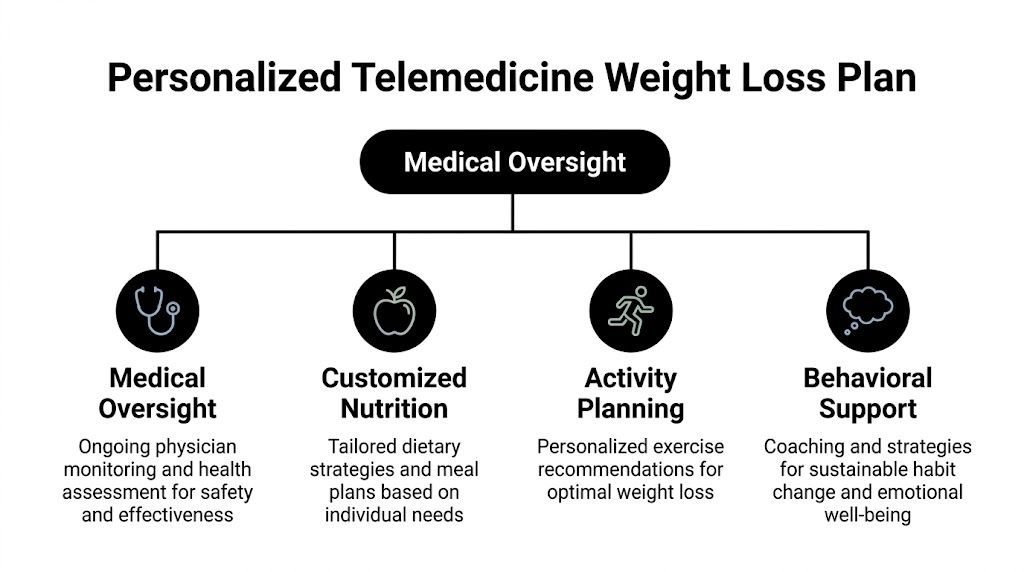
Comprehensive assessment before any treatment
The first step isn’t a prescription. It’s an evaluation.
A clinician typically reviews your medical history, current medications, weight history, eating patterns, sleep, movement, and health goals. Depending on the program, that review may also involve labs and body composition information. The goal is to understand what’s driving weight gain or making weight loss harder.
Many readers get confused at this point. They assume telemedicine means rushed care. It doesn’t have to. A strong virtual program can still gather the same important background information that an in-person clinic would use to make careful decisions.
That’s why the initial visit matters so much. It creates the map before the journey starts.
A prescription plan that matches your biology
Some patients do well with nutrition and behavior changes alone. Others benefit from prescription support, especially when appetite, cravings, or metabolic conditions keep getting in the way.
This is not guesswork. The clinician considers your health history, goals, tolerance for side effects, and likely response. If a GLP-1 medication is appropriate, it’s prescribed and adjusted under supervision. If it isn’t, another approach may make more sense.
If you want a clearer picture of what a virtual visit can include, this overview of an online weight loss consultation shows how telehealth care is structured.
Frequent follow-up is not a minor detail
The most overlooked part of a doctor supervised weight loss program is follow-up. People often focus on the starting plan, but results usually depend on what happens after that.
Patients completing at least 6 monthly visits with a medical provider achieved an average weight loss of 7.06% over 6 months, compared with 4.68% in those with only 4 to 5 visits, according to the study in the Journal of Health Economics and Outcomes Research (specialized medical weight management intervention for high-risk obesity).
That finding makes clinical sense. Bodies change during weight loss. Hunger shifts. Plateaus happen. Side effects may need attention. A plan that isn’t revisited often can become outdated quickly.
More contact usually means more course correction. More course correction usually means a better chance of staying on track.
Lifestyle coaching that people can actually follow
Medical care works best when it includes everyday habits. That doesn’t mean handing you a perfect meal chart and expecting obedience. It means building routines you can repeat on normal Tuesdays, not just ideal weekends.
That may include:
Nutrition guidance: Choosing meals that support fullness and steady energy.
Activity planning: Matching exercise to your starting level, joints, schedule, and preferences.
Behavior support: Identifying triggers for overeating, late-night snacking, or all-or-nothing thinking.
Tracking tools: Using food logs or a Macro Calculator for Weight Loss when you need more structure around intake and protein targets.
What the virtual experience often feels like
Many patients expect telemedicine to feel impersonal. In practice, it often feels more usable.
You’re at home. You’re in your own kitchen, with your own food, your own schedule, and your own stressors in plain view. That can make the conversation more honest. Instead of speaking in abstract terms, you can talk about the snacks in your pantry, the hours you work, the nights you barely sleep, and the options available to you.
A telemedicine service such as 10 Rx Home connects patients with board-certified physicians, uses a quiz-to-consult workflow, and supports ongoing prescription-based care across all 50 states. For readers who’ve struggled to reach an in-person obesity clinic, that kind of access can remove a major barrier.
How the four parts work together
A virtual plan works when the pieces support each other.
Pillar | What it does | Why it matters |
|---|---|---|
Assessment | Identifies medical and lifestyle drivers | Prevents generic treatment |
Prescription planning | Matches medication to the patient | Helps control hunger and improve adherence when appropriate |
Monitoring | Tracks progress and safety | Catches plateaus and side effects early |
Lifestyle support | Builds practical habits | Makes results easier to maintain |
If one pillar is missing, the plan gets weaker. Medication without follow-up can drift. Coaching without medical review can miss important causes. Assessment without ongoing support becomes a one-time conversation instead of real care.
The Science Behind Medically Guided Weight Loss
People often ask whether supervision really changes outcomes or whether it just sounds more reassuring. It changes outcomes.
A 2023 study in JAMA Network Open found that the 1-year probability of achieving 5% or greater weight loss without weight management treatment was 15.6%. With nutrition counseling, that probability rose to 23.1%, and with meal replacement, it reached 54.6% (JAMA Network Open study on weight management treatments).
Those numbers help explain why so many self-directed efforts feel discouraging. The issue isn’t always effort. The issue is that unsupported treatment often isn’t strong enough for the biology involved.
Why supervision improves safety
Weight loss advice online can be wildly inconsistent. One person says eat as little as possible. Another says fast longer. Another says push harder in the gym no matter how you feel.
A physician doesn’t approach it that way. Medical supervision helps determine whether a treatment is appropriate for your health history, whether side effects need intervention, and whether the pace of weight loss remains safe. It also helps protect against another common problem: under-fueling.
When people cut calories too aggressively, they often end up exhausted, hungry, and discouraged. A supervised program tries to avoid that trap by making measured adjustments instead of dramatic swings.
Why medication oversight matters
Prescription medications can be useful tools, but tools work best in trained hands. That’s especially true with newer options that affect appetite and digestion.
If you’re exploring GLP-1 care, this overview of Meta GLP-1 offers a starting point for understanding how a supervised approach may fit into treatment.
A medication should never be the whole plan. It should sit inside a plan that includes monitoring, nutrition, and follow-up.
Evidence matters because hope needs structure
Hope is important. So is realism.
Medically guided weight loss doesn’t promise a perfect straight line. It offers something better: a process grounded in clinical evidence, adjusted to the person, and watched carefully enough to catch trouble early. That’s one reason many patients feel calmer once they begin. They’re no longer guessing which internet advice to trust.
They have a clinician helping them sort signal from noise.
A Guide to Common Weight Loss Medications and Supplements
Medication is often the part patients feel most curious about and most nervous about. That makes sense. You want to know what it does, whether it’s appropriate for you, and what “normal” progress looks like.
The easiest way to think about weight loss medication is this: it doesn’t replace healthy habits. It helps some people practice those habits with less friction.
GLP-1 medications in plain language
GLP-1 medications, including semaglutide, work by mimicking a natural hormone involved in appetite and digestion. In simple terms, they can help you feel fuller, reduce how much you want to eat, and slow stomach emptying.
Under medical supervision, GLP-1 medications have shown strong results. Clinical trials such as the STEP trials showed 12% to 18% total body weight loss at 68 weeks, with 90% adherence under physician oversight versus 50% in self-directed efforts, according to the cited review from Wellspring Health Services (medical weight loss supervised programs work better).
That doesn’t mean everyone will have the same experience. It does mean these medications are worth serious consideration when the right patient is matched with the right monitoring.
What patients usually misunderstand
Many people assume weight loss medications “force” weight off. That’s not how a physician views them.
These medications are better understood as supports. They may lower appetite noise, reduce the constant mental tug toward food, and make portion control more natural. But you still need a plan for meals, protein intake, movement, hydration, and follow-up.
If you’re learning about semaglutide specifically, this page on semaglutide injection explains the treatment in more detail.
Supportive supplements and nutrition tools
Some programs also include supportive supplements as part of a broader wellness plan. These don’t replace prescription treatment when medication is indicated, but they may support energy, routine, or nutritional consistency when chosen carefully.
Protein is one of the most practical examples. Higher-protein meals can help with fullness and muscle preservation during weight loss, which is why many clinicians discuss shakes or powders with patients who skip meals or struggle to hit protein targets. For a patient-friendly overview, this guide to protein powder for weight loss can help you compare options.
“The best nutrition tool is the one you’ll actually use consistently and tolerate well.”
Comparing common medical weight loss approaches
Approach | Mechanism of Action | Typical 6-Month Weight Loss | Best For |
|---|---|---|---|
GLP-1 medication | Mimics a hormone involved in appetite and digestion | Qualitatively strong results under supervision | Patients who struggle with appetite, cravings, or repeated diet failure |
Lifestyle counseling with physician oversight | Improves eating patterns, activity, and habits with accountability | Modest to meaningful progress depending on adherence | Patients who want structured non-drug support or need a foundation before medication |
Meal replacement strategies in supervised care | Simplifies calorie intake and decision-making | Can outperform self-directed efforts in selected patients | Patients who benefit from high structure |
Supplements within a medical plan | Supports nutrition or routine, depending on the product | Varies by person and product | Patients with identified gaps or practical barriers |
Safety notes that matter
Medication choice should never come from social media trends. A physician screens for who is and isn’t a good candidate. They review your medical history, current prescriptions, symptoms, and treatment goals before writing anything.
That matters because side effects, interactions, and tolerability are individual. One patient may do well with a gradual dose increase. Another may need a different option entirely.
The safest path is rarely the loudest one online. It’s the one that fits your health profile and includes real follow-up.
Your First Steps with a Virtual Weight Loss Doctor
Starting usually feels bigger in your head than it does in real life. Most virtual programs break into a few simple stages.

Step one is a private screening
You begin with a short online questionnaire about your goals, health history, and current concerns. This helps the clinical team understand whether a doctor supervised weight loss program is a fit and what issues may need closer review.
For many people, this is a relief. It’s easier to be honest when you’re not rushed and not sitting under fluorescent lights in an exam room.
Step two is the medical consultation
Next comes a virtual visit with a physician. You talk through your history, weight patterns, medications, and treatment preferences. If prescription treatment is appropriate, the doctor explains options and what monitoring will look like.
If you’ve never had a telehealth prescription visit before, this overview of an online doctor prescription consultation shows how the process typically works.
Step three is your personalized plan
After the consultation, you receive a plan customized for your needs. That may include nutrition guidance, behavior goals, follow-up scheduling, and prescriptions delivered to your door when indicated.
The convenience matters more than people expect. When treatment is easy to access, people are more likely to stay engaged.
A virtual model removes many of the usual obstacles:
Less disruption: No commute, parking, or long waiting room delays.
Better continuity: Follow-up visits are easier to keep.
More privacy: You can discuss sensitive topics from home.
Practical support: Your treatment fits into real life instead of competing with it.
This process doesn’t make weight loss effortless. It makes help easier to reach.
Inspiring Stories from the 10 Rx Home Community
The numbers matter, but so do the quieter wins people notice in daily life.
One patient I’ll call Daniel had spent years losing the same weight and gaining it back. He did well for a month at a time, then work travel, restaurant meals, and stress would undo everything. What changed for him wasn’t a burst of motivation. It was having a physician-guided plan with regular follow-up, so when appetite surged and progress slowed, he didn’t panic or quit. He adjusted and kept going.
Another patient, Ava, was less focused on a clothing size than on stamina. She wanted enough steady energy to get through work without grazing all afternoon and enough confidence to say yes to social plans again. The scale mattered, but not as much as feeling in control around food for the first time in years.
Their experiences fit what we see in real-world care. A primary care weight management program reported an average total body weight loss of 5.7%, and 53% of patients achieved more than 5% total body weight loss with physician guidance and medication in that real-world setting (Family Medicine study on primary care weight management).
The victories patients talk about most
Steadier appetite: Meals feel calmer and less chaotic.
More consistency: One difficult day no longer turns into a lost month.
Better follow-through: Accountability keeps small problems from becoming drop-off points.
Renewed confidence: Patients start trusting themselves again.
Those changes often arrive before anyone else notices the weight loss. They still count. In many cases, they’re the reason lasting progress becomes possible.
Your Questions About Doctor Supervised Weight Loss Answered
People usually reach this point with a few practical concerns. Those questions are important.

Is telemedicine really enough for weight loss care
For many patients, yes. A virtual program can handle screening, physician consultation, treatment planning, prescription management, and ongoing follow-up. If a clinician believes you need in-person evaluation, they can tell you that. Good telemedicine doesn’t ignore limits. It works responsibly within them.
Will I have to stay on medication forever
Not everyone uses medication long term, and not every patient uses medication at all. The better question is what happens when active weight loss ends.
Many people get blindsided at this stage. Weight maintenance needs a plan too. According to the Obesity Action Coalition resource provided, many patients using GLP-1s regain two-thirds of lost weight within a year of stopping without support, which is why ongoing telehealth monitoring matters so much (physician-supervised options and long-term support).
That doesn’t mean regain is inevitable. It means maintenance should be treated as a real phase of care, not an afterthought.
Reaching your goal weight is not the end of treatment planning. It’s the beginning of maintenance planning.
What if I’ve failed before
Then you’re like many patients who do well in medically guided care.
Past attempts often provide useful clues. Maybe your hunger was never controlled. Maybe your plan was too rigid. Maybe no one adjusted the strategy when life changed. Failure in one framework doesn’t mean failure in all frameworks.
What about cost and insurance
Program costs and insurance coverage vary, and medication coverage can differ widely. The best approach is to ask directly during the intake process so you know what is covered, what is out of pocket, and what alternatives exist if one option isn’t financially practical.
How do I know I’m ready
You’re ready when you’re tired of guessing and willing to accept help. Not because you feel perfectly confident. Few people feel perfectly confident.
You don’t need more shame. You need a plan that respects biology, uses medical judgment, and fits into your life. That’s what makes a telemedicine-based doctor supervised weight loss program so valuable. It turns a lonely cycle into a supported process.
If you're ready to stop starting over and begin with medical guidance, 10 Rx Home offers a simple next step. You can begin with a free quiz, connect with a board-certified physician, and see whether a personalized virtual weight loss plan fits your needs and goals.