Best At Home Gut Health Test: 2026 Expert Guide
If you’ve been dealing with bloating, fatigue, digestive changes, or unexplained discomfort, an at-home gut health test may help turn confusing symptoms into clearer next steps. As explained in , the best gut health tests don’t “diagnose everything” — they provide useful data that can help guide conversations about digestion, inflammation, metabolism, and overall wellness. The goal isn’t finding a perfect microbiome score. It’s understanding your body better so you can make more informed decisions about your health.
Find the best at home gut health test with our 2026 guide. Compare microbiome and SIBO kits to understand your results and improve your wellness today.

Best At Home Gut Health Test: 2026 Expert Guide
Bloating after meals. Fatigue that doesn't quite make sense. Bathroom habits that seem to change without warning. Maybe you've cleaned up your diet, tried probiotics, cut out a few foods, and still feel like your body is sending mixed signals.
That's where many people start looking for the best at home gut health test. They want something concrete. A report. A clue. A next step.
The problem is that the gut testing market can feel like a maze. Some kits offer fascinating data but little guidance. Others promise personalized answers that sound more certain than the science can support. If you've felt curious and skeptical at the same time, that's a healthy response.
Your Gut Is Talking Are You Ready to Listen
Sara is the kind of person these tests are built for. She isn't in crisis, but she isn't thriving either. She gets bloated after meals, wakes up tired, and notices that stress seems to hit her stomach before it hits her mood.
She's seen ads for stool kits that promise to decode her microbiome and tell her exactly what to eat. She's also heard enough wellness hype to wonder whether any of it is real. That tension is important.

A helpful gut test should do one thing well. It should give you useful starting data, not pretend to be the final word on your health. That's a very different promise from “this test will solve everything.”
Why the skepticism matters
Medical experts have raised serious concerns about direct-to-consumer microbiome testing. A 2024 STAT News investigation described the market as “fraught with snake oil,” and noted that doctors can't currently recommend legitimate personalized-diet tests without stronger evidence, as summarized by Henry Ford Health's review of whether home gut microbiome tests work.
That doesn't mean every test is useless. It means you should approach testing the same way you'd approach a home blood pressure cuff. It can be informative. It can guide a conversation. But it doesn't replace clinical judgment.
Practical rule: A gut test is most valuable when it changes the quality of the questions you ask, not when it claims to replace a diagnosis.
What good testing can still do
When used wisely, an at-home gut test can help you organize a confusing picture. It may point toward low microbial diversity, possible patterns in fiber metabolism, or a need to discuss symptoms with a clinician in a more structured way.
Some people also benefit from pairing test data with broader digestive support resources, such as LifeWorks Integrative Health metabolic support, especially if they're trying to connect gut symptoms with energy, inflammation, or overall wellness habits. If your questions also overlap with immunity, this practical guide on ways to support your immune system adds useful context.
The win isn't getting a colorful dashboard. It's turning scattered symptoms into a clearer conversation.
Decoding the Different Types of Gut Tests
Not all gut tests are asking the same question. That's where people get tripped up. They buy one kind of test hoping it will answer a completely different problem.
A simple way to think about this is to ask, what is the test measuring?
Microbiome sequencing tests
These are the tests individuals typically refer to when they search for the best at home gut health test. They usually involve mailing in a stool sample and getting a digital report about the organisms in your gut.
Here's the easiest analogy.
16S-style testing is like a census. It gives a broad picture of who lives in the neighborhood.
Shotgun metagenomics is more like a stack of resumes. It shows who is there, in much more detail, and what they may be capable of doing.
Metatranscriptomics works like a live activity feed. It focuses on what microbes are actively doing at the moment.
That last distinction matters. According to Tiny Health's explanation of what an at-home gut microbiome test checks and how it works, shotgun metagenomics can identify bacteria, fungi, and viruses at the species and strain level and reveal functional capabilities such as effects on metabolism and inflammation. That's a major step up from older methods that only captured a smaller slice of the microbial picture.
If you want a deeper primer on the molecule behind older sequencing approaches, this ribosomal RNA guide for hygiene professionals is a surprisingly readable backgrounder.
Other gut tests that are not the same thing
A microbiome report can be interesting, but it isn't the only kind of gut testing.
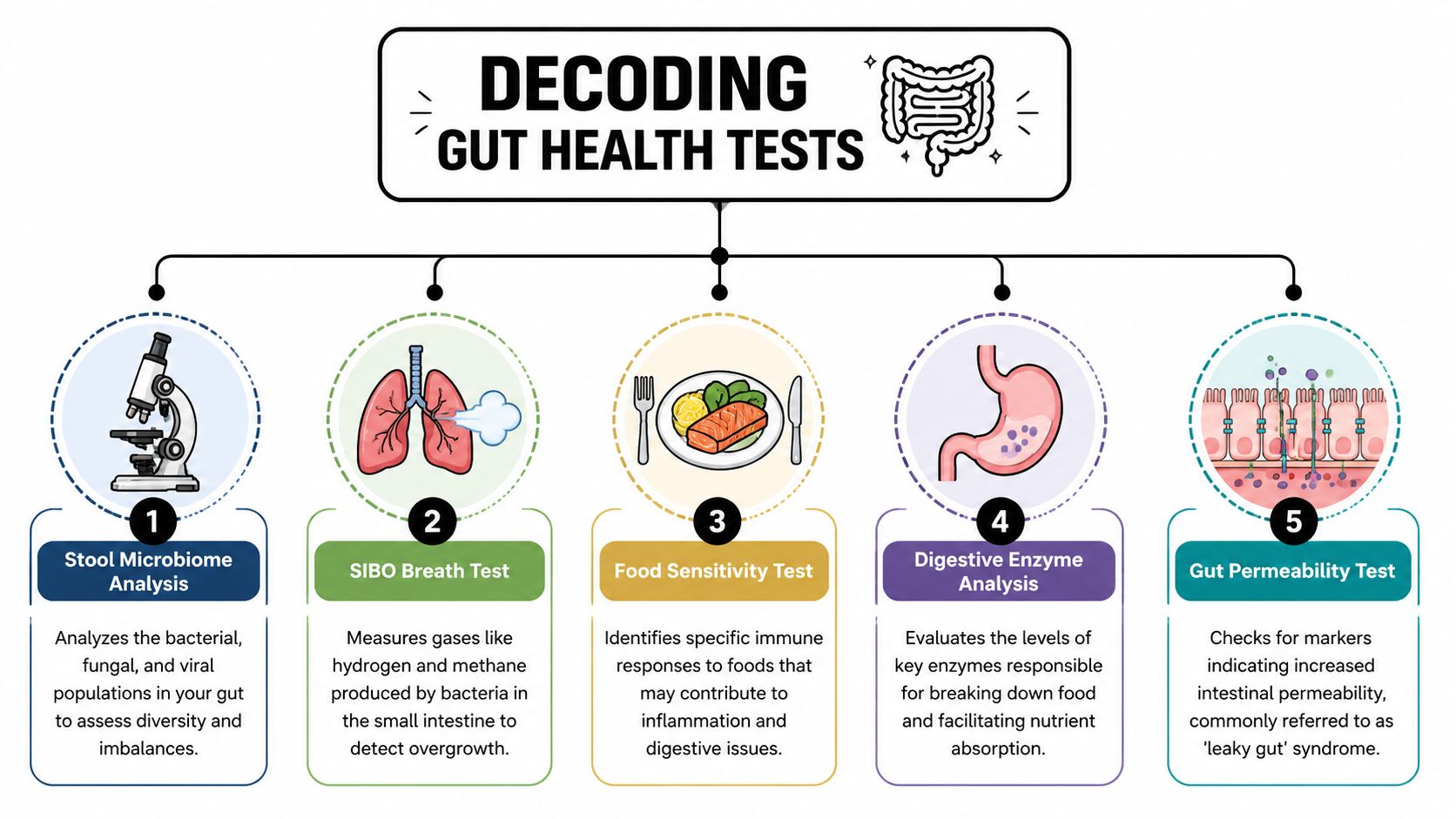
Here are a few categories people often confuse with one another:
SIBO breath tests check gases linked to bacterial overgrowth in the small intestine.
Stool pathogen panels look for specific infectious organisms.
Food sensitivity tests try to link immune reactions to foods.
Digestive enzyme analysis looks at breakdown capacity.
Gut permeability tests look for markers associated with barrier function.
These tests answer different clinical questions. If you suspect an infection, a broad wellness microbiome kit may not be the right first tool. If you're trying to understand overall gut ecology and lifestyle patterns, a narrow pathogen panel won't give the same view.
A mismatch between your question and your test is one of the most common reasons people feel disappointed by gut testing.
Match the test to the problem
A few examples make this easier:
Situation | Most relevant test style | Why |
|---|---|---|
Ongoing bloating with curiosity about the microbiome | Microbiome sequencing | Gives a broad ecosystem snapshot |
Suspected food poisoning or infection | Stool pathogen testing | Looks for specific harmful organisms |
Symptoms linked to fermentation and upper abdominal discomfort | SIBO breath testing | Focuses on small-intestine gas patterns |
General wellness tracking | Microbiome sequencing | Better for trends and personalized discussion |
The right test isn't the fanciest one. It's the one that fits the question you're trying to answer.
How to Choose a Reliable At Home Gut Test
The best at home gut health test isn't always the most expensive box or the most dramatic marketing page. It's the test that combines solid lab methods, a clear report, and realistic interpretation.
A flashy brand can still leave you with vague advice. A better brand tells you how it tests, what it can measure, and what the result can't prove.
What to look for first
Use this checklist before you order anything:
Transparent method: The company should clearly explain whether it uses shotgun metagenomics, RNA sequencing, or another approach.
Actionable reporting: You want more than a list of microbes. The report should organize findings into understandable patterns.
Sample handling: The instructions should be simple and the collection process should seem practical for home use.
Privacy standards: Gut data is health data. Look for a company that addresses privacy directly.
Scope that matches your goal: Don't buy a broad microbiome test if your main concern is a possible acute infection.
Brands that stand out in current reviews
In 2026 reviews, Viome and Tiny Health are frequently praised for advanced lab analysis, actionable reports, and user-friendly kits, with pricing that ranges from $199 to over $600 depending on depth of analysis, according to Gene Food's review of the best at-home microbiome tests.
Viome is often highlighted for RNA sequencing and metatranscriptomics, which aims to capture microbial activity. Tiny Health is known for shotgun metagenomics, including species- and strain-level detail. Ombre is commonly discussed as a budget option, while Floré gets attention for accepting insurance.
That doesn't make one company universally best. It means these brands are at least being recognized for specific strengths rather than vague wellness language.
At-Home Gut Test Types Compared
Test Type | What It Measures | Best For | Typical Cost |
|---|---|---|---|
Basic microbiome stool test | Broad microbial patterns | General wellness curiosity | Lower end of consumer range |
Shotgun metagenomics test | Species and strain detail, broader functional insight | People who want a more detailed ecosystem view | Mid to higher end |
RNA-based microbiome test | Active gene expression and microbial activity | People interested in what microbes may be doing now | Mid to higher end |
Practitioner-led comprehensive panel | Microbes plus additional gut markers | People working closely with a clinician | Higher end |
A simple buyer's filter
If you're stuck between options, ask three questions:
Do I want a broad wellness snapshot or a more detailed profile?
Will I understand the report on my own?
Can I imagine bringing these results to a qualified clinician for discussion?
If the answer to the third question is no, keep shopping. The strongest test is the one that supports a real plan after the report arrives.
The Promise Versus The Reality of Clinical Validity
Gut testing companies often speak the language of precision. Medicine asks a tougher question. Has this test been shown to guide decisions in a way that reliably improves care?
That's what clinical validity is really about. Not whether a report looks scientific, but whether the information has been shown to be dependable and meaningful in real clinical use.
Why one report is only a snapshot
Your microbiome changes. Food, stress, sleep, travel, illness, antibiotics, and normal day-to-day variation can all shift what shows up in a sample.
Henry Ford Health notes that daily fluctuations may produce seven different results over a week, based on gastroenterologist Dr. Najwa El-Nachef's warning in its discussion of home gut microbiome tests. That's a powerful reminder that one stool test should not be treated like a permanent label.
What's promising in research and what isn't ready yet
There is serious progress in microbiome science. For example, Mayo Clinic's Gut Microbiome Wellness Index 2 analyzed more than 8,000 stool samples from 54 studies across 26 countries and six continents, and achieved at least 80% accuracy in separating healthy individuals from those with diseases, as described in the same Henry Ford Health summary earlier in this article.
That's encouraging. But it does not mean every consumer test on the market has the same level of validation.
A consumer microbiome test can support wellness exploration. It should not be mistaken for a stand-alone diagnosis.
A balanced expectation
Use a home test for what it does well:
spotting patterns worth discussing
creating a baseline
motivating diet and lifestyle changes
making symptom tracking more organized
Don't use it to self-diagnose a disease, stop medical treatment, or assume every “bad” microbe on a dashboard is the reason you feel unwell.
Realistic expectations protect you from both hype and unnecessary fear.
Interpreting Your Results and Planning Your Next Steps
Most reports look impressive at first glance. Bars, circles, color codes, rankings. Then the confusion sets in. What do these findings mean in everyday life?
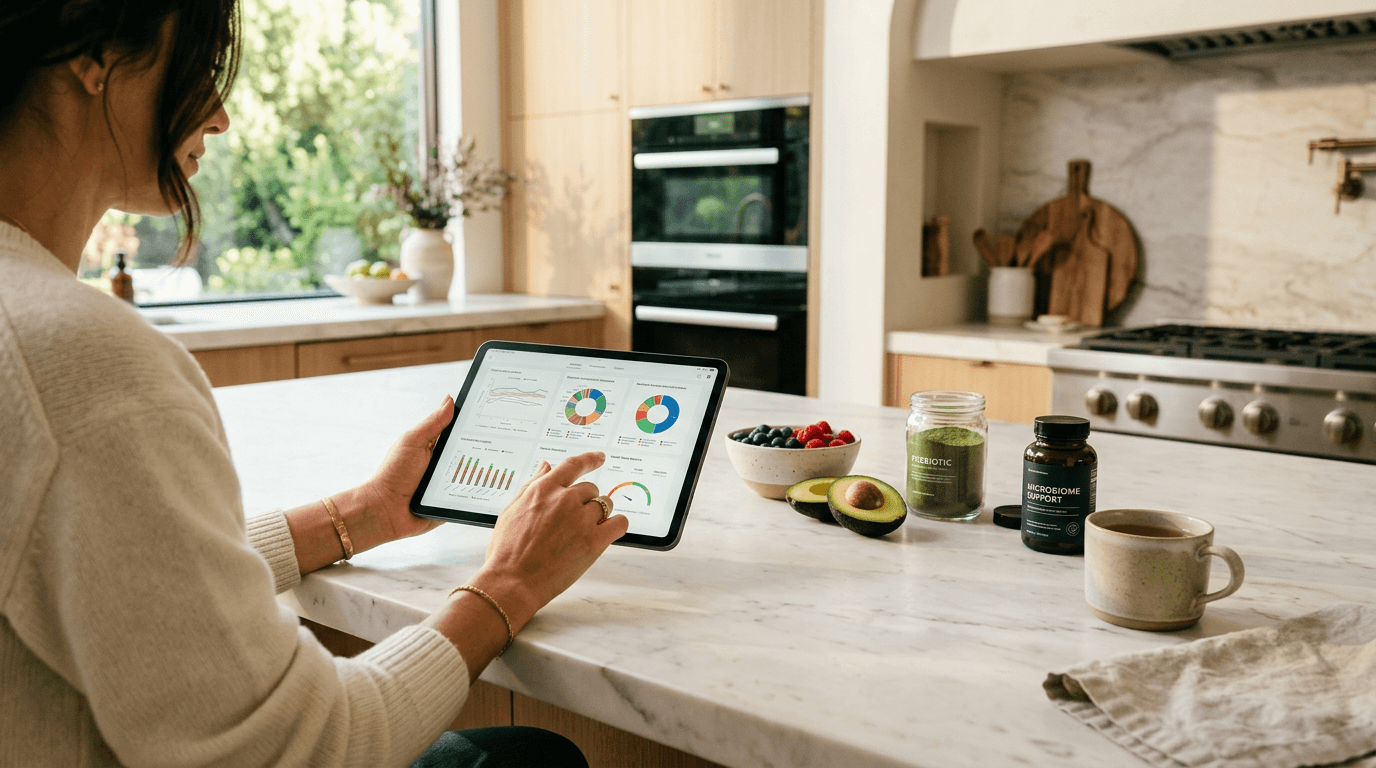
A useful report should help you move from raw information to a short list of practical experiments. Not twenty supplements. Not panic. Just a few smart next steps.
How to read common report themes
Some companies focus on diversity, which is a rough way of asking how varied your gut ecosystem appears to be. In plain language, a more varied ecosystem may suggest broader resilience, while a less varied one may be a reason to look at diet quality, food variety, and recent stressors.
You might also see references to beneficial versus potentially harmful organisms. Treat those labels cautiously. Many microbes aren't “good” or “bad” in every context. They can behave differently depending on the whole ecosystem and the person they live in.
Some reports mention patterns tied to metabolism or short-chain fatty acid production. That can be more actionable. If your report suggests low support for butyrate production, that's a clue worth discussing because butyrate is often linked to gut lining support and inflammation balance.
Turning findings into first steps
These are the kinds of actions that often make sense after a report:
Low diversity signals: Increase plant variety gradually instead of making one dramatic food swap.
Poor fiber-metabolism clues: Add tolerated fibers slowly and consistently.
Low fermented food exposure: Consider introducing fermented foods if they agree with you.
Symptom-heavy reports: Track meals, stress, bowel habits, and sleep alongside the test findings.
For readers interested in the overlap between gut health and body composition, this guide on improving gut health for weight loss can help connect the dots.
What helps most: Pair the report with a symptom journal. Data without context stays abstract.
A simple example
Let's say your report suggests low butyrate-producing bacteria. That doesn't mean you need to chase a miracle supplement. It may mean your first move is to review fiber intake, meal consistency, and tolerance for foods that support a healthier microbial environment.
Or maybe the report flags low overall diversity. Rather than overreacting, you might ask simpler questions. Have you been eating the same meals every day? Have you taken antibiotics recently? Are you under chronic stress?
Good interpretation feels less like decoding a secret message and more like narrowing down a sensible plan.
Integrating Your Test with a Clinician or Telemedicine
A PDF report can tell you what a company measured. It can't examine your abdomen, review your medication history, assess red-flag symptoms, or decide whether your fatigue may have nothing to do with your gut.
That's why the most useful role for an at-home test is as conversation material. It gives a clinician more context. It does not replace clinical care.

What a clinician adds that a report cannot
A qualified clinician can place your test into the bigger picture:
your symptoms
your diet history
medication use
stress and sleep patterns
weight and metabolic goals
whether further testing is needed
That changes everything. The same microbiome finding can mean very different things in different people.
Where test data becomes useful
According to Vibrant Wellness's overview of gut testing and clinical application, microbiome results can support targeted action in telemedicine. If a test shows insufficient butyrate-producing bacteria, a physician can indicate specific dietary fibers or probiotic strains. For weight loss, certain microbial profiles can help predict how well a patient may respond to treatment, allowing for a more personalized plan.
That's the sweet spot. The report doesn't hand you a diagnosis. It helps a clinician choose a more informed starting strategy.
If you're considering virtual care, it also helps to know how efficient online evaluation can be. A same-day telehealth appointment option may be useful when you want to review symptoms and next steps without waiting weeks.
Bringing your report to an appointment
Come prepared with three things:
Your report summary, not just screenshots.
A symptom timeline, including when things got worse or changed.
Questions you want answered, such as whether your findings matter clinically or whether other tests make more sense.
If probiotics are part of the discussion, readers sometimes want simple timing guidance too. This visual on the best probiotic schedule for men may help frame that conversation, though the right schedule still depends on the product and the person.
Bring your test to a clinician the way you'd bring a map to a guide. The map helps. The guide helps you avoid walking in circles.
The most important shift is mental. Don't ask, “What supplement does this report want me to buy?” Ask, “What does this report suggest I should discuss next?”
Your Gut Health Journey Starts Here
If you've made it this far, you're already doing something useful. You're moving from vague frustration toward informed action.
The best at home gut health test can give you a clearer picture of your gut ecosystem. It can help you ask better questions. It can even guide early changes in food, fiber, and daily habits. But it is still a starting point, not a verdict.
The most grounded approach is simple. Choose a test with transparent methods. Read the results with curiosity, not fear. Then bring that information into a real clinical conversation so your symptoms, goals, and health history shape the next move.
If you're not sure where to begin, a free online health assessment can help you organize your questions before you decide on testing or treatment.
You don't need perfect certainty to take the next step. You need a thoughtful process, good support, and a willingness to listen to what your body has been trying to tell you.
If you're ready to turn gut test data into a real treatment plan, 10 Rx Home offers a simple way to start. You can begin with an assessment, connect with a board-certified physician, and get a personalized plan built around your symptoms, goals, and broader health picture.