PCOS Belly vs Normal Belly: Visual & Hormonal Differences
May 7, 2026
If your midsection feels firmer, more rounded, or more pronounced than the rest of your body, hormones and metabolism may be playing a bigger role than you realize. As explained in , a PCOS belly often differs from general weight gain because it’s linked to deeper visceral fat, insulin resistance, and hormonal shifts — not simply calories alone. Understanding the difference can help you stop blaming yourself and start focusing on solutions that actually support your body.
PCOS belly vs normal belly? Learn visual & hormonal differences, causes of firmness, and how to get a clear diagnosis today.
PCOS Belly vs Normal Belly: Visual & Hormonal Differences
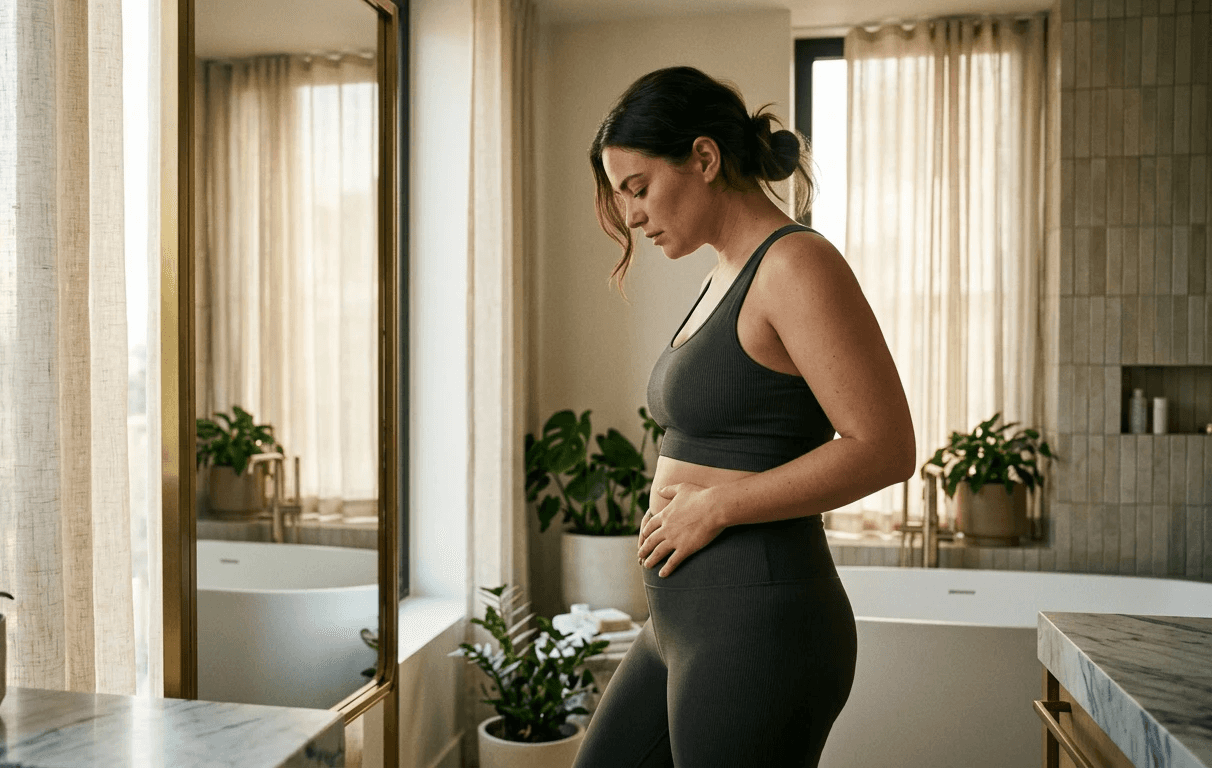
You catch your reflection in the mirror and pause. Your weight may not have changed much, but your midsection looks different. It feels firmer. Your jeans press at the waist. You may even be eating well and exercising, yet your stomach still seems to push forward in a way that doesn't match the rest of your body.
That experience can feel confusing, isolating, and very frustrating.
If you've been wondering about pcos belly vs normal belly, you're not being vain and you're not imagining it. Belly shape can reflect what's happening beneath the surface. In PCOS, the abdomen can change because of hormone and metabolic shifts, not just calories or lack of effort. Understanding that difference can turn self-blame into useful action.
Your Body Is Talking Are You Listening
A lot of women notice the change slowly. First, pants fit differently. Then the belly feels less soft than it used to. Maybe friends say, “Are you bloated?” or you tell yourself you just need to work harder. Weeks turn into months, and the same advice that seems to help other people doesn't seem to touch your middle.
That can wear you down.
If this sounds familiar, it helps to know one thing right away. Not all belly fat is the same. A belly shaped by PCOS often has a different pattern than a belly caused by more general weight gain. The difference isn't just cosmetic. It reflects where fat is stored and what signals inside the body are driving that storage.
Why this matters emotionally and medically
When your body changes in a way that doesn't make sense, it's easy to assume you're failing. In PCOS, that assumption is often wrong. The body may be responding to insulin resistance, androgen-related shifts, inflammation, and changes in fat distribution.
You deserve an explanation that goes beyond “eat less and move more.”
A normal belly from general weight gain is usually softer and more evenly spread. A PCOS belly often looks and feels different because more fat is stored deeper in the abdomen. That deeper storage changes both the appearance and the health risks.
What to pay attention to
Before you judge your body, get curious about it.
Notice the feel: Is your belly soft and easy to pinch, or firm and rounded?
Notice the shape: Does it spread out, or project forward?
Notice the pattern: Is your midsection changing more than your hips, thighs, or arms?
Notice the context: Are you also dealing with irregular periods, acne, hair growth, or fatigue?
Those clues matter. They can help you tell the difference between ordinary body fat changes and a pattern worth discussing with a clinician.
Visually Comparing PCOS Belly and Normal Belly
Many readers find this point confusing. Both can involve abdominal fullness, but pcos belly vs normal belly looks different when you know what to look for.

A helpful way to think about it is this. A typical “fat belly” is often mostly subcutaneous fat, which sits under the skin. A PCOS belly is more likely to involve visceral fat, which sits deeper around internal organs. That changes the silhouette.
A significant study found that women with PCOS, even when matched for weight with women without PCOS, had markedly higher central abdominal fat, especially in normal-weight and overweight groups, supporting the idea that PCOS itself can drive this pattern of fat storage (Journal of Clinical Endocrinology & Metabolism study on central abdominal fat in PCOS).
PCOS Belly vs. Normal Belly at a Glance
Characteristic | PCOS Belly | Normal Belly |
|---|---|---|
Feel | Often firmer, less pinchable | Usually softer, more pinchable |
Shape | More rounded and protruding | More spread out or gently layered |
Main location | Concentrated in the midsection | More evenly distributed |
Visual pattern | Often “apple-shaped” | Often more balanced with the rest of the body |
What may be driving it | Hormonal and metabolic factors | General fat storage patterns |
What a PCOS belly often looks like
A PCOS belly commonly appears round, central, and firm. Many women describe it as looking “inflamed,” “harder,” or “like it sticks out more than it hangs.” The widest point may seem near or above the navel, and the rest of the body may not look proportionally larger.
That mismatch is one reason people feel confused. They may have a relatively smaller frame overall, yet still feel dominated by the shape of their midsection.
What a normal belly often looks like
A normal belly associated with general weight gain usually feels softer. You can often pinch more of the fat just under the skin. It may roll, fold, or spread across the lower abdomen rather than push forward in one firm curve.
This kind of fat distribution also tends to track more predictably with overall weight changes.
Practical rule: If your belly feels unusually firm, central, and persistent compared with the rest of your body, it's reasonable to ask whether hormones and metabolism are part of the picture.
If you're trying to make sense of body composition more broadly, this guide on how to measure body fat percentage can help you separate scale weight from where fat is stored.
The Hidden Causes Behind Your Belly Shape
The shape of the belly tells part of the story. The deeper reason lies in where the fat is stored and what is pushing the body to store it there.
Visceral fat and subcutaneous fat aren't the same
Subcutaneous fat sits just beneath the skin. It's the kind you can often pinch with your fingers. It can still affect health, but visually it usually creates a softer look.
Visceral fat sits deeper in the abdomen around organs. That's why the belly can feel firmer and look more projected. It isn't as easy to grab from the outside because much of it isn't right under the skin.
The firmness of a PCOS belly is linked to this deeper fat pattern. About 65 to 70% of women with PCOS have insulin resistance, and waist-to-hip ratio is a better predictor of insulin resistance in PCOS than BMI, which helps explain why someone can have a “normal” weight on paper but still have a metabolically concerning belly shape (Instalab explanation of PCOS belly and insulin resistance).
The hormone pathway behind the shape
Here's the simple version.
When the body becomes more resistant to insulin, it often needs to produce more insulin to do the same job. Higher insulin levels can encourage the ovaries to produce more androgens. Those hormone shifts can change where fat gets stored, pushing it toward the abdomen.
That's why a PCOS belly isn't just about eating too much. The body is receiving signals that favor central fat storage.
Why a normal belly develops differently
A normal belly from general weight gain is often more about overall energy storage. The body stores extra energy under the skin in many places, including the stomach, hips, thighs, and arms. There isn't usually the same hormonal pattern pushing fat specifically toward the center in the same way.
That's the key contrast in pcos belly vs normal belly. One is often strongly tied to metabolic and hormonal dysfunction. The other is more often part of broader body fat storage.
If your belly feels out of proportion to your efforts, that doesn't mean your efforts are pointless. It may mean your treatment target is incomplete.
Why bloating can confuse the picture
Some women have both a PCOS belly pattern and day-to-day bloating or water retention. That can make the abdomen feel even more uncomfortable and can blur the difference between fat, inflammation, and temporary swelling.
If that sounds familiar, this article on how to reduce water retention may help you think through one piece of the puzzle.
There's also growing recognition that PCOS care works best when it isn't limited to weight alone. Some people benefit from a broader pelvic health approach to PCOS recovery, especially when abdominal symptoms overlap with pelvic pain, tension, or cycle-related discomfort.
Recognizing the Red Flags of PCOS Belly
A PCOS belly usually doesn't show up alone. It often arrives with a cluster of other signs that, together, make the pattern easier to recognize.
Clues beyond the abdomen
If you're looking at your own symptoms, ask whether the belly change is happening alongside any of these:
Cycle changes: Irregular periods, skipped periods, or long gaps between cycles
Skin changes: Acne, especially around the jawline or lower face
Hair changes: More facial or body hair than usual, or thinning hair on the scalp
Energy or appetite shifts: Feeling tired after meals, frequent cravings, or a sense that your body doesn't respond normally to food
Midsection pattern: A belly that feels firm, central, and stubborn compared with the rest of your body
One symptom alone doesn't confirm PCOS. A pattern of symptoms makes the case stronger.
Lean PCOS is real
Many women often find themselves dismissed. They're told they can't possibly have PCOS because they aren't overweight.
That's not accurate. About 10 to 20% of women with PCOS have a normal BMI, often called lean PCOS, and imaging research described in Aspect Health's review reports higher visceral fat and inflammatory markers even in these weight-matched women without obesity (Aspect Health overview of lean PCOS and visceral fat).
So yes, someone can look slim in the arms and legs and still have a firm, protruding PCOS belly.
A simple self-check mindset
Don't ask only, “Am I gaining weight?”
Ask better questions.
Is the belly shape new or changing?
Does it feel different from soft body fat?
Am I having reproductive, skin, or hair symptoms too?
Have my concerns been brushed off because I don't fit a stereotype?
A normal BMI doesn't rule out PCOS. If the symptoms line up, your concerns still deserve a full evaluation.
From Suspicion to Diagnosis How to Get Answers
Once you suspect that your belly shape may reflect PCOS, the next step is getting clear answers. That process doesn't have to be overwhelming.

Start with what you can observe
Before your appointment, collect a few practical details. You don't need a perfect spreadsheet. You just need useful patterns.
Track your cycles: Note whether they're regular, absent, or unpredictable.
Record related symptoms: Acne, hair growth, hair thinning, fatigue, and changes in belly shape all matter.
Measure your waist: A waist circumference greater than 88 cm (35 inches) is an important indicator of PCOS-related abdominal obesity, and this measure is reported in 60 to 70% of women with PCOS compared with 25% of the general population at the same BMI in the cited source (Cosmopolitan summary of PCOS belly diagnostic indicators).
Write down your questions: It's easier to advocate for yourself when you bring notes.
If talking with a clinician feels intimidating, this guide on how to talk to your doctor about weight loss can help you organize your concerns without minimizing them.
What a clinician may look for
PCOS diagnosis often involves a combination of history, symptoms, and testing. A clinician may ask about:
menstrual irregularity
acne or hair changes
weight and waist pattern
family history of diabetes or hormone-related conditions
fertility concerns
They may also order blood work to look at hormones and metabolic markers, and in some cases they may recommend pelvic imaging.
How to make the visit more productive
Bring specifics, not apologies.
Instead of saying, “I just feel off,” try:
“My belly has become firmer and more central.”
“My cycles are irregular.”
“I'm noticing acne and hair changes.”
“I want to be evaluated for PCOS and insulin-related issues.”
That kind of clarity helps. It also reduces the chance that the whole conversation gets narrowed to the number on the scale.
Evidence-Based Ways to Manage PCOS Abdominal Fat
Once you understand the cause, treatment becomes more targeted. The goal isn't just to shrink the belly. The primary goal is to improve the hormonal and metabolic pattern that created it.
Lifestyle changes that match the mechanism
Because PCOS belly is tied to insulin resistance and central fat storage, it helps to focus on habits that support insulin sensitivity rather than chasing quick weight loss.
Nutrition is one piece. Many women do better with meals built around protein, fiber, and less dramatic blood sugar swings. If meal planning feels exhausting, a structured personalized PCOS meal plan can make that process easier and more realistic.
Exercise also matters, but the type matters too. Resistance training is often especially useful because it helps the body use glucose more effectively and supports body composition in a way that long stretches of cardio alone may not.
A practical toolkit
Try thinking in layers instead of perfection.
Build meals that steady blood sugar: Focus on regular meals with protein, fiber-rich carbohydrates, and healthy fats.
Lift or do resistance work consistently: Strength-based exercise can be more helpful for abdominal fat patterns linked to insulin resistance.
Protect sleep: Poor sleep can make appetite regulation and metabolic symptoms harder to manage.
Lower chronic stress where you can: Not because stress “causes everything,” but because it can worsen the environment your body is already dealing with.
Main takeaway: The best plan for PCOS belly treats the biology underneath it, not just the appearance on top of it.
When medication becomes part of the plan
Lifestyle work is valuable, but sometimes it isn't enough on its own. That doesn't mean you failed. It means your body may need more support.
Medical interventions that target insulin resistance can directly reduce visceral fat. In the cited source, metformin at 500 to 2000 mg per day is described as reducing visceral adipose tissue by 5 to 10% in 6 months, and GLP-1 agonists are described as showing 15 to 20% VAT loss in 12 months in trials adapted for PCOS (Belle Health review of medication options for PCOS belly).
These medications work differently, and they're not right for everyone. But they can be important options, especially when insulin resistance is strong or abdominal fat remains stubborn despite solid lifestyle changes.
What progress often looks like
Improvement may start with better energy, fewer cravings, more regular cycles, or less abdominal firmness before you see major visual change. That can be hard when you're focused on the mirror, but it matters.
The body often gives functional wins before cosmetic ones.
When and How to Seek Help with Telemedicine
Some people know they need help but keep putting off the appointment. Time is tight. In-person visits are hard to schedule. Talking about belly shape, cycles, acne, or weight can feel vulnerable.
That's where telemedicine can help.

Signs it's time to get professional support
Consider reaching out if your belly shape is changing in a way that feels persistent and out of proportion, especially if you also have irregular cycles, acne, hair changes, fertility concerns, or signs of insulin resistance.
Telemedicine can make that first step easier because you can discuss sensitive concerns from home, in a more private setting, without adding travel and waiting room stress.
Why virtual care fits this condition well
PCOS often requires ongoing adjustment, not one quick visit. You may need help reviewing symptoms, discussing medication options, making a plan, and checking in over time. Virtual care can support that kind of follow-through.
If emotional stress, body image strain, or anxiety are also part of your experience, mental health support matters too. Some readers may benefit from local resources such as counselling for Okanagan residents, especially when the emotional side of PCOS has been building in the background.
For people who want a convenient medical path forward, telehealth can also fit into broader wellness goals. This guide on achieving your goals with weight loss telemedicine gives a practical look at how virtual treatment can work.
You do not need to wait until things get worse to ask for help. Early support often makes the path clearer and less exhausting.
If you're ready to move from uncertainty to a personalized plan, 10 Rx Home offers a simple telemedicine path that starts with a free quiz and connects you with a board-certified physician. You can discuss concerns like PCOS-related abdominal fat, explore appropriate treatment options, and get care from home in a way that feels private, practical, and supportive.