GLP-1’s at low prices with free shipping. Get Started


" transform="translate(53.5 27.5)" width="0px"/><g d="M 164.013 0 C 206.437 0 240.828 33.597 240.828 75.04 C 240.828 116.484 206.437 150.08 164.013 150.08 C 121.589 150.08 87.198 116.484 87.198 75.04 C 87.198 33.597 121.589 0 164.013 0 Z M 164.52 30.422 C 140.298 30.422 120.662 50.398 120.662 75.04 C 120.662 99.682 140.298 119.659 164.52 119.659 C 188.742 119.659 208.377 99.682 208.377 75.04 C 208.377 50.398 188.742 30.422 164.52 30.422 Z M 49.689 117.004 L 49.724 117.026 C 50.148 121.056 54.397 124.222 59.576 124.222 C 60.05 124.222 60.516 124.195 60.973 124.143 L 61.097 124.222 L 83.406 120.926 C 83.406 120.926 73.956 127.316 67.688 131.067 C 60.617 135.299 49.689 141.207 49.689 141.207 C 49.689 141.207 39.295 147.961 27.633 149.827 C 27.576 149.836 27.52 149.844 27.463 149.853 C 26.591 150.023 25.702 150.098 24.814 150.077 C 24.739 150.079 24.665 150.08 24.591 150.08 L 24.577 150.069 C 19.359 149.854 15.211 146.423 15.211 142.221 L 15.211 29.154 C 15.211 28.755 15.022 28.379 14.702 28.139 C 14.383 27.9 13.968 27.826 13.585 27.939 L 0 29.915 L 35.746 8.366 L 49.689 0 Z M 260.136 98.048 C 260.234 98.048 260.33 98.052 260.427 98.058 L 287.219 98.517 L 287.219 98.612 C 295.722 98.712 302.586 105.638 302.586 114.166 C 302.586 121.454 297.574 127.571 290.811 129.259 L 304.648 146.964 L 304.644 146.964 C 304.889 147.252 305.023 147.617 305.023 147.995 C 305.023 148.839 304.365 149.536 303.523 149.585 L 303.523 149.588 L 291.341 149.588 L 291.341 149.582 C 289.373 149.504 287.613 148.618 286.384 147.245 L 286.374 147.245 L 286.328 147.182 C 286.064 146.88 285.827 146.557 285.619 146.215 L 273.443 129.628 L 273.463 129.625 C 272.779 128.705 272.41 127.589 272.412 126.442 C 272.412 123.684 274.502 121.414 277.187 121.13 L 277.191 121.101 L 281.783 120.351 L 281.783 120.348 C 285.214 120.264 287.968 117.864 287.968 114.916 C 287.968 111.968 285.214 109.568 281.783 109.483 L 281.783 109.481 L 270.538 109.481 L 270.538 146.777 L 270.536 146.777 C 270.538 146.808 270.538 146.839 270.538 146.871 C 270.538 148.34 269.371 149.537 267.913 149.586 L 267.913 149.588 L 258.168 149.588 L 258.168 149.573 C 256.799 149.433 255.731 148.277 255.731 146.871 C 255.731 146.839 255.733 146.808 255.733 146.777 L 255.731 146.777 L 255.731 102.359 L 255.733 102.359 C 255.781 100.064 257.585 98.201 259.856 98.058 L 259.856 98.048 L 259.998 98.051 C 260.044 98.049 260.09 98.048 260.136 98.048 Z M 324.515 110.615 C 326.064 110.719 327.396 111.676 328.101 113.049 L 332.884 119.45 L 338.302 112.809 C 339.033 111.565 340.298 110.713 341.756 110.615 L 341.756 110.605 L 352.44 110.605 C 353.577 110.605 354.5 111.528 354.5 112.667 C 354.5 113.003 354.42 113.321 354.276 113.601 L 354.314 113.604 L 354.176 113.776 C 354.1 113.896 354.011 114.008 353.912 114.109 L 342.693 128.222 C 342.693 128.222 342.413 128.627 342.413 128.972 C 342.413 129.318 342.693 129.722 342.693 129.722 L 355.241 146.116 C 355.722 146.507 356 147.094 356 147.714 C 356 148.852 355.077 149.775 353.938 149.775 C 353.876 149.775 353.814 149.772 353.751 149.766 L 353.751 149.775 L 341.756 149.775 L 341.756 149.749 C 340.252 149.58 338.973 148.605 338.31 147.237 L 333.228 140.405 C 333.228 140.405 333.042 140.217 332.76 140.217 C 332.48 140.217 332.291 140.405 332.291 140.405 L 332.289 140.402 L 327.078 147.492 C 326.891 147.825 326.664 148.134 326.401 148.411 L 326.295 148.557 L 326.263 148.553 C 325.588 149.207 324.723 149.641 323.764 149.749 L 323.764 149.775 L 312.331 149.775 C 311.194 149.775 310.271 148.852 310.271 147.714 C 310.271 147.02 310.613 146.407 311.138 146.033 L 323.015 130.659 C 323.015 130.659 323.295 130.255 323.295 129.909 C 323.295 129.564 323.015 129.16 323.015 129.16 L 311.458 114.146 C 311.058 113.758 310.833 113.224 310.833 112.667 C 310.833 111.528 311.756 110.605 312.894 110.605 L 324.515 110.605 Z" fill="transparent" height="150.08043079668755px" id="HpkDSJwpk" transform="translate(0 1)" width="356.0000118682049px"><path d="M 76.815 0 C 119.239 0 153.63 33.597 153.63 75.04 C 153.63 116.484 119.239 150.08 76.815 150.08 C 34.391 150.08 0 116.484 0 75.04 C 0 33.597 34.391 0 76.815 0 Z M 77.322 30.422 C 53.1 30.422 33.464 50.398 33.464 75.04 C 33.464 99.682 53.1 119.659 77.322 119.659 C 101.544 119.659 121.179 99.682 121.179 75.04 C 121.179 50.398 101.544 30.422 77.322 30.422 Z" fill="rgb(8, 9, 35)" height="150.08043079668755px" id="kvrqFybmK" transform="translate(87.198 0)" width="153.62981889920286px"/><path d="M 49.689 117.004 L 49.724 117.026 C 50.148 121.056 54.397 124.222 59.576 124.222 C 60.05 124.222 60.516 124.195 60.973 124.143 L 61.097 124.222 L 83.406 120.926 C 83.406 120.926 73.956 127.316 67.688 131.067 C 60.617 135.299 49.689 141.207 49.689 141.207 C 49.689 141.207 39.295 147.961 27.633 149.827 C 27.576 149.836 27.52 149.844 27.463 149.853 C 26.591 150.023 25.702 150.098 24.814 150.077 C 24.739 150.079 24.665 150.08 24.591 150.08 L 24.577 150.069 C 19.359 149.854 15.211 146.423 15.211 142.221 L 15.211 29.154 C 15.211 28.755 15.022 28.379 14.702 28.139 C 14.383 27.9 13.968 27.826 13.585 27.939 L 0 29.915 L 35.746 8.366 L 49.689 0 Z M 260.136 98.048 C 260.234 98.048 260.33 98.052 260.427 98.058 L 287.219 98.517 L 287.219 98.612 C 295.722 98.712 302.586 105.638 302.586 114.166 C 302.586 121.454 297.574 127.571 290.811 129.259 L 304.648 146.964 L 304.644 146.964 C 304.889 147.252 305.023 147.617 305.023 147.995 C 305.023 148.839 304.365 149.536 303.523 149.585 L 303.523 149.588 L 291.341 149.588 L 291.341 149.582 C 289.373 149.504 287.613 148.618 286.384 147.245 L 286.374 147.245 L 286.328 147.182 C 286.064 146.88 285.827 146.557 285.619 146.215 L 273.443 129.628 L 273.463 129.625 C 272.779 128.705 272.41 127.589 272.412 126.442 C 272.412 123.684 274.502 121.414 277.187 121.13 L 277.191 121.101 L 281.783 120.351 L 281.783 120.348 C 285.214 120.264 287.968 117.864 287.968 114.916 C 287.968 111.968 285.214 109.568 281.783 109.483 L 281.783 109.481 L 270.538 109.481 L 270.538 146.777 L 270.536 146.777 C 270.538 146.808 270.538 146.839 270.538 146.871 C 270.538 148.34 269.371 149.537 267.913 149.586 L 267.913 149.588 L 258.168 149.588 L 258.168 149.573 C 256.799 149.433 255.731 148.277 255.731 146.871 C 255.731 146.839 255.733 146.808 255.733 146.777 L 255.731 146.777 L 255.731 102.359 L 255.733 102.359 C 255.781 100.064 257.585 98.201 259.856 98.058 L 259.856 98.048 L 259.998 98.051 C 260.044 98.049 260.09 98.048 260.136 98.048 Z M 324.515 110.615 C 326.064 110.719 327.396 111.676 328.101 113.049 L 332.884 119.45 L 338.302 112.809 C 339.033 111.565 340.298 110.713 341.756 110.615 L 341.756 110.605 L 352.44 110.605 C 353.577 110.605 354.5 111.528 354.5 112.667 C 354.5 113.003 354.42 113.321 354.276 113.601 L 354.314 113.604 L 354.176 113.776 C 354.1 113.896 354.011 114.008 353.912 114.109 L 342.693 128.222 C 342.693 128.222 342.413 128.627 342.413 128.972 C 342.413 129.318 342.693 129.722 342.693 129.722 L 355.241 146.116 C 355.722 146.507 356 147.094 356 147.714 C 356 148.852 355.077 149.775 353.938 149.775 C 353.876 149.775 353.814 149.772 353.751 149.766 L 353.751 149.775 L 341.756 149.775 L 341.756 149.749 C 340.252 149.58 338.973 148.605 338.31 147.237 L 333.228 140.405 C 333.228 140.405 333.042 140.217 332.76 140.217 C 332.48 140.217 332.291 140.405 332.291 140.405 L 332.289 140.402 L 327.078 147.492 C 326.891 147.825 326.664 148.134 326.401 148.411 L 326.295 148.557 L 326.263 148.553 C 325.588 149.207 324.723 149.641 323.764 149.749 L 323.764 149.775 L 312.331 149.775 C 311.194 149.775 310.271 148.852 310.271 147.714 C 310.271 147.02 310.613 146.407 311.138 146.033 L 323.015 130.659 C 323.015 130.659 323.295 130.255 323.295 129.909 C 323.295 129.564 323.015 129.16 323.015 129.16 L 311.458 114.146 C 311.058 113.758 310.833 113.224 310.833 112.667 C 310.833 111.528 311.756 110.605 312.894 110.605 L 324.515 110.605 Z" fill="rgb(8, 9, 35)" height="150.08043079668755px" id="kdERGws7a" width="356.0000118682049px"/></g></svg>)
Burping That Smells Like Rotten Eggs: Causes and Fixes
Burping that smells like rotten eggs is usually caused by hydrogen sulfide gas produced during digestion. Common triggers include sulfur-rich foods, slow digestion, gut bacteria imbalances, reflux, infections, or even medications like GLP-1 treatments that slow stomach emptying. Keeping meals smaller, avoiding trigger foods, staying hydrated, and tracking patterns can often help identify the cause. If symptoms keep returning or happen with pain, diarrhea, nausea, or weight loss, it’s a good idea to speak with a doctor.
Worried about burping that smells like rotten eggs? Learn the common causes from diet to H. pylori, find at-home remedies, and know when to see a doctor.

Burping That Smells Like Rotten Eggs: Causes and Fixes
You notice it after a meal, or while talking, or when you're trying to fall asleep. You burp, and the smell is unmistakable. Rotten eggs. It's unpleasant, a little alarming, and often embarrassing.
If you're dealing with burping that smells like rotten eggs, your body isn't being random or “gross.” It's sending a clue. In many cases, that clue points to digestion, food choices, gut bacteria, or the way your stomach is moving food along. Sometimes it also points to something that deserves a closer medical look.
The good news is that this symptom is usually understandable once you know what creates it. Better still, there are practical ways to respond. You can learn what may be triggering it, test a few simple changes, and know when a doctor's opinion is the smart next step.
You Are Not Alone with This Symptom
You're brushing your teeth before bed, trying to freshen your breath, and then it happens again. The burp has that sulfur smell you cannot ignore. A lot of people feel embarrassed by this symptom, so they stay quiet and hope it goes away on its own.
Clinicians hear about it more often than you might think. Rotten egg burps can happen with ordinary digestive slowdowns, a food that did not sit well, or a short-term stomach bug. They can also show up in less obvious situations, including medication side effects. That matters right now because some people notice more belching, nausea, or delayed stomach emptying after starting medicines that slow digestion, including GLP-1 medications used for weight loss or diabetes.
The helpful way to look at this symptom is as a clue, not a conclusion. A burp odor is a bit like smoke from a kitchen. The smell tells you something is being cooked or burned, but not exactly what caused it. You need the full context. Timing, recent meals, new medicines, stress, and other symptoms all help narrow it down.
That is why two people can have the same unpleasant smell for very different reasons.
Why this symptom can feel bigger than it is
Burping that smells bad often triggers worry because it feels personal and hard to hide. Some people assume it has to be a serious disease. Others dismiss it even when it keeps coming back. Neither reaction gives you much to work with.
A better first step is to track the pattern for a few days:
Look at timing. Did it start after a heavy meal, a stomach illness, or a new prescription?
Notice what comes with it. Bloating, nausea, diarrhea, belly pain, or feeling full very quickly can change what the symptom means.
Check whether it repeats. One isolated episode is different from a pattern that shows up every week.
If your belly also feels swollen or tight, it can help to sort out whether you are dealing with digestive swelling or something else. This guide on bloating versus belly fat explains the difference in plain language.
Bad breath can add another layer of stress, and burps are only one possible cause. If you are trying to tell mouth-related odor from stomach-related odor, this comprehensive bad breath guide may help.
A simple rule helps here. Do not judge this symptom by how embarrassing it feels. Judge it by the pattern around it.
That mindset also makes it easier to decide whether a telemedicine visit makes sense. If the symptom is new, keeps returning, or started after a medication change, a virtual appointment can be a practical first step to review your history, your medicines, and your next steps.
The Science Behind That Rotten Egg Smell
The smell comes mainly from hydrogen sulfide, or H2S. That's the gas most closely linked to the classic rotten egg odor.
According to Metro GI's explanation of sulfur burps, the characteristic rotten egg smell in burps is primarily caused by hydrogen sulfide, a volatile sulfur compound produced when gut microbes break down sulfur-containing foods. The same source describes sulfur burps as a gas-composition signal, meaning the odor can reflect diet, gut motility, or an underlying gastrointestinal condition.
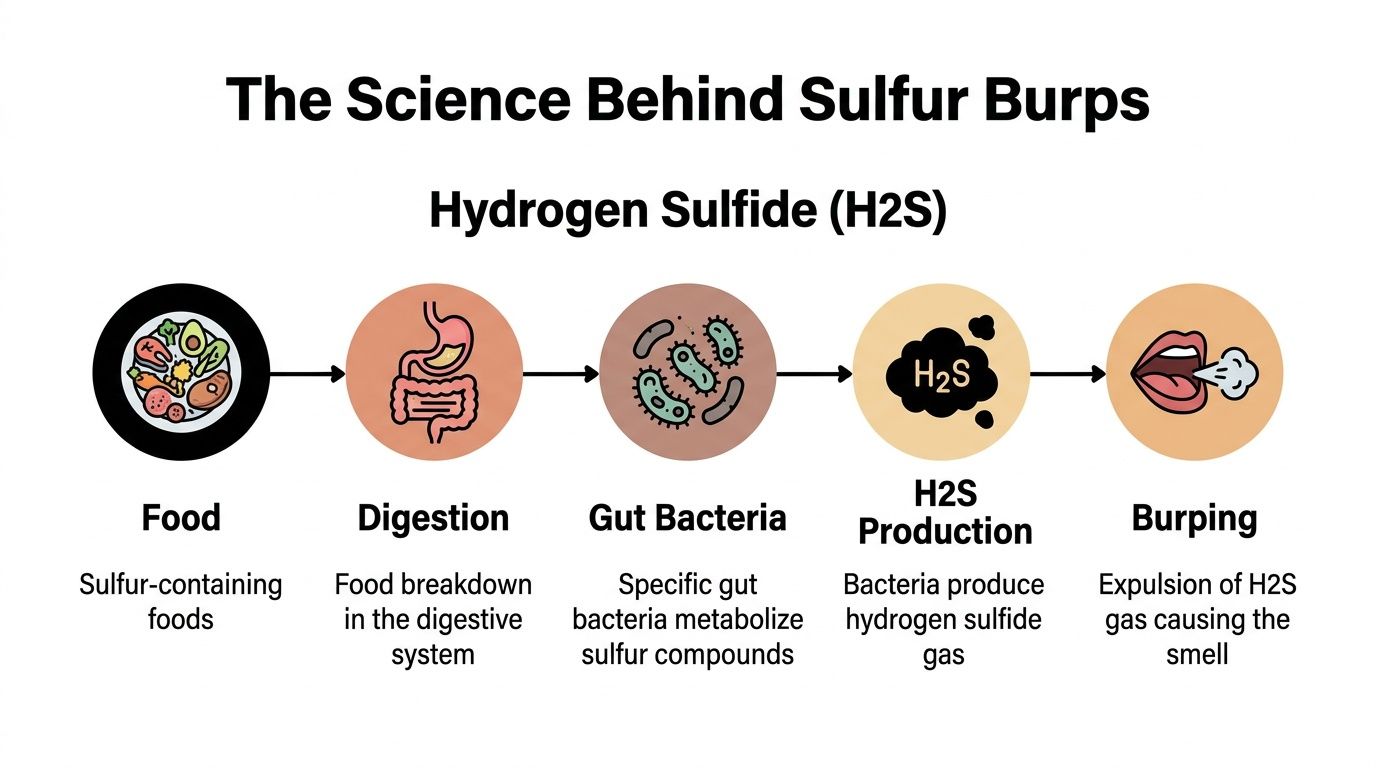
Think of your gut as a scent factory
A simple way to picture this is to imagine your digestive system as a small factory. Food goes in. Your stomach and intestines break it down. Gut microbes process what's left. During that process, gases get made.
Most of the time, those gases don't smell especially strong. But when hydrogen sulfide is part of the mix, the odor stands out. That's why one burp can smell dramatically different from another, even if both came from the same stomach.
People often get confused. The smell itself doesn't automatically mean danger. It means the type of gas being produced has changed.
Why the same symptom can have different causes
Two people can have the same rotten egg burp for different reasons.
One person may have eaten foods that are more likely to contribute to sulfur gas. Another may have slower digestion, so food sits longer and creates more fermentation. Someone else may have reflux, IBS, a food intolerance, or another digestive issue affecting how food moves and breaks down.
That's why symptom tracking can be more useful than guessing. If you want a broader primer on digestion and microbiome patterns, this overview of at-home gut health testing options can give you helpful context.
Bad breath and sulfur burps can overlap in real life, but they aren't always the same problem. If you're trying to tell mouth odor from digestive odor, this comprehensive bad breath guide is a useful companion resource.
Once you know hydrogen sulfide is the key player, the next question becomes practical. What tends to feed that process, and what can you change first?
Common Food Triggers and Simple Dietary Swaps
Food is often the easiest place to start because it's something you can observe and adjust right away. Metro GI notes that actionable next steps can include tracking sulfur-rich triggers such as cruciferous vegetables, dairy, garlic, beer, and high-fat meals, then trying a brief elimination trial to see whether symptoms settle down.
That doesn't mean these foods are “bad.” Many are nutritious. It just means your body may handle some of them poorly right now, especially in certain combinations or portion sizes.
Start with a short detective phase
For several days, keep it simple. Write down what you ate, when the burping started, and whether you also had bloating, cramping, or loose stools. You're not trying to create a perfect food diary. You're looking for repeat offenders.
A useful pattern to watch is whether symptoms follow:
Large meals
Heavy or high-fat meals
Meals with dairy
Meals with cruciferous vegetables
Garlic, onions, or beans
Beer or carbonated drinks
High-sulfur foods and healthier swaps
Food Category | High-Sulfur Foods to Limit | Lower-Sulfur Swaps to Try |
|---|---|---|
Vegetables | Broccoli, cauliflower, Brussels sprouts, cabbage | Zucchini, carrots, cucumber, lettuce |
Protein choices | Large portions of richer animal proteins | Smaller portions of simpler proteins you tolerate well |
Dairy | Milk, some creamy or heavy dairy meals | Lactose-free options or non-dairy choices if dairy seems to trigger symptoms |
Flavor bases | Garlic and onions in large amounts | Chives, herbs, ginger, or simpler seasoning blends |
Drinks | Beer and carbonated beverages | Still water, herbal tea, non-carbonated drinks |
Meal style | Large, heavy meals | Smaller meals with less fat and fewer trigger combinations |
Make swaps without making life miserable
You don't need to cut out everything at once. That usually backfires. Pick the most likely triggers and test them in a focused way.
Try approaches like these:
If vegetables seem involved: Cook them well and reduce portion size before removing them completely.
If dairy seems suspicious: Test a brief dairy break or try lactose-free versions.
If rich dinners are the problem: Split one big dinner into a smaller evening meal and a light snack later.
If drinks are part of it: Replace fizzy beverages with still options for a few days.
A short elimination trial works best when it's specific. Remove the likely trigger, not half your kitchen.
Watch combinations, not just ingredients
Some people tolerate broccoli at lunch but not with cheese sauce and a carbonated drink at dinner. Others do fine with a small amount of dairy but feel awful after a milkshake. The trigger may be the food itself, the portion, the combination, or the timing.
That's why experimentation beats rigid food rules. The goal isn't to eat a tiny, joyless menu forever. The goal is to learn what your digestive system is reacting to so you can make targeted changes.
If careful food changes don't help, or if the symptom keeps returning no matter what you eat, it's time to think beyond the plate.
When It Is More Than Just Food
You cut back on the obvious triggers. You skip the fizzy drinks, eat a lighter dinner, and still get a burp that smells like sulfur an hour later. At that point, it helps to stop thinking only about the menu and start thinking about how your digestive system is moving food along.
Sometimes the issue is less about what you ate and more about what happened after you ate it. Digestion works like a conveyor belt. If that belt slows down, food sits longer, gas builds, and sulfur compounds have more time to create that rotten egg smell.

Digestive problems that can cause the same symptom
A clinician may think about several possibilities when sulfur burps keep returning, especially if the pattern does not match a single food trigger.
Reflux or GERD: Stomach contents and gas can move upward more easily, which can make burping frequent after meals or when lying down.
IBS or food intolerance: Some digestive systems react strongly to certain carbohydrates, dairy, or meal patterns, causing bloating, gas, and discomfort.
Infections such as H. pylori or Giardia: These can disrupt normal digestion and often bring other symptoms like nausea, cramps, or diarrhea.
Short-term stomach bugs or food poisoning: These usually come on more suddenly and often cause vomiting, loose stools, or abdominal pain along with the burps.
Conditions that slow stomach emptying: If food lingers in the stomach longer than usual, gas and odor can become more noticeable.
These are clues, not a diagnosis.
That distinction matters because sulfur burps can look similar on the surface while coming from very different causes underneath.
A cause many people miss: medication side effects
Medication changes are easy to overlook, especially if the burping started gradually. But some medicines can slow digestion, irritate the stomach, or change the way your gut handles food.
One important example is the GLP-1 medication class used for weight loss and diabetes. Inspira Health explains that GLP-1 medications can increase burping by slowing stomach emptying. If the stomach empties more slowly, food has more time to ferment, and burping may become more frequent or smell worse.
This can be confusing because it often looks like a food problem. A key clue is timing. Symptoms may start after a new prescription, after a dose increase, or when larger meals feel much heavier than they used to.
If you take one of these medications, it helps to read about GLP-1 medications and gallbladder concerns, because burping is sometimes only one piece of a bigger digestive picture.
Other medicines can also play a role. Antibiotics can disrupt gut bacteria. Iron supplements can upset the stomach. Some pain relievers and reflux medicines can change digestion in ways that make gas patterns harder to predict.
A simple way to tell whether it may be more than food
Ask three practical questions:
Did this start after a new medication, dose change, illness, or major stress period?
Does it happen even when you avoid your usual food triggers?
Are there other symptoms with it, such as nausea, diarrhea, pain, bloating, reflux, or feeling full very quickly?
If the answer to one or more is yes, a food diary alone may not solve the mystery. A symptom and medication timeline is often more useful. Write down when the burps happen, what you ate, any medicines or supplements you took, and whether you also had pain, loose stools, heartburn, or vomiting.
Resources like Wellness Apothecary's gut insights can be helpful for understanding the bigger picture of digestion, but ongoing sulfur burps still deserve a medical review when the pattern does not add up.
A clinician can use your timeline to sort through the possibilities much faster than guesswork can.
Practical Steps for At-Home Symptom Relief
When symptoms are mild and you don't have warning signs, home care can be a reasonable first move. The key is to support digestion without throwing ten remedies at your body at once.
Small changes tend to work better than dramatic ones because they're easier to stick with and easier to evaluate.
Habits that often help
Start with the basics:
Drink water regularly: Hydration supports digestion and is especially important if you also have loose stools.
Eat smaller meals: A crowded stomach is more likely to burp.
Slow down while eating: Fast eating often means more swallowed air and more digestive strain.
Skip carbonated drinks for now: Bubbles add gas before digestion even starts.
Go lighter on very fatty meals: These can feel heavier and may sit longer.
Comfort measures worth trying
Some people feel better with warm, non-carbonated fluids and gentler meal choices for a day or two. Others notice less burping when they avoid eating late at night or take a light walk after meals.
You can also consider supportive strategies such as:
Peppermint or chamomile tea: These can feel soothing for some people.
A simple food routine: Plain, easy-to-digest meals make patterns easier to spot.
Stress reduction: Stress and anxiety are listed among possible triggers by Medical News Today, so relaxation may help if symptoms flare during tense periods.
Relief often comes from reducing the total digestive load, not from finding one magic ingredient.
Be selective with supplements and remedies
If you're thinking about probiotics or broader gut-support habits, this roundup of Wellness Apothecary's gut insights offers practical ideas to compare with your own routine.
Keep your approach simple enough that you can tell what's helping. If you change your entire diet, start three supplements, and stop two medications on the same day, you won't know which move mattered.
A better plan looks like this:
Pick one or two likely triggers to reduce.
Shift to smaller, simpler meals.
Increase fluids.
Reassess after a short stretch.
If the burping improves, you've learned something useful. If it doesn't, that's useful too. Lack of response can be a clue that food alone isn't the whole issue.
Knowing When to Connect with a Doctor
You try the simple fixes for a few days. You eat lighter meals, drink more water, and pay attention to timing. But the rotten egg burps keep showing up, or they start coming with other symptoms. That is the point where guessing becomes less useful than getting a medical opinion.
A good rule is simple: if this is becoming a pattern instead of a one-time flare, it deserves attention. Burping can come from something minor, but it can also be a clue that your digestive system is slowing down, getting irritated, or reacting to a medication.
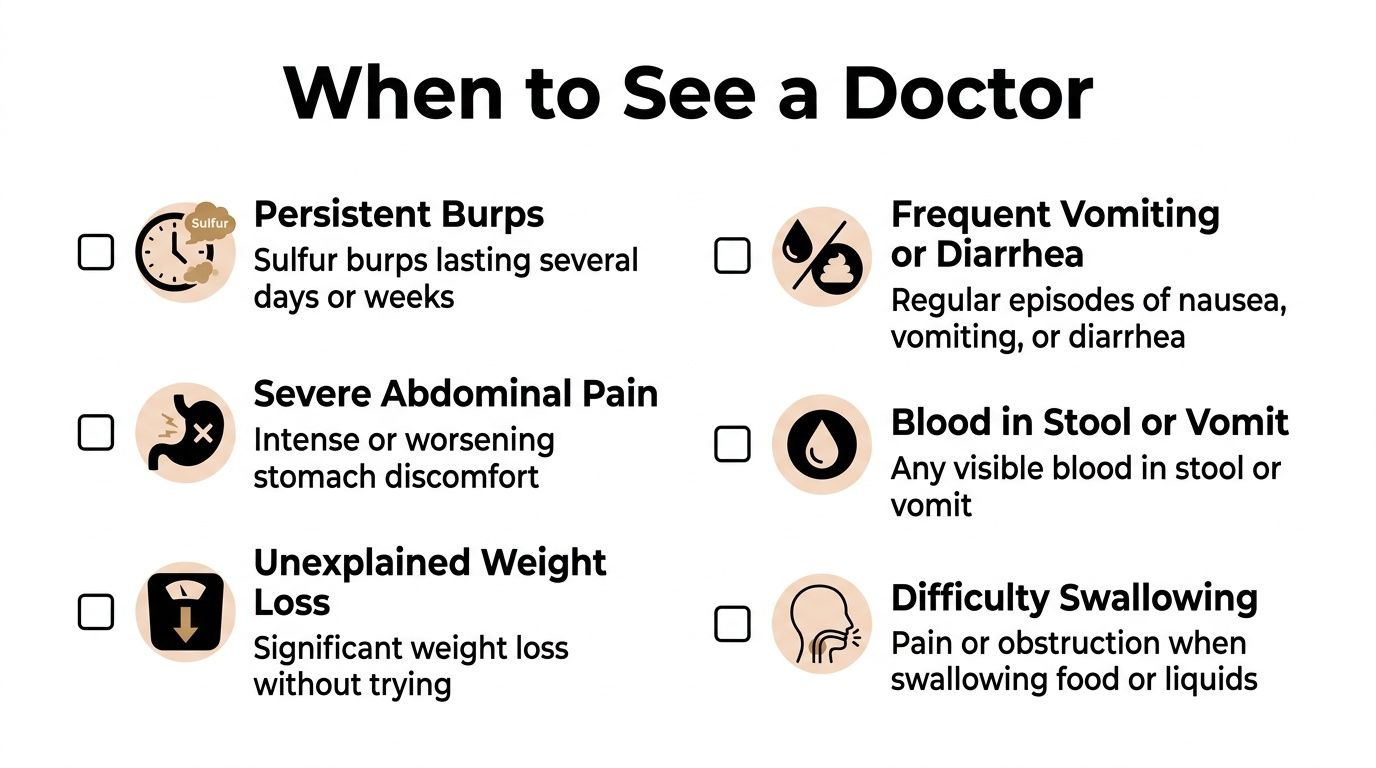
Symptoms that deserve medical attention
Doctors pay close attention to the company a symptom keeps. A sulfur-smelling burp on its own is one thing. Sulfur burps plus pain, diarrhea, vomiting, or weight loss tell a different story.
Manhattan Gastroenterology explains that sulfur burps with diarrhea, abdominal pain, blood in the stool, or trouble tolerating food can point to infection, inflammation, or another digestive problem that needs proper evaluation, as described in their guidance on sulfur burps with diarrhea.
Pay closer attention if you have:
Diarrhea along with sulfur burps
Abdominal pain that is persistent or getting worse
Blood in the stool
Vomiting or poor tolerance of food
Weight loss you cannot explain
Symptoms that keep returning even after dietary changes
Burping that began after starting or increasing a medication
That last point matters more than many people realize. Medicines that slow stomach emptying, including GLP-1 drugs used for weight loss or diabetes, can sometimes set the stage for nausea, fullness, reflux, and unpleasant burping. The stomach works like a sink that is draining more slowly than usual. Food sits longer, gas builds, and the smell can get stronger.
Why telemedicine can be a smart first step
This symptom can feel awkward to talk about, which is one reason people wait too long. A virtual visit can make the first step easier, especially if you mainly need help sorting out the pattern.
Telemedicine is often a good fit when you want to answer questions like:
Did this start after a new medicine, dose increase, or supplement?
Does this sound more like a food issue, reflux, slowed digestion, infection, or intolerance?
Do I need stool testing, blood work, or an in-person exam?
What can I safely try at home while I wait for next steps?
A clinician can often learn a lot from your timeline. Bring a short list of when the burps started, what else happens with them, what you ate before they show up, and any recent medication changes. That information acts like a map. It helps the doctor decide whether you likely need reassurance, medication adjustments, testing, or urgent in-person care.
If you want an easy starting point, this guide to an online doctor consultation for digestive symptoms explains what to expect.
If burping that smells like rotten eggs has become a repeat problem, not just an annoying fluke, 10 Rx Home offers a simple way to connect with board-certified physicians from home. You can get guidance on symptoms, medication side effects, and next steps without waiting and wondering on your own.